
 Afurika
 Aziya
Aziya Uburayi
 Amerika y'Amajyepfo
 Ositaraliya na Oseyaniya
 Antaragitika
 Inyanja ya Pasifika
 Inyanja ya Atalantika
 Inyanja y'Abahinde
 Inyanja ya Arigitika
 Inyanja ya Mediterane
 Inyanja Itukura
 Inyanja ya Karayibe
 Inyanja ya Korali
 Inyanja y'Amajyepfo y'u Bushinwa
 Inyanja ya Filipine
 Inyanja ya Andamani
 Inyanja y'Amajyaruguru
 Inyanja ya Timor na Arafura
 Ikigobe cya Bengali
 Ikigobe cya Kaliforuniya
German wasp
 Itera urubori
The German wasp is a black and yellow social wasp that lives in colonies. It is native to Europe, Northern Africa and temperate Asia, but it has spread to many other parts of the world. Because it competes with local wildlife, it is treated as a pest in most areas outside its native range.1


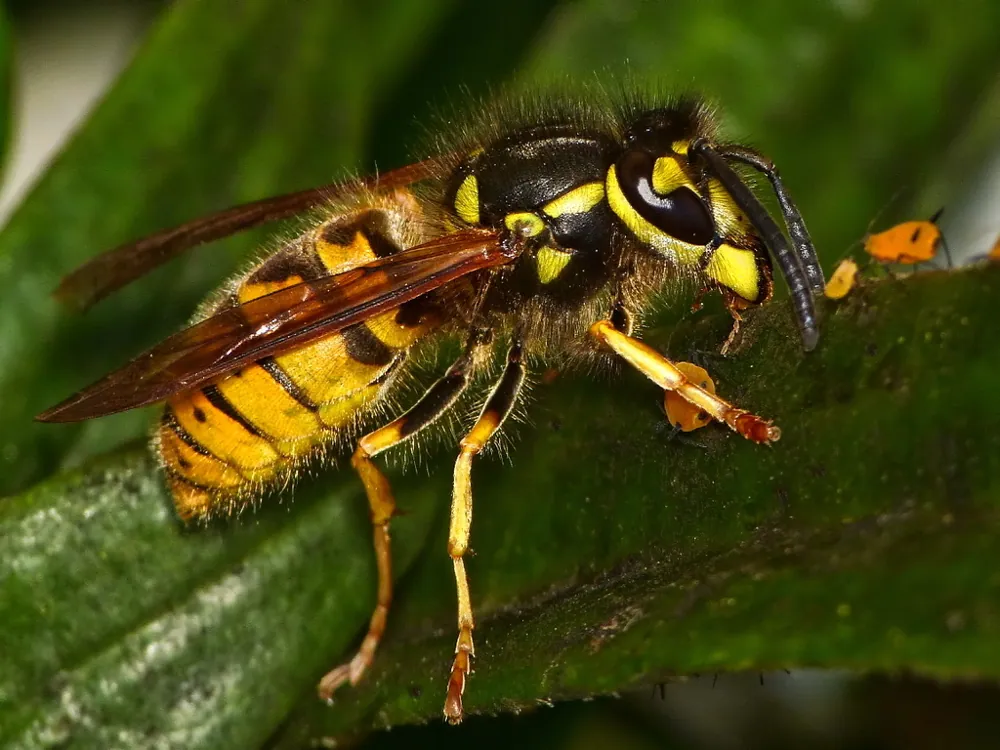
 Uko wayimenya
- About 13 mm long, with typical wasp colours of black and yellow1
- Workers have three tiny black dots on the clypeus (the front part of the head, between the eyes and mouthparts)1
- Black marks on the abdomen are highly variable, so they are not a reliable way to identify it1
- Grey paper nests, often in the soil or in attics1
Ikunze kwitiranywa na: The German wasp is very similar to the common wasp (Vespula vulgaris). Unlike the common wasp, it has three tiny black dots on the clypeus, but this only applies to workers. In males, the normally unbroken black mark on the common wasp's clypeus can look broken, which makes it hard to tell the two apart. Members of Vespula are also often confused with the paper wasp Polistes dominula.1
Imbaraga z'ubumara
Ubumara busohokera mu rubori.
Iteje akaga kangana iki ku bantu?
Akaga ku bantu: IrababazaIshobora kubabaza cyane, ariko hafi ya buri gihe nta kibazo gikomeye biteza. Niba itera urubori
- Kuramo urubori rw'uruyuki uruharura, kandi ukonjeshe aho rwateye.
- Niba umuntu ahumeka bimugoye, akabyimba mu maso cyangwa mu muhogo, cyangwa akumva agiye guta ubwenge, ni ikibazo cyihutirwa cya aleriji: hamagara nimero y'ubutabazi kandi ukoreshe urushinge rwe rwa adrenaline (adrenaline pen) niba arufite.
Buri gihe banza uhamagare nimero y'ubutabazi (112, 000, 911). Izi ni inama rusange z'ubutabazi bw'ibanze, si inama za muganga. Ibanze by'ubutabazi bw'ibanze
 Irinde akaga
- Ntuzigere ukora, ufata cyangwa ushotora inyamaswa yo mu gasozi, nubwo yaba ntoya, kandi nubwo yasa n'isinziriye cyangwa yapfuye.
- Yihe umwanya. Niba uhuye n'imwe, tuza, usubire inyuma buhoro buhoro kandi uyireke yigendere.
- Niba imwe igutereye urubori: tuza, ntunyeganyege, hamagara nimero y'ubutabazi (112, 000, 911) cyangwa ujye ku bitaro vuba. Ibuka uko yasaga, ifoto irafasha.
Ntigushakisha ngo ikugirire nabi. Ikoresha ubumara bwayo kugira ngo ifate ibyo kurya cyangwa yirinde, kandi ikunda cyane kwihisha. Ibindi ku kwirinda
Ingana gute?
Ireshya ite?
Iremera ibingana iki?
 ntoya ku buryo yakwicara ku nzara yawe
 yoroshye cyane ku buryo utayumva ku kiganza cyawe
 yaguruka ikambuka ikibuga cyose cy'umupira w'amaguru mu masegonda 16
German wasp ingana ite ugereranyije NAWE?
Ni imibare gusa ikorerwa muri mudasobwa yawe. Nta kintu kibikwa cyangwa cyoherezwa ahandi.
Yihuta gute?


Ibintu by'ukuri
German wasps are invasive. They have spread to many continents and are especially successful at colonising new areas.1
They can outcompete many other animals for food, which has caused considerable harm to native wildlife where they have invaded.1
Female bee moths (Aphomia sociella) sometimes lay eggs in German wasp nests. Their larvae feed on the eggs, larvae and pupae, and can destroy large parts of the nest.1
In Australia, nests can grow very large and some survive the winter. In England, none of the nests in the study survive the winter.1
Queens mate with between one and seven males, and workers can lay eggs, although worker policing keeps most of their sons from reaching adulthood.1
Colonies grow rapidly over summer, with a large increase in worker numbers and nest size. In late summer, the colony focuses on producing new queens and males.1
Usenya ibinyoma
Ikinyoma: German wasps are paper wasps because they build grey paper nests.
Ukuri: The name is used by mistake. Strictly speaking, paper wasps belong to the subfamily Polistinae, while German wasps belong to the genus Vespula.1
Ku bahanga mu by'ubumara
- Izina rya siyansi
- Vespula germanica
- Itsinda
- Inzuki, amavubi n'amavubi manini
- Umuryango
- Vespidae2
- Itsinda rinini (order)
- Hymenoptera
- Imigabane
- Uburayi, Aziya, Afurika
- Abana bato
- A single queen starts a nest in spring and lays eggs in hexagonal cells, with one wasp developing in each cell through the egg, larva and pupa stages.1
- Akaga ku bantu
- 2 / 5: Irababaza3
Aho ibintu bivugwa bituruka
- Vespula germanica (Wikipedia (CC BY-SA 4.0))
- Vespula germanica (iNaturalist): amazina n'ibyiciro.
- Venom Wiki: urwego rw'akaga, ingano isanzwe n'ikigereranyo cy'umuvuduko ni ibyacu bwite. Reba uko tubibara: Uko tugena akaga.
Buri kintu kivugwa kuri iyi paji gifite nimero yerekana aho cyavuye. Niba twibeshye, tubabarire, turi abakunzi b'inyamaswa, ntituri ikinyamakuru cya siyansi. Tubwire kuri [email protected] tuzabikosora.
 Sikorupiyo irashonje! Venom Wiki ni umushinga w'umuntu umwe: ni ubuntu, nta matangazo kandi nta bikurikirana abantu. Impano ntoya ifasha kugira ngo ikomeze kuboneka kuri interineti.Gaburira sikorupiyo
Izindi zo mu itsinda rimwe: Inzuki, amavubi n'amavubi manini
 Asian giant hornetInzuki, amavubi n'amavubi maniniIshobora kwica
 Common waspInzuki, amavubi n'amavubi maniniIrababaza gusa
 European hornetInzuki, amavubi n'amavubi maniniIrababaza gusa
 Western honey beeInzuki, amavubi n'amavubi maniniIrababaza gusa
 Giant honey beeInzuki, amavubi n'amavubi maniniBisaba muganga
 Asian hornetInzuki, amavubi n'amavubi maniniIrababaza gusa
Iba kandi muri: Uburayi
 Common European adderVipera na adderBisaba muganga
 Spanish flyIzindi nyamaswa zifite uburoziBisaba mugangaNtukayikoreho
 Fire salamanderIbikeri by'uburozi, ibikeri binini na newtIrababaza gusaNtukayikoreho
 Blunt-nosed viperVipera na adderIshobora kwica
 Nose-horned viperVipera na adderIshobora kwica
 Ottoman viperVipera na adderIshobora kwica