
 Afurika
 Aziya
Aziya Uburayi
 Amerika y'Amajyepfo
 Ositaraliya na Oseyaniya
 Antaragitika
 Inyanja ya Pasifika
 Inyanja ya Atalantika
 Inyanja y'Abahinde
 Inyanja ya Arigitika
 Inyanja ya Mediterane
 Inyanja Itukura
 Inyanja ya Karayibe
 Inyanja ya Korali
 Inyanja y'Amajyepfo y'u Bushinwa
 Inyanja ya Filipine
 Inyanja ya Andamani
 Inyanja y'Amajyaruguru
 Inyanja ya Timor na Arafura
 Ikigobe cya Bengali
 Ikigobe cya Kaliforuniya
Socotra Island blue baboon spider
 Iraruma
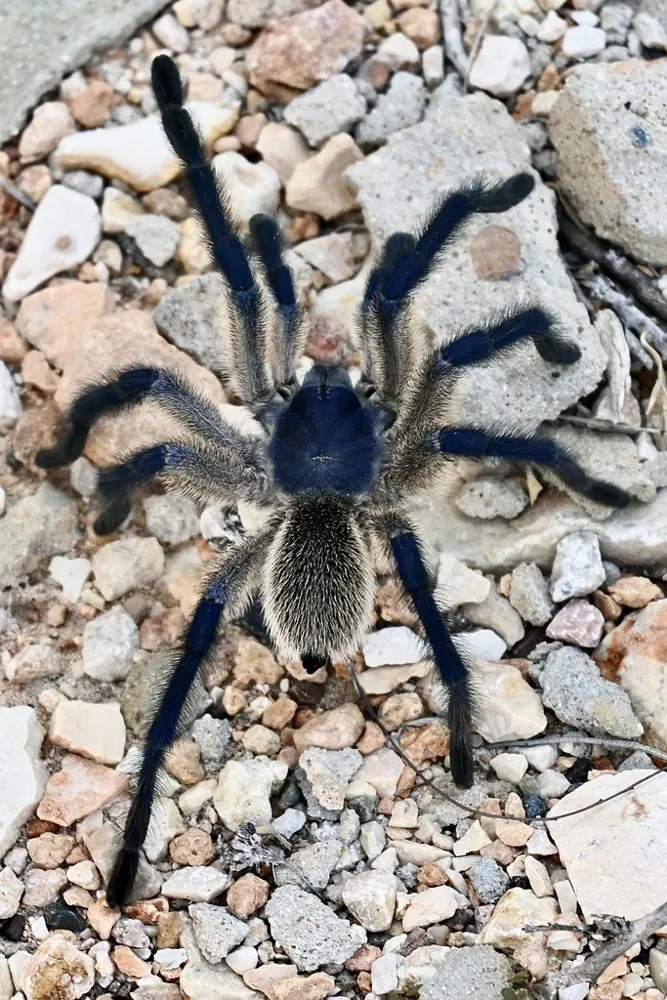
The Socotra Island blue baboon tarantula is a large, vivid blue spider that lives on the ground. It is found only on Socotra Island, which is part of Yemen, and it is known for its unusual group behaviour, where mother spiders guard their young. Its venom has not been studied enough to know how strong it is.1
 Uko wayimenya
Imbaraga z'ubumara
Ubumara busohokera mu menyo yayo y'ubumara cyangwa mu yandi menyo iyo iriye.
Ubumara bwayo bukora iki?
The potency of its venom is not known. Some people believe it can kill a dromedary (a one-humped camel), but this is most likely not the case.1
Iteje akaga kangana iki ku bantu?
Akaga ku bantu: IrababazaIshobora kubabaza cyane, ariko hafi ya buri gihe nta kibazo gikomeye biteza.How strong its venom is has not been established. When provoked, especially when a mother is protecting an egg sac, it will deliver a fast strike and bite.1
Ikora iki iyo ifite ubwoba?
When threatened, it rears up on its hind legs and bares its chelicerae (fang-bearing mouthparts) in a characteristic threat pose. Further provocation leads to a fast strike and bite.1
 Niba iruma
- Oza aho yarumye kandi uhakonjeshe. Shaka ubufasha bwa muganga niba ububabare bukabije cyangwa umuntu yumva atameze neza.
Buri gihe banza uhamagare nimero y'ubutabazi (112, 000, 911). Izi ni inama rusange z'ubutabazi bw'ibanze, si inama za muganga. Ibanze by'ubutabazi bw'ibanze
 Irinde akaga
- Ntuzigere ukora, ufata cyangwa ushotora inyamaswa yo mu gasozi, nubwo yaba ntoya, kandi nubwo yasa n'isinziriye cyangwa yapfuye.
- Yihe umwanya. Niba uhuye n'imwe, tuza, usubire inyuma buhoro buhoro kandi uyireke yigendere.
- Niba imwe ikurumye: tuza, ntunyeganyege, hamagara nimero y'ubutabazi (112, 000, 911) cyangwa ujye ku bitaro vuba. Ibuka uko yasaga, ifoto irafasha.
Ntigushakisha ngo ikugirire nabi. Ikoresha ubumara bwayo kugira ngo ifate ibyo kurya cyangwa yirinde, kandi ikunda cyane kwihisha. Ibindi ku kwirinda
Ingana gute?
Ireshya ite?
 ireshya n'ibice 4 by'ibikinisho byo kubaka biri ku murongo
 yakwiruka metero 100 mu masegonda 220 (umuntu wihuta kurusha abandi akenera 9,6)
Socotra Island blue baboon spider ingana ite ugereranyije NAWE?
Ni imibare gusa ikorerwa muri mudasobwa yawe. Nta kintu kibikwa cyangwa cyoherezwa ahandi.
Yihuta gute?


Ibintu by'ukuri
Its vivid blue colour is the striking feature of the adult, although red and amber forms have been seen very rarely.1
This tarantula is communal: mother spiders care for their young and will attack predators that get too close to their egg sac.1
In captivity, several males and females of different ages can live together without attacking one another, as long as they have enough food and proper care.1
Females live for about 10 to 14 years, while males tend to live for only about 3 to 4 years.1
Because it is an Old World tarantula, it does not have urticating hairs, the irritating hairs that some New World tarantulas flick at attackers.1
Usenya ibinyoma
Ikinyoma: It can kill a dromedary (one-humped camel).
Ukuri: Some people believe this, but it is most likely not the case. Its venom potency is not known.1
Ku bahanga mu by'ubumara
Aho ibintu bivugwa bituruka
- Monocentropus balfouri (Wikipedia (CC BY-SA 4.0))
- Monocentropus balfouri (iNaturalist): amazina n'ibyiciro.
- Venom Wiki: urwego rw'akaga, ingano isanzwe n'ikigereranyo cy'umuvuduko ni ibyacu bwite. Reba uko tubibara: Uko tugena akaga.
Buri kintu kivugwa kuri iyi paji gifite nimero yerekana aho cyavuye. Niba twibeshye, tubabarire, turi abakunzi b'inyamaswa, ntituri ikinyamakuru cya siyansi. Tubwire kuri [email protected] tuzabikosora.
 Sikorupiyo irashonje! Venom Wiki ni umushinga w'umuntu umwe: ni ubuntu, nta matangazo kandi nta bikurikirana abantu. Impano ntoya ifasha kugira ngo ikomeze kuboneka kuri interineti.Gaburira sikorupiyo
Izindi zo mu itsinda rimwe: Tarantula na funnel-web
 Gooty sapphire tarantulaTarantula na funnel-webBisaba muganga
 Indian ornamental tarantulaTarantula na funnel-webBisaba muganga
 Cobalt blue tarantulaTarantula na funnel-webIrababaza gusa
 Chinese bird spiderTarantula na funnel-webBisaba muganga
 Chinese black earth tiger tarantulaTarantula na funnel-webBisaba muganga
 Fringed ornamental tarantulaTarantula na funnel-webBisaba muganga
 Deathstalker
 Indian cobra
 Indian saw-scaled viper
 King cobra
 Puff adder
 Impiri ya Russell