
 Afurika
 Aziya
Aziya Uburayi
 Amerika y'Amajyepfo
 Ositaraliya na Oseyaniya
 Antaragitika
 Inyanja ya Pasifika
 Inyanja ya Atalantika
 Inyanja y'Abahinde
 Inyanja ya Arigitika
 Inyanja ya Mediterane
 Inyanja Itukura
 Inyanja ya Karayibe
 Inyanja ya Korali
 Inyanja y'Amajyepfo y'u Bushinwa
 Inyanja ya Filipine
 Inyanja ya Andamani
 Inyanja y'Amajyaruguru
 Inyanja ya Timor na Arafura
 Ikigobe cya Bengali
 Ikigobe cya Kaliforuniya
Violet carpenter bee
 Itera urubori
The violet carpenter bee is one of the largest bees in Europe. It is also found across parts of Asia. It nests in dead wood, which is where the name 'carpenter bee' comes from.1
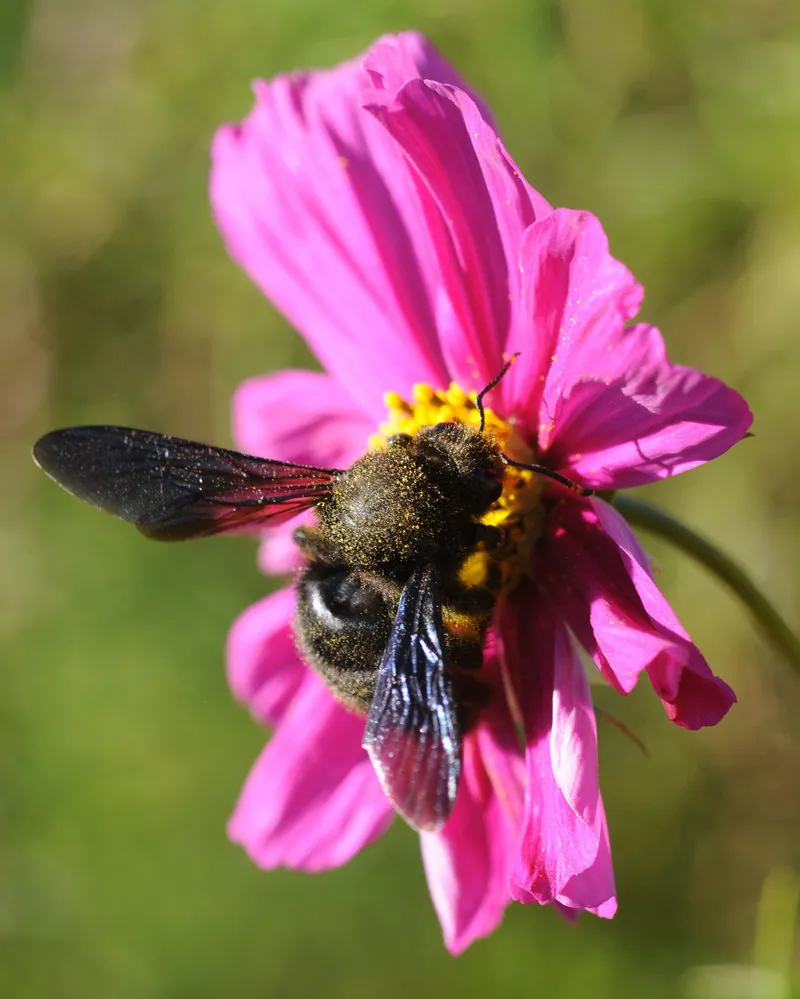
 Uko wayimenya
- One of the largest bees in Europe1
- Makes its nest in dead wood1
- Adults emerge from hibernation in spring, usually around April or May1
- In late spring or early summer, adults are seen searching for mates and nesting sites1
Ikunze kwitiranywa na: In India, several all-black Xylocopa species are called 'bhanvra' (or 'bhomora' in Assamese). Sightings of these are often wrongly blamed on this species. This species is found only in the northern regions of Jammu and Kashmir and Punjab. Most sightings refer to other black carpenter bees, such as X. nasalis, X. tenuiscapa or X. tranquebarorum.1
Imbaraga z'ubumara
Ubumara busohokera mu rubori.
Iteje akaga kangana iki ku bantu?
Akaga ku bantu: YorohejeNko guterwa urubori n'uruyuki cyangwa munsi yaho. Mu by'ukuri ntacyo itwaye abantu.It is not particularly aggressive and will attack only if forced to.1
Ikora iki iyo ifite ubwoba?
It will sting only if forced to.1
 Niba itera urubori
- Kuramo urubori rw'uruyuki uruharura, kandi ukonjeshe aho rwateye.
- Niba umuntu ahumeka bimugoye, akabyimba mu maso cyangwa mu muhogo, cyangwa akumva agiye guta ubwenge, ni ikibazo cyihutirwa cya aleriji: hamagara nimero y'ubutabazi kandi ukoreshe urushinge rwe rwa adrenaline (adrenaline pen) niba arufite.
Buri gihe banza uhamagare nimero y'ubutabazi (112, 000, 911). Izi ni inama rusange z'ubutabazi bw'ibanze, si inama za muganga. Ibanze by'ubutabazi bw'ibanze
 Irinde akaga
- Ntuzigere ukora, ufata cyangwa ushotora inyamaswa yo mu gasozi, nubwo yaba ntoya, kandi nubwo yasa n'isinziriye cyangwa yapfuye.
- Yihe umwanya. Niba uhuye n'imwe, tuza, usubire inyuma buhoro buhoro kandi uyireke yigendere.
- Niba imwe igutereye urubori: tuza, ntunyeganyege, hamagara nimero y'ubutabazi (112, 000, 911) cyangwa ujye ku bitaro vuba. Ibuka uko yasaga, ifoto irafasha.
Ntigushakisha ngo ikugirire nabi. Ikoresha ubumara bwayo kugira ngo ifate ibyo kurya cyangwa yirinde, kandi ikunda cyane kwihisha. Ibindi ku kwirinda
Ingana gute?
Ireshya ite?
 ireshya hafi na trombone yo gufata impapuro
 yaguruka ikambuka ikibuga cyose cy'umupira w'amaguru mu masegonda 13
Violet carpenter bee ingana ite ugereranyije NAWE?
Ni imibare gusa ikorerwa muri mudasobwa yawe. Nta kintu kibikwa cyangwa cyoherezwa ahandi.
Yihuta gute?


Ibintu by'ukuri
It was found breeding in England for the first time in 2007, in Leicestershire.1
Its range has expanded north in France, Germany and the Channel Islands.1
Adults hibernate over winter in old nest tunnels.1
Like most carpenter bees, it nests in dead wood rather than in hives.1
The female creates her nest alone, as other solitary bees do.1
Usenya ibinyoma
Ikinyoma: Every all-black carpenter bee in India is a violet carpenter bee, called 'bhanvra'.
Ukuri: This species is found only in the northern regions of Jammu and Kashmir and Punjab. Most black carpenter bees called bhanvra belong to other Xylocopa species.1
Ku bahanga mu by'ubumara
- Izina rya siyansi
- Xylocopa violacea
- Itsinda
- Inzuki, amavubi n'amavubi manini
- Umuryango
- Apidae2
- Itsinda rinini (order)
- Hymenoptera
- Imigabane
- Uburayi, Aziya
- Abana bato
- The female builds the nest alone. She lays eggs in a series of small cells, each supplied with a pollen ball for the larva to feed on. Adults emerge in late summer and then hibernate until the following year.1
- Akaga ku bantu
- 1 / 5: Yoroheje3
Aho ibintu bivugwa bituruka
- Xylocopa violacea (Wikipedia (CC BY-SA 4.0))
- Xylocopa violacea (iNaturalist): amazina n'ibyiciro.
- Venom Wiki: urwego rw'akaga, ingano isanzwe n'ikigereranyo cy'umuvuduko ni ibyacu bwite. Reba uko tubibara: Uko tugena akaga.
Buri kintu kivugwa kuri iyi paji gifite nimero yerekana aho cyavuye. Niba twibeshye, tubabarire, turi abakunzi b'inyamaswa, ntituri ikinyamakuru cya siyansi. Tubwire kuri [email protected] tuzabikosora.
 Sikorupiyo irashonje! Venom Wiki ni umushinga w'umuntu umwe: ni ubuntu, nta matangazo kandi nta bikurikirana abantu. Impano ntoya ifasha kugira ngo ikomeze kuboneka kuri interineti.Gaburira sikorupiyo
Izindi zo mu itsinda rimwe: Inzuki, amavubi n'amavubi manini
 Asian giant hornetInzuki, amavubi n'amavubi maniniIshobora kwica
 Common waspInzuki, amavubi n'amavubi maniniIrababaza gusa
 European hornetInzuki, amavubi n'amavubi maniniIrababaza gusa
 Western honey beeInzuki, amavubi n'amavubi maniniIrababaza gusa
 Giant honey beeInzuki, amavubi n'amavubi maniniBisaba muganga
 Asian hornetInzuki, amavubi n'amavubi maniniIrababaza gusa
Iba kandi muri: Uburayi
 Common European adderVipera na adderBisaba muganga
 Spanish flyIzindi nyamaswa zifite uburoziBisaba mugangaNtukayikoreho
 Fire salamanderIbikeri by'uburozi, ibikeri binini na newtIrababaza gusaNtukayikoreho
 Blunt-nosed viperVipera na adderIshobora kwica
 Nose-horned viperVipera na adderIshobora kwica
 Ottoman viperVipera na adderIshobora kwica