
 Afrika
 Asia
Asia Yuropu
 Amerika yeKumaodzanyemba
 Australia neOceania
 Antarctica
 Gungwa rePacific
 Gungwa reAtlantic
 Gungwa reIndia
 Gungwa reArctic
 Gungwa reMediterranean
 Gungwa Dzvuku
 Gungwa reCaribbean
 Gungwa reCoral
 Gungwa reChina yeKumaodzanyemba
 Gungwa rePhilippines
 Gungwa reAndaman
 Gungwa reKuchamhembe
 Gungwa reTimor neArafura
 Gungwa reBengal
 Gulf yeCalifornia
Bandy-bandy
 Inoruma
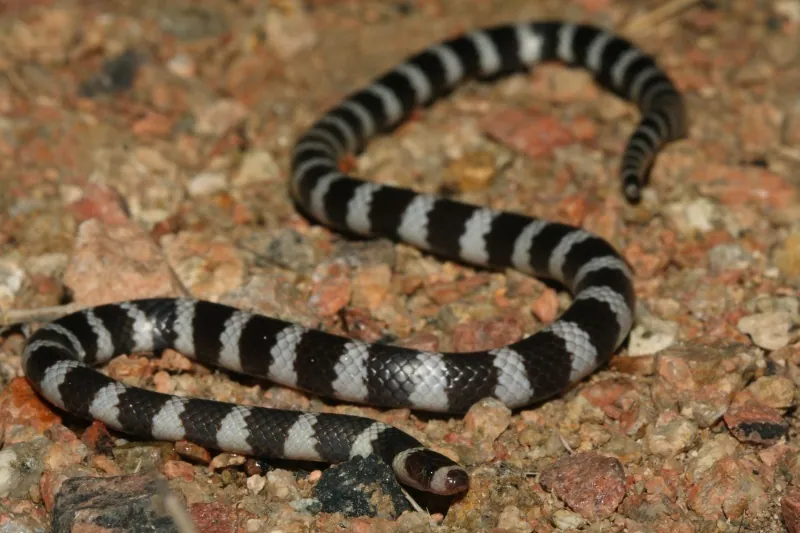
The bandy-bandy is a small, glossy snake with bold black and white rings that go all the way round its body. It lives in Australia, mostly along the east coast. It is venomous, but its venom is weak and it is generally considered harmless to people.1

 Maziviro ayo
- Smooth, glossy scales1
- Sharply contrasting black and white rings that continue right around the body1
- A short tail with a blunt tip, unlike other elapid snakes1
- Usually 50 to 60 cm long including the tail1
Inowanzovhiringidzwa ne: Other bandy-bandy species look similar and live in different regions. They are told apart by the presence of a pair of small scales on the head (internasals), the number of black bands on the body and tail, and the number of belly scales.1
Simba reuturu
Uturu hunobuda nemeno ayo painoruma.
Uturu hwayo hunoitei?
Bandy-bandy venom is weak, and its effects are mostly limited to the area around the bite. Its mouth is small and it is not aggressive, so it rarely bites people.1
Ine ngozi yakadii kuvanhu?
Ngozi kuvanhu: InorwadzaInogona kurwadza chaizvo, asi kazhinji haisi njodzi huru.The bandy-bandy is generally considered harmless to people because of its small mouth and inoffensive nature.1
 Kana ikaruma
- Kusunga nekumisa (pressure immobilisation): monera bhandeji rinotambanuka zvakasimba pamusoro peparumwa wozokwira nenhengo yose, isungirire nechitsigiso (splint), uye chengeta munhu asingafambe zvachose kusvikira rubatsiro rwasvika.
- Usageza parumwa: zvipatara zvinogona kuongorora uturu hwasara paganda kuti zvisarudze antivenom (mushonga weuturu) chaiwo.
Gara uchitanga wafonera nhamba yechimbichimbi (112, 000, 911). Iri izano rakajairika rerubatsiro rwekutanga, kwete zano rechiremba. Zvakakosha zverubatsiro rwekutanga
 Gara wakachengeteka
- Usambobata mhuka yesango, kuedza kuitora kana kuinetsa, kunyange iri diki, uye kunyange ichiita seyakarara kana yakafa.
- Ipa nzvimbo. Kana ukasangana nayo, dzikama, dzokera shure zvishoma nezvishoma uirege iende nenzira yayo.
- Kana imwe ikakuruma: dzikama, gara wakanyarara, fonera nhamba yechimbichimbi (112, 000, 911) kana kuti enda kuchipatara nokukurumidza. Rangarira kuti yaitaridzika sei, mufananidzo unobatsira.
Haisi kukutsvaga. Inoshandisa uturu hwayo kubata chikafu kana kuzvidzivirira, uye inotonyanya kuda kuhwanda. Zvimwe pamusoro pekugara wakachengeteka
Yakakura sei?
Yakareba zvakadii?
 yakareba semabhanana 3 akateedzana
 inogona kumhanya mamita 100 mumasekondi 58 (munhu anomhanyisa kupfuura vose anoda 9.6)
Bandy-bandy yakakura sei kana yaenzaniswa NEWE?
Masvomhu chete mubrowser yako. Hapana chinochengetwa kana kutumirwa kupi zvako.
Inomhanya zvakadii?


Chokwadi
Blind snakes can be bigger than the bandy-bandy that eats them. Bandy-bandies have been seen with prey sticking out of their mouths while they slowly digest it.1
Bandy-bandies can follow the chemical trail of a blind snake. In one study they followed trails for an average of 0.93 metres, and some followed a full 1.4-metre trail.1
Bandy-bandies are also called hoop snakes because of their striking rings.1
Females are much larger than males. In one study, the mean snout-vent length was 54.4 cm for females and 39.2 cm for males.1
Unlike other elapid snakes, the bandy-bandy has a blunt tail tip.1
Kune nyanzvi dzeuturu
- Zita resainzi
- Vermicella annulata
- Boka
- Nyoka dzekuAustralia
- Mhuri
- Elapidae2
- Odha
- Squamata
- Makondinendi
- Australia neOceania
- Vacheche
- Bandy-bandies lay eggs (they are oviparous), usually in late summer, February to March. A clutch averages 7.7 eggs, and up to 13 have been recorded.1
- Ngozi kuvanhu
- 2 / 5: Inorwadza3
Kwakabva chokwadi
- Bandy-bandy (Wikipedia (CC BY-SA 4.0))
- Vermicella annulata (iNaturalist): mazita nekurongwa kwemhuka.
- Venom Wiki: danho rengozi, saizi yakajairika nekufungidzira kwekumhanya ndezvedu. Ona kuti tinozviwana sei: Matinoyera ngozi.
Chokwadi chimwe nechimwe pane peji rino chine nhamba inoratidza kwachakabva. Kana takakanganisa, ruregerero, tiri vanoda mhuka, kwete magazini yesainzi. Tiudze pa[email protected] tichazvigadzirisa.
 Chinyavada chine nzara! Venom Wiki iprojekiti yemunhu mumwe: yemahara, isina kushambadza uye isina zvinokuteedzera. Chipo chidiki chinobatsira kuti irambe iri paindaneti.Fudza chinyavada
Zvimwe kubva muboka rimwe chete: Nyoka dzekuAustralia
 Coastal taipan
 Common death adder
 Eastern brown snake
 Taipan yemukati menyika
 Nyoka ine mitsetse yakaita sengwe
 Collett's snake
Inogarawo mu: Australia neOceania
 Sydney funnel-web spiderMatarantula nemafunnel-webInouraya
 Redback spiderMadandemutandeInoda chiremba
 Brown tree snakeNyoka dzine meno ekumashureInongorwadza
 Hooded pitohuiDzimwe mhuka dzine chepfuInongorwadzaUsabata
 PlatypusMhuka dzinoyamwisa dzine uturuInongorwadza
 Northern tree-dwelling funnel-web spiderMatarantula nemafunnel-webInouraya