
 Afrika
 Asia
Asia Yuropu
 Amerika yeKumaodzanyemba
 Australia neOceania
 Antarctica
 Gungwa rePacific
 Gungwa reAtlantic
 Gungwa reIndia
 Gungwa reArctic
 Gungwa reMediterranean
 Gungwa Dzvuku
 Gungwa reCaribbean
 Gungwa reCoral
 Gungwa reChina yeKumaodzanyemba
 Gungwa rePhilippines
 Gungwa reAndaman
 Gungwa reKuchamhembe
 Gungwa reTimor neArafura
 Gungwa reBengal
 Gulf yeCalifornia
Caspian cobra
 Inoruma
The Caspian cobra is a highly venomous snake that lives in Central Asia, Afghanistan, Iran and Pakistan. Many scientists consider it the most venomous cobra in the world. It is also a strong swimmer and a good climber.1



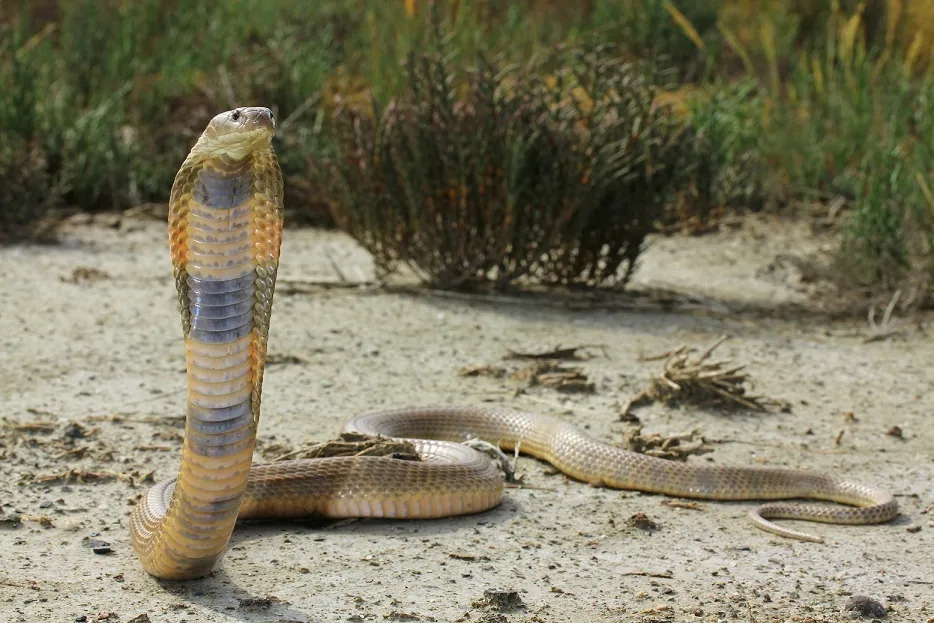
 Maziviro ayo
- Adults are light to chocolate brown or yellowish, with no hood marks and no spots on the throat.1
- Juveniles are pale and faded, with dark and light cross-bands of about equal width around the body.1
- The hood is long and tapers gradually, unlike the rounder hood of some other cobras.1
- It has several dark bands under the throat.1
- It is never fully black, although some individuals can be quite dark.1
Inowanzovhiringidzwa ne: The Caspian cobra is often confused with the Indian cobra, and the two live side by side in Pakistan and northern India. Indian cobras without a hood mark look similar. In the black form of the Indian cobra from Pakistan, almost the whole throat is black, while the Caspian cobra has several dark throat bands and is never fully black.1
Simba reuturu
Uturu hunobuda nemeno ayo painoruma.
Uturu hwayo hunoitei?
Its venom is mainly neurotoxic, meaning it attacks the nerves, and most of the venom is made of short neurotoxins. It also contains cytotoxins, which can kill cells, and enzymes called nucleases, which damage tissue at the bite. Severe pain and swelling appear quickly, and weakness, drowsiness and paralysis of the throat and limbs can appear within an hour. The venom can also affect the heart during the first few hours, and at least one heart attack after a bite has been recorded.1
Ine ngozi yakadii kuvanhu?
Ngozi kuvanhu: InourayaImwe yemhuka dzine ngozi zvikuru pasi rose.It is regarded as the most dangerous snake in Central Asia and has a high death rate. Between 1979 and 1987, 136 confirmed bites were attributed to it in the former Soviet Union. Of these, 8 people died after receiving antivenom, and 11 of the 15 who did not receive antivenom died. In Iran, it causes more deaths from snakebite than any other snake in the country. Without treatment, death can come in as little as 45 minutes or be delayed for up to 24 hours.1
 Mashoko akanaka: vanachiremba vane mushonga (antivenom) kana kurapwa kwechinhu ichi.1
Inoitei kana yatya?
It tends to avoid people, but when cornered or provoked it spreads its hood, hisses, sways from side to side and strikes repeatedly.1
 Kana ikaruma
- Medical treatment with antivenom is essential, because untreated bites are often fatal. Symptoms can worsen rapidly without treatment, so urgent medical care is needed.1
- Chengeta munhu asingafambe uye akadzikama, bvisa mhete nezvinhu zvakasunga, uende kuchipatara nokukurumidza: antivenom ndiwo mushonga wacho.
Gara uchitanga wafonera nhamba yechimbichimbi (112, 000, 911). Iri izano rakajairika rerubatsiro rwekutanga, kwete zano rechiremba. Zvakakosha zverubatsiro rwekutanga
 Gara wakachengeteka
- Usambobata mhuka yesango, kuedza kuitora kana kuinetsa, kunyange iri diki, uye kunyange ichiita seyakarara kana yakafa.
- Ipa nzvimbo. Kana ukasangana nayo, dzikama, dzokera shure zvishoma nezvishoma uirege iende nenzira yayo.
- Kana imwe ikakuruma: dzikama, gara wakanyarara, fonera nhamba yechimbichimbi (112, 000, 911) kana kuti enda kuchipatara nokukurumidza. Rangarira kuti yaitaridzika sei, mufananidzo unobatsira.
Haisi kukutsvaga. Inoshandisa uturu hwayo kubata chikafu kana kuzvidzivirira, uye inotonyanya kuda kuhwanda. Zvimwe pamusoro pekugara wakachengeteka
Yakakura sei?
Yakareba zvakadii?
 yakareba sekatsi dzepamba 3 kubva pamhuno kusvika kumuswe
 yakareba semabhanana 9 akateedzana
 inogona kumhanya mamita 100 mumasekondi 48 (munhu anomhanyisa kupfuura vose anoda 9.6)
Caspian cobra yakakura sei kana yaenzaniswa NEWE?
Masvomhu chete mubrowser yako. Hapana chinochengetwa kana kutumirwa kupi zvako.
Inomhanya zvakadii?


Chokwadi
Many toxinological studies suggest that the Caspian cobra is the most venomous cobra in the world.1
A ribonuclease called ribonuclease V1, purified from its venom, is used as a laboratory reagent in molecular biology because it can break down structured RNA.1
It cannot spit venom, but it is a good climber and an able swimmer.1
It is the westernmost species of Asiatic cobra, and it can be found at heights of up to about 3,000 m.1
For most of the twentieth century it was treated as a subspecies of the Indian cobra, until genetic analysis showed it was a separate species.1
Kuputsa ngano
Ngano: Caspian cobras are always black, like some Indian cobras.
Chokwadi: The Caspian cobra is never fully black. Adults are light to chocolate brown or yellowish, and it has several dark bands under the throat.1
Kwakabva chokwadi
- Caspian cobra (Wikipedia (CC BY-SA 4.0))
- Naja oxiana (iNaturalist): mazita nekurongwa kwemhuka.
- Venom Wiki: danho rengozi, saizi yakajairika nekufungidzira kwekumhanya ndezvedu. Ona kuti tinozviwana sei: Matinoyera ngozi.
Chokwadi chimwe nechimwe pane peji rino chine nhamba inoratidza kwachakabva. Kana takakanganisa, ruregerero, tiri vanoda mhuka, kwete magazini yesainzi. Tiudze pa[email protected] tichazvigadzirisa.
 Chinyavada chine nzara! Venom Wiki iprojekiti yemunhu mumwe: yemahara, isina kushambadza uye isina zvinokuteedzera. Chipo chidiki chinobatsira kuti irambe iri paindaneti.Fudza chinyavada
 Indian cobra
 King cobra
 Common krait
 Malayan krait
 Many-banded krait
 Monocled cobra
 Deathstalker
 Indian saw-scaled viper
 Puff adder
 Bvumbi raRussell
 Asian giant hornet
 Komodo dragon