
 Afrika
 Asia
Asia Yuropu
 Amerika yeKumaodzanyemba
 Australia neOceania
 Antarctica
 Gungwa rePacific
 Gungwa reAtlantic
 Gungwa reIndia
 Gungwa reArctic
 Gungwa reMediterranean
 Gungwa Dzvuku
 Gungwa reCaribbean
 Gungwa reCoral
 Gungwa reChina yeKumaodzanyemba
 Gungwa rePhilippines
 Gungwa reAndaman
 Gungwa reKuchamhembe
 Gungwa reTimor neArafura
 Gungwa reBengal
 Gulf yeCalifornia
Chilean six-eyed sand spider
 Inoruma
The Chilean six-eyed sand spider is a small spider that lives in the deserts of northern and central Chile. It hides under rocks and comes out at night. Its venom has effects similar to those of the Chilean recluse spider, which is why it matters to people who live nearby.1


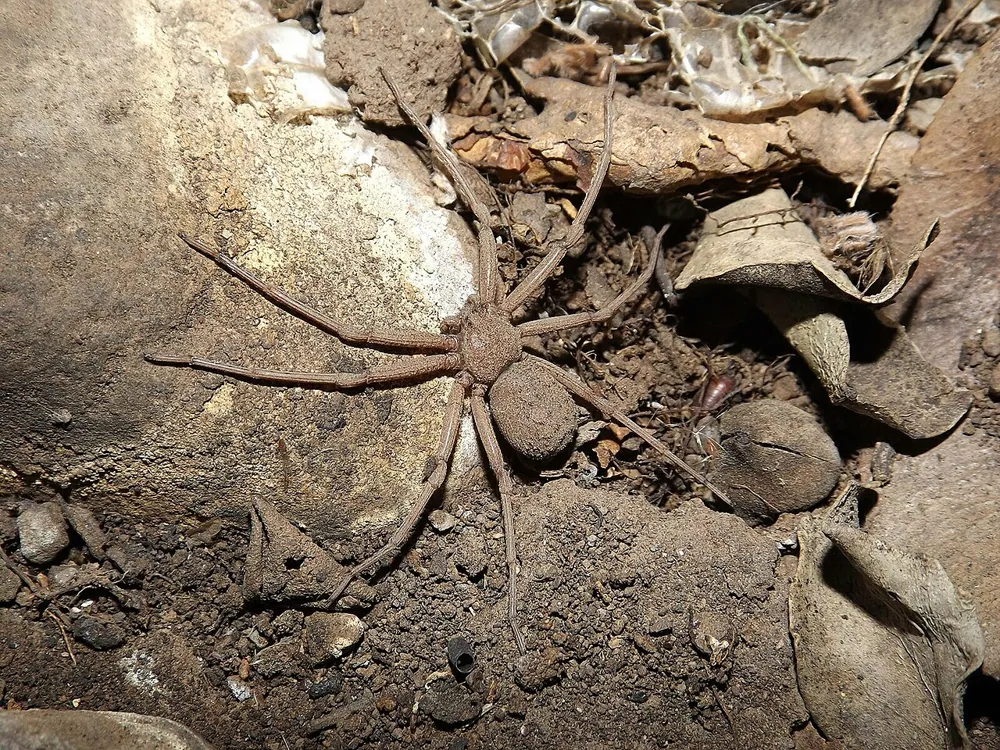
 Maziviro ayo
- Body length of 12 to 20 mm1
- Active at night, with nocturnal habits1
- Shelters under rocks on sandy ground1
- Very common in urban areas with household waste1
Inowanzovhiringidzwa ne: Older records under the name Sicarius terrosus may actually describe other species, such as Sicarius levii. Names in older books can therefore be unreliable.1
Simba reuturu
Uturu hunobuda nemeno ayo painoruma.
Uturu hwayo hunoitei?
Its venom contains an enzyme called sphingomyelinase D, which has effects similar to those of the Chilean recluse spider. In laboratory tests the venom broke down red blood cells (haemolysis) and damaged skin cells, and 50 μg was enough to cause dermonecrosis, or the death of skin tissue. The venom also broke down fibrinogen, a protein needed for blood to clot.1
Ine ngozi yakadii kuvanhu?
Ngozi kuvanhu: InorwadzaInogona kurwadza chaizvo, asi kazhinji haisi njodzi huru.Laboratory work shows that the venom can damage human tissue. Adult spiders carry up to eight times the amount of venom tested, so bites from adults could cause more serious lesions.1
 Kana ikaruma
- Geza parumwa woisa pakiti yechando kuderedza marwadzo. Wana rubatsiro rwechiremba kana marwadzo akanyanya, achipararira kana munhu asinganzwi zvakanaka.
Gara uchitanga wafonera nhamba yechimbichimbi (112, 000, 911). Iri izano rakajairika rerubatsiro rwekutanga, kwete zano rechiremba. Zvakakosha zverubatsiro rwekutanga
 Gara wakachengeteka
- Usambobata mhuka yesango, kuedza kuitora kana kuinetsa, kunyange iri diki, uye kunyange ichiita seyakarara kana yakafa.
- Ipa nzvimbo. Kana ukasangana nayo, dzikama, dzokera shure zvishoma nezvishoma uirege iende nenzira yayo.
- Kana imwe ikakuruma: dzikama, gara wakanyarara, fonera nhamba yechimbichimbi (112, 000, 911) kana kuti enda kuchipatara nokukurumidza. Rangarira kuti yaitaridzika sei, mufananidzo unobatsira.
Haisi kukutsvaga. Inoshandisa uturu hwayo kubata chikafu kana kuzvidzivirira, uye inotonyanya kuda kuhwanda. Zvimwe pamusoro pekugara wakachengeteka
Yakakura sei?
Yakareba zvakadii?
 inenge kureba sechibatanidzo chemapepa
 inogona kumhanya mamita 100 mumasekondi 330 (munhu anomhanyisa kupfuura vose anoda 9.6)
Chilean six-eyed sand spider yakakura sei kana yaenzaniswa NEWE?
Masvomhu chete mubrowser yako. Hapana chinochengetwa kana kutumirwa kupi zvako.
Inomhanya zvakadii?


Chokwadi
In 2020 a 20 mm spider was recorded preying on a 28 mm gecko, which is larger than the spider itself.1
Its venom breaks down fibrinogen, a clotting protein, faster than the venom of the Loxosceles species it was compared with.1
Scientists found that 50 μg of its venom was enough to cause dermonecrosis in laboratory tests.1
It is extremely common in Chilean cities where household waste is plentiful.1
Kuputsa ngano
Ngano: The species is known as Sicarius terrosus.
Chokwadi: The correct name is Sicarius thomisoides. The name terrosus was used for this species for a long time, but it was often used wrongly for other species too.1
Kwakabva chokwadi
- Sicarius thomisoides (Wikipedia (CC BY-SA 4.0))
- Sicarius thomisoides (iNaturalist): mazita nekurongwa kwemhuka.
- Venom Wiki: danho rengozi, saizi yakajairika nekufungidzira kwekumhanya ndezvedu. Ona kuti tinozviwana sei: Matinoyera ngozi.
Chokwadi chimwe nechimwe pane peji rino chine nhamba inoratidza kwachakabva. Kana takakanganisa, ruregerero, tiri vanoda mhuka, kwete magazini yesainzi. Tiudze pa[email protected] tichazvigadzirisa.
 Chinyavada chine nzara! Venom Wiki iprojekiti yemunhu mumwe: yemahara, isina kushambadza uye isina zvinokuteedzera. Chipo chidiki chinobatsira kuti irambe iri paindaneti.Fudza chinyavada
Zvimwe kubva muboka rimwe chete: Madandemutande
 Brazilian wandering spiderMadandemutandeInogona kuuraya
 Amazon wandering spiderMadandemutandeInogona kuuraya
 Chilean recluseMadandemutandeInoda chiremba
 Golden silk orb-weaverMadandemutandeIsina ngozi
 Keyserling's wandering spiderMadandemutandeInogona kuuraya
 Argentine black widowMadandemutandeInoda chiremba
 Golden poison frog
 Terciopelo
 Eyelash viper
 Golden lancehead
 South American bushmaster
 Cane toad