
 Afrika
 Asia
Asia Yuropu
 Amerika yeKumaodzanyemba
 Australia neOceania
 Antarctica
 Gungwa rePacific
 Gungwa reAtlantic
 Gungwa reIndia
 Gungwa reArctic
 Gungwa reMediterranean
 Gungwa Dzvuku
 Gungwa reCaribbean
 Gungwa reCoral
 Gungwa reChina yeKumaodzanyemba
 Gungwa rePhilippines
 Gungwa reAndaman
 Gungwa reKuchamhembe
 Gungwa reTimor neArafura
 Gungwa reBengal
 Gulf yeCalifornia
King brown snake
 Inoruma
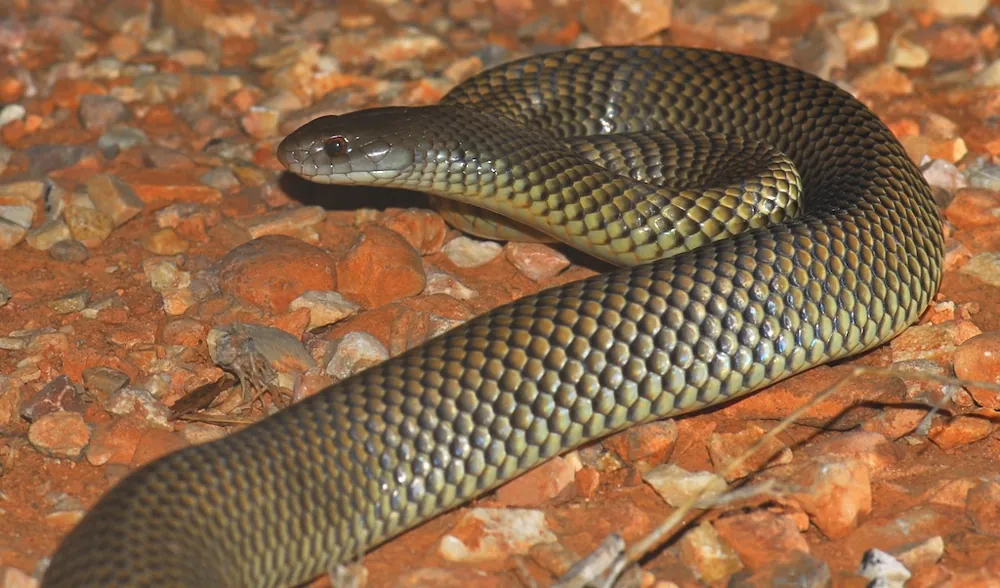
The king brown snake is a highly venomous snake and the largest land-dwelling venomous snake in Australia. It lives across northern, western and Central Australia. Its size and venom make it one of the most important snakes to recognise in the region.1



 Maziviro ayo
- A large, robust snake that can reach 2.0 to 2.5 m, with a maximum confirmed length of 3.3 m.1
- Colour varies by area: tan in the north, and darker brown to blackish in the south.1
- Scales are two-toned, giving the upper body a reticulated (net-like) pattern.1
- The belly is cream, white or salmon, and often has orange marks.1
- The head is slightly wider than the body, with small eyes that have red-brown irises and a dark tongue.1
Inowanzovhiringidzwa ne: King brown snakes can be confused with brown snakes of the genus Pseudonaja, olive pythons, water pythons, spotted mulga snakes and coastal taipans. In eastern brown snakes, the temporolabial scale and last supralabial scale (scales above the mouth) are fused. In king brown snakes, they are separate.1
Simba reuturu
Uturu hunobuda nemeno ayo painoruma.
Uturu hwayo hunoitei?
The venom is not as potent as that of Australia's other dangerous snakes, but it can cause severe effects if delivered in large enough amounts. Its main effect is on striated (skeletal) muscle, which can cause paralysis through muscle damage. It also commonly affects blood clotting (coagulopathy).1
Ine ngozi yakadii kuvanhu?
Ngozi kuvanhu: Ine ngozi zvikuruInogona kuuraya munhu asina kurapwa.Deaths from its bites have been recorded, with the most recent in 1969. Extensive pain and swelling often occur at the bite site, and necrosis (death of tissue) occurs rarely.1
 Mashoko akanaka: vanachiremba vane mushonga (antivenom) kana kurapwa kwechinhu ichi.1
 Kana ikaruma
- Victims are treated with black snake (not brown snake) antivenom.1
- Kusunga nekumisa (pressure immobilisation): monera bhandeji rinotambanuka zvakasimba pamusoro peparumwa wozokwira nenhengo yose, isungirire nechitsigiso (splint), uye chengeta munhu asingafambe zvachose kusvikira rubatsiro rwasvika.
- Usageza parumwa: zvipatara zvinogona kuongorora uturu hwasara paganda kuti zvisarudze antivenom (mushonga weuturu) chaiwo.
Gara uchitanga wafonera nhamba yechimbichimbi (112, 000, 911). Iri izano rakajairika rerubatsiro rwekutanga, kwete zano rechiremba. Zvakakosha zverubatsiro rwekutanga
 Gara wakachengeteka
- Usambobata mhuka yesango, kuedza kuitora kana kuinetsa, kunyange iri diki, uye kunyange ichiita seyakarara kana yakafa.
- Ipa nzvimbo. Kana ukasangana nayo, dzikama, dzokera shure zvishoma nezvishoma uirege iende nenzira yayo.
- Kana imwe ikakuruma: dzikama, gara wakanyarara, fonera nhamba yechimbichimbi (112, 000, 911) kana kuti enda kuchipatara nokukurumidza. Rangarira kuti yaitaridzika sei, mufananidzo unobatsira.
Haisi kukutsvaga. Inoshandisa uturu hwayo kubata chikafu kana kuzvidzivirira, uye inotonyanya kuda kuhwanda. Zvimwe pamusoro pekugara wakachengeteka
Yakakura sei?
Yakareba zvakadii?
Inorema zvakadii?
 yakareba seimbwa 3 kubva pamhuno kusvika kumuswe
 yakareba semabhanana 18 akateedzana
 inenge kurema sekatsi yepamba
 inogona kumhanya mamita 100 mumasekondi 41 (munhu anomhanyisa kupfuura vose anoda 9.6)
King brown snake yakakura sei kana yaenzaniswa NEWE?
Masvomhu chete mubrowser yako. Hapana chinochengetwa kana kutumirwa kupi zvako.
Inomhanya zvakadii?


Chokwadi
Its name causes a real problem: its venom is not neutralised by brown snake antivenom, so the name has been criticised by medical researchers.1
It is the largest terrestrial venomous snake in Australia.1
In the Kaytetye language of Central Australia, it is called atetherr-ayne-wene, meaning "budgerigar-eater".1
Despite its common name, it belongs to the black snake genus Pseudechis and is only distantly related to true brown snakes.1
Males are around 20% larger than females.1
It has been reported to live up to 25 years in captivity.1
Kuputsa ngano
Ngano: Because it is called a brown snake, brown snake antivenom will treat its bite.
Chokwadi: Its venom is not neutralised by brown snake antivenom. Victims are treated with black snake antivenom.1
Kune nyanzvi dzeuturu
- Zita resainzi
- Pseudechis australis
- Boka
- Nyoka dzekuAustralia
- Mhuri
- Elapidae2
- Odha
- Squamata
- Makondinendi
- Australia neOceania
- Vacheche
- King brown snakes lay eggs. A female produces a clutch of four to 19 eggs, usually around 10, which take 70 to 100 days to hatch.1
- Makore ekurarama
- kunenge makore 251
- Iri kurarama sei musango
- Least concern (IUCN), though its numbers may have declined with the spread of the cane toad.1
- Ngozi kuvanhu
- 4 / 5: Ine ngozi zvikuru3
Kwakabva chokwadi
- King brown snake (Wikipedia (CC BY-SA 4.0))
- Pseudechis australis (iNaturalist): mazita nekurongwa kwemhuka.
- Venom Wiki: danho rengozi, saizi yakajairika nekufungidzira kwekumhanya ndezvedu. Ona kuti tinozviwana sei: Matinoyera ngozi.
Chokwadi chimwe nechimwe pane peji rino chine nhamba inoratidza kwachakabva. Kana takakanganisa, ruregerero, tiri vanoda mhuka, kwete magazini yesainzi. Tiudze pa[email protected] tichazvigadzirisa.
 Chinyavada chine nzara! Venom Wiki iprojekiti yemunhu mumwe: yemahara, isina kushambadza uye isina zvinokuteedzera. Chipo chidiki chinobatsira kuti irambe iri paindaneti.Fudza chinyavada
Zvimwe kubva muboka rimwe chete: Nyoka dzekuAustralia
 Coastal taipan
 Common death adder
 Eastern brown snake
 Taipan yemukati menyika
 Nyoka ine mitsetse yakaita sengwe
 Collett's snake
Inogarawo mu: Australia neOceania
 Sydney funnel-web spiderMatarantula nemafunnel-webInouraya
 Redback spiderMadandemutandeInoda chiremba
 Brown tree snakeNyoka dzine meno ekumashureInongorwadza
 Hooded pitohuiDzimwe mhuka dzine chepfuInongorwadzaUsabata
 PlatypusMhuka dzinoyamwisa dzine uturuInongorwadza
 Northern tree-dwelling funnel-web spiderMatarantula nemafunnel-webInouraya