
 Afrika
 Asia
Asia Yuropu
 Amerika yeKumaodzanyemba
 Australia neOceania
 Antarctica
 Gungwa rePacific
 Gungwa reAtlantic
 Gungwa reIndia
 Gungwa reArctic
 Gungwa reMediterranean
 Gungwa Dzvuku
 Gungwa reCaribbean
 Gungwa reCoral
 Gungwa reChina yeKumaodzanyemba
 Gungwa rePhilippines
 Gungwa reAndaman
 Gungwa reKuchamhembe
 Gungwa reTimor neArafura
 Gungwa reBengal
 Gulf yeCalifornia
Prairie rattlesnake
 Inoruma
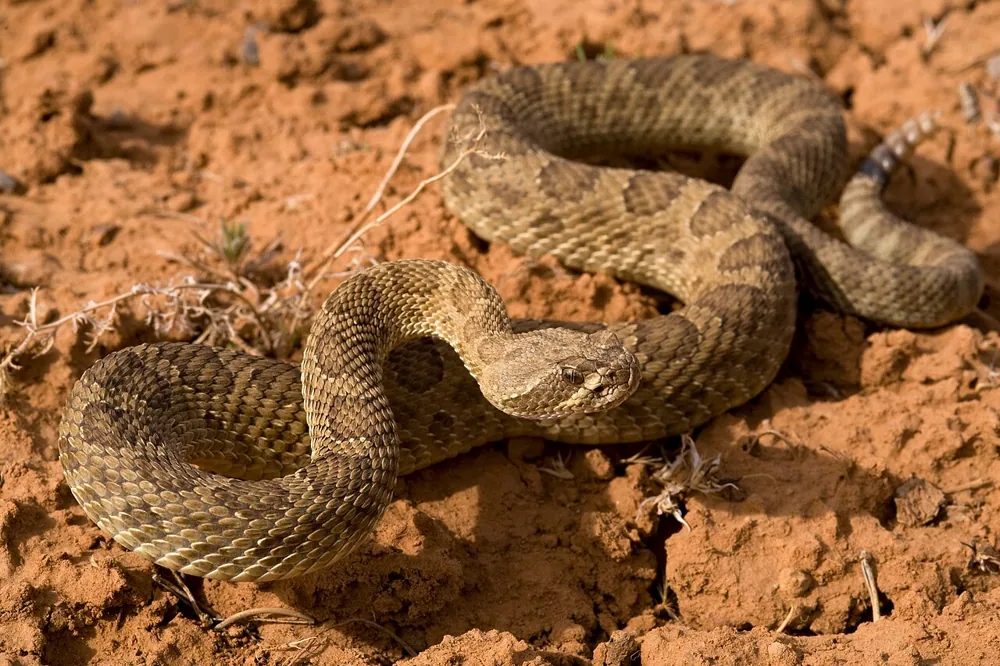
The prairie rattlesnake is a venomous pit viper that lives across the Great Plains and the foothills of the Rocky Mountains. It is found in the western United States, southwestern Canada and northern Mexico. It shakes its tail to give a rattling warning when it feels threatened.1



 Maziviro ayo
- Usually lightly coloured in shades of brown, with patches of dark brown along the back1
- A colour band may be seen at the back of the eye1
- A triangle-shaped head with pit sensory organs on either side1
- Usually four internasal scales on the snout, with three or more in total1
- Commonly grows to more than 100 cm long1
Inowanzovhiringidzwa ne: Other rattlesnakes can look similar. A key difference is that two internasal scales touch the rostral scale, at the tip of the snout, in the prairie rattlesnake.1
Simba reuturu
Uturu hunobuda nemeno ayo painoruma.
Uturu hwayo hunoitei?
The venom is a complex mixture of proteins, including enzymes such as proteases and peptidases. It is hemotoxic, meaning it damages blood and destroys tissue. It also has neurotoxic properties, meaning it attacks the nerves.1
Ine ngozi yakadii kuvanhu?
Ngozi kuvanhu: YakakombaKurumwa kunoda chiremba. Kufa hakuwanzoitiki zvachose.The species has powerful venom and uses about 20 to 55% of its venom in one bite. It will defend itself if it is threatened or injured.1
Inoitei kana yatya?
It rapidly vibrates its tail to make a rasping rattle that warns intruders, and it will defend itself if threatened or injured.1
 Kana ikaruma
- Chengeta munhu asingafambe uye akadzikama, chengeta nhengo yakarumwa yakaenzana nemwoyo, bvisa mhete nezvinhu zvakasunga, uende kuchipatara nokukurumidza.
Gara uchitanga wafonera nhamba yechimbichimbi (112, 000, 911). Iri izano rakajairika rerubatsiro rwekutanga, kwete zano rechiremba. Zvakakosha zverubatsiro rwekutanga
 Gara wakachengeteka
- Usambobata mhuka yesango, kuedza kuitora kana kuinetsa, kunyange iri diki, uye kunyange ichiita seyakarara kana yakafa.
- Ipa nzvimbo. Kana ukasangana nayo, dzikama, dzokera shure zvishoma nezvishoma uirege iende nenzira yayo.
- Kana imwe ikakuruma: dzikama, gara wakanyarara, fonera nhamba yechimbichimbi (112, 000, 911) kana kuti enda kuchipatara nokukurumidza. Rangarira kuti yaitaridzika sei, mufananidzo unobatsira.
Haisi kukutsvaga. Inoshandisa uturu hwayo kubata chikafu kana kuzvidzivirira, uye inotonyanya kuda kuhwanda. Zvimwe pamusoro pekugara wakachengeteka
Yakakura sei?
Yakareba zvakadii?
 yakareba sekatsi dzepamba 3 kubva pamhuno kusvika kumuswe
 yakareba semabhanana 8 akateedzana
 inogona kumhanya mamita 100 mumasekondi 97 (munhu anomhanyisa kupfuura vose anoda 9.6)
Prairie rattlesnake yakakura sei kana yaenzaniswa NEWE?
Masvomhu chete mubrowser yako. Hapana chinochengetwa kana kutumirwa kupi zvako.
Inomhanya zvakadii?


Chokwadi
Females often gather in communal dens to give birth and care for their young. Some females even look after unrelated young while the mothers take a break.1
Newborn snakelets measure 22 to 28 cm and are venomous from the moment they are born.1
Prairie rattlesnakes prefer a straight migration path, even in areas dominated by humans, because it gives them a better chance of survival.1
In Montana, the species reaches its largest size, with specimens sometimes exceeding 120 cm.1
In Canada, the species is listed as a species of special concern because its numbers have steadily declined since the 1930s.1
Kune nyanzvi dzeuturu
- Zita resainzi
- Crotalus viridis
- Boka
- Marattlesnake
- Mhuri
- Viperidae2
- Odha
- Squamata
- Makondinendi
- Amerika yeKuchamhembe
- Vacheche
- It gives birth to one to 25 live young per litter, typically four to 12, in late summer or early fall.1
- Iri kurarama sei musango
- Least concern on the IUCN Red List. It is listed as endangered in Iowa and as a species of special concern in Canada.1
- Ngozi kuvanhu
- 3 / 5: Yakakomba3
Kwakabva chokwadi
- Crotalus viridis (Wikipedia (CC BY-SA 4.0))
- Crotalus viridis (iNaturalist): mazita nekurongwa kwemhuka.
- Venom Wiki: danho rengozi, saizi yakajairika nekufungidzira kwekumhanya ndezvedu. Ona kuti tinozviwana sei: Matinoyera ngozi.
Chokwadi chimwe nechimwe pane peji rino chine nhamba inoratidza kwachakabva. Kana takakanganisa, ruregerero, tiri vanoda mhuka, kwete magazini yesainzi. Tiudze pa[email protected] tichazvigadzirisa.
 Chinyavada chine nzara! Venom Wiki iprojekiti yemunhu mumwe: yemahara, isina kushambadza uye isina zvinokuteedzera. Chipo chidiki chinobatsira kuti irambe iri paindaneti.Fudza chinyavada
 Eastern diamondback rattlesnake
 Timber rattlesnake
 Western diamondback rattlesnake
 Sidewinder
 Mojave rattlesnake
 Aruba rattlesnake
 Terciopelo
 Eastern coral snake
 Eyelash viper
 Arizona bark scorpion
 Brown recluse
 Cane toad
.jpg)