
 Afrig
Afrig Asi
Asi Tugal
Tugal Amerig gu Bëj-saalum
 Ostarali ak Oseyani
 Antarktig
 Mbàmbulaanu Pasifik
 Mbàmbulaanu Atlantig
 Mbàmbulaanu End
 Mbàmbulaanu Arktik
 Géeju Mediteraane
 Géej gu Xonq
 Géeju Karayib
 Géeju Koraay
 Géeju Siin gu Bëj-saalum
 Géeju Filipin
 Géeju Andaman
 Géeju Bëj-gànnaar
 Géeju Timor ak Arafura
 Golfu Bengal
 Golfu Kaliforni
Israeli mole viper
 Dafay màtt
The Israeli mole viper is a small, dark, venomous snake that lives in deserts in the Middle East. It spends most of its time underground or hidden under rocks, and it is active mainly at night. It is one of the most venomous snakes in its region, but bites to people are rare.1



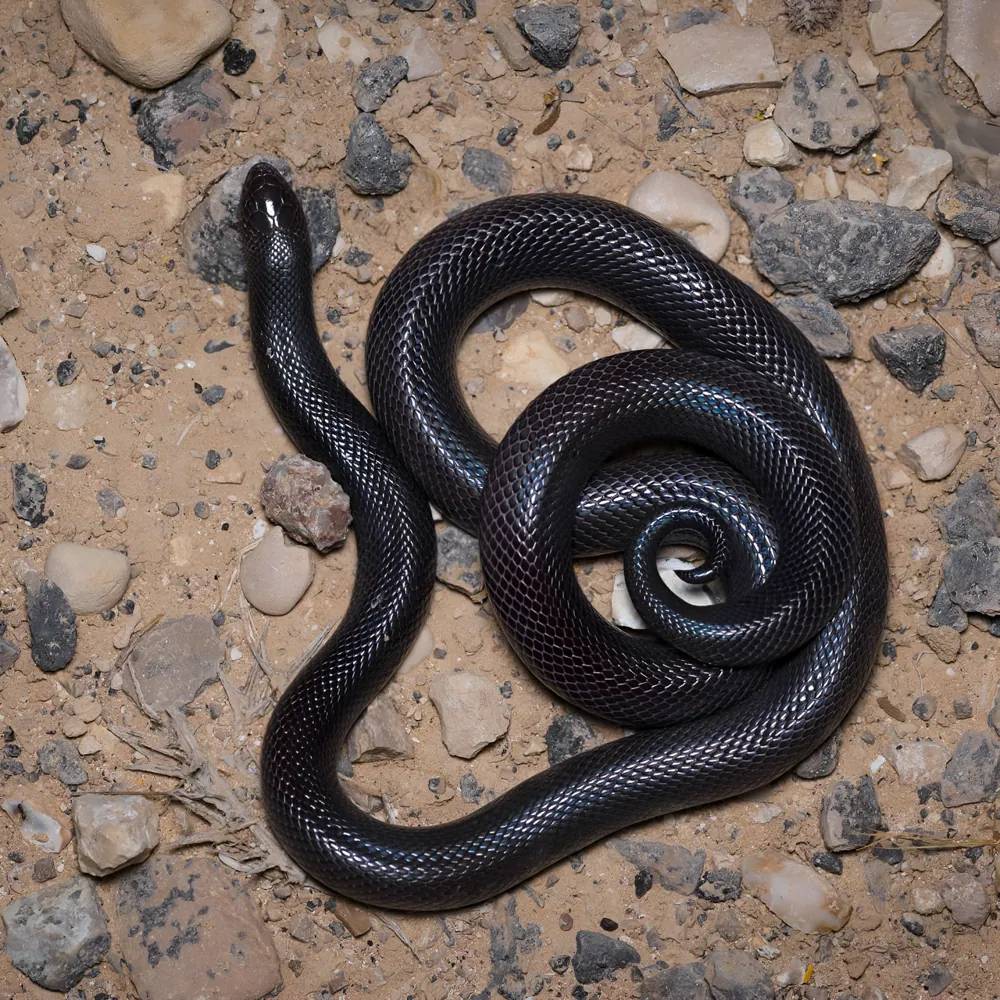
 Ni ngay ko xàmmee
Kàttanu daŋar
Daŋar bi dafay génn ci bëñam yi su màttee.
Lan la daŋar biy sóob di def?
Its venom contains three toxins called sarafotoxins, which act strongly on the heart. The venom affects the heart's electrical rhythm, causing an A-V block, which means the signal between the upper and lower chambers of the heart is interrupted. Death from very high doses is rapid and seems to result from effects on the nerves.1
Ni mu lore nit ñi?
Musiba ci nit: Am na musiba loolMën na rey nit ku ñu fajul.It is an extremely venomous snake. Bites are rare because it lives mostly in deserts and underground and is slow to react. Most people survive a bite with little or no lasting damage, even small children with proper treatment. Only 2 to 3 fatal cases have been recorded since its discovery in 1950, the most recent in 2002, when a man tried to capture a snake near his house.1
Lan lay def bu tiitee?
When threatened, it rolls up with its tail raised and its head hidden under its body.1
 Su màttee
- Raxas fa mu màtt, def ba nit ki dal te wutal ndimbal doktoor. Am na yenn xeet (ni boomslang) yu mën a rey ay waxtu ginnaaw.
Saa su nekk, woo jëkk sa nimerob urgence (112, 000, 911). Lii ay ndigal yu yaatu ci ndimbal yu jëkk la, du ndigalu doktoor. Li war a xam ci ndimbal yu jëkk
 Sàmmal sa bopp
- Bul laal mukk, bul jàpp, bul sonal ab rab bu àll, doonte bu ndaw la, te doonte dafa mel ni dafa nelaw walla dafa dee.
- May ko bérab. Su nga ko gisee, dalal, dellu ginnaaw ndànk-ndànk te bàyyi ko mu dem yoonam.
- Su benn màttee la: dalal, bul yëngu, woo sa nimerob urgence (112, 000, 911) walla dem lopitaan ci gaaw. Bul fàtte ni mu meloon, ab nataal dina dimbali.
Du la wut. Dafay jëfandikoo daŋaram ngir jàpp lu muy lekk walla ngir aar boppam, te nëbbu moo ko gën a neex. Yeneen ci ni ngay sàmme sa bopp
Ni mu réye?
Ni mu guddoo?
 guddu na ni 1,5 muusu kër, bakkan ba geen
 guddu na ni 4 banaana yu ñu toftale
 mën na daw 100 meetar ci 75 segond (nit ki gën a gaaw soxla na 9,6)
Israeli mole viper ni mu réye ci wetu YOW?
Ay waññ rekk ci sa navigateur. Dara du denc te dara du yónnee fenn.
Ni mu gaawe?


Xibaar
Its fangs can be turned to point outside its mouth, so it can stab sideways even with its mouth closed.1
Capturing this snake is dangerous, because it can bite sideways even when held by the head. Zoologist Heinrich Mendelssohn was bitten this way when he first captured one in 1944.1
There is currently no antivenom available for this snake.1
Its eggs are large compared with its body size and with snakes in general.1
It mates in July and August, which is late compared with other snakes and may point to a tropical origin.1
It is relatively non-aggressive and slow to react, even when disturbed.1
Ngir boroom xam-xam ci daŋar
- Turu xam-xam
- Atractaspis engaddensis
- Mbooloo
- Jaan yu am bëñ ci ginnaaw gémmiñ
- Njaboot
- Atractaspididae2
- Toftal
- Squamata
- Kontinaa yi
- Asi
- Liir yi
- Between the end of September and November, the female lays 2 to 3 large, elongated eggs, about 7.5 cm long, in humid conditions. The young hatch after about 3 months already equipped with venom.1
- Musiba ci nit
- 4 / 5: Am na musiba lool3
Fa xibaar yi jóge
- Atractaspis engaddensis (Wikipedia (CC BY-SA 4.0))
- Atractaspis engaddensis (iNaturalist): tur ak ni ñu leen séddale.
- Venom Wiki: tolluwaayu musiba bi, réyaay bu yem bi ak xalaatu gaawaay bi, nun ñoo leen defar. Seetal ni nu leen waññe: Ni nuy natte musiba.
Xibaar bu nekk ci xët wii am na ab nimero buy won fa mu jóge. Su nu juumee, baal nu, nun ay nit ñu bëgg rab lanu, du ab jurnaalu xam-xam. Wax nu ko ci [email protected] te dinanu ko jubbanti.
 Jiit bi dafa xiif! Venom Wiki ab liggéeyu kenn la: amul pay, amul piblisite te amul traceur. Ab may bu tuuti dafay dimbali ngir mu des ci internet.Leel jiit bi
Yeneen ci mbooloo mi: Jaan yu am bëñ ci ginnaaw gémmiñ
 Brown tree snakeJaan yu am bëñ ci ginnaaw gémmiñDafay metti rekk
 Tiger keelbackJaan yu am bëñ ci ginnaaw gémmiñMën na rey
 Red-necked keelbackJaan yu am bëñ ci ginnaaw gémmiñSoxla na doktoor
 Green cat snakeJaan yu am bëñ ci ginnaaw gémmiñDafay metti rekk
 Mangrove snakeJaan yu am bëñ ci ginnaaw gémmiñDafay metti rekk
 Asian vine snakeJaan yu am bëñ ci ginnaaw gémmiñAmul lor
 Deathstalker
 Indian cobra
 Indian saw-scaled viper
 King cobra
 Jaan wu ñuul wi (Bitis arietans)
 Jaan wu Russell
.png)