
 Afrig
Afrig Asi
Asi Tugal
Tugal Amerig gu Bëj-saalum
 Ostarali ak Oseyani
 Antarktig
 Mbàmbulaanu Pasifik
 Mbàmbulaanu Atlantig
 Mbàmbulaanu End
 Mbàmbulaanu Arktik
 Géeju Mediteraane
 Géej gu Xonq
 Géeju Karayib
 Géeju Koraay
 Géeju Siin gu Bëj-saalum
 Géeju Filipin
 Géeju Andaman
 Géeju Bëj-gànnaar
 Géeju Timor ak Arafura
 Golfu Bengal
 Golfu Kaliforni
Tropical carpenter bee
 Dafay jam
The broad-handed carpenter bee is a very large, solitary bee that lives across much of Southeast Asia. It digs its nests into wood, often in rafters, fallen trees and telephone poles. It is one of the largest bees in the world, and it is known for its loud, low buzz.1
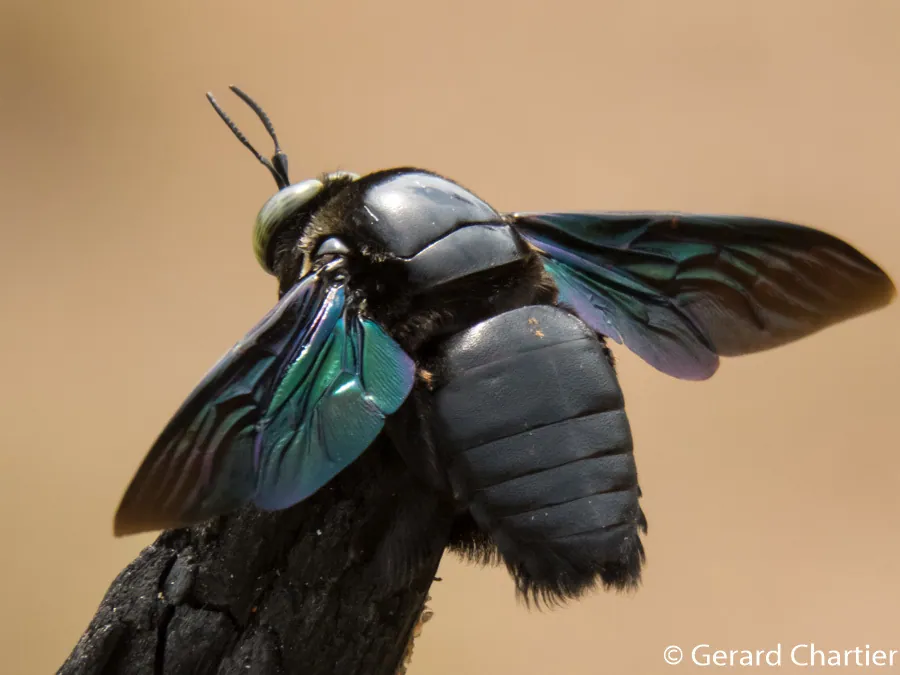
 Ni ngay ko xàmmee
Kàttanu daŋar
Daŋar bi dafay génn ci ab dag buy jam.
Ni mu lore nit ñi?
Musiba ci nit: WoyofNi jamu yamb walla lu ko yées. Lu jege, amul lor ci nit. Su jamee
- Xuufal dagu yamb bi ba mu génn, te sedal fa mu jam.
- Su nit ki am jafe-jafe ci noyyi, kanamam walla putam funki, walla mu bëgg a xëm, allergie bu metti la (urgence): woo sa nimerob urgence te jëfandikoo stylo adrénaline bi mu am, su am.
Saa su nekk, woo jëkk sa nimerob urgence (112, 000, 911). Lii ay ndigal yu yaatu ci ndimbal yu jëkk la, du ndigalu doktoor. Li war a xam ci ndimbal yu jëkk
 Sàmmal sa bopp
- Bul laal mukk, bul jàpp, bul sonal ab rab bu àll, doonte bu ndaw la, te doonte dafa mel ni dafa nelaw walla dafa dee.
- May ko bérab. Su nga ko gisee, dalal, dellu ginnaaw ndànk-ndànk te bàyyi ko mu dem yoonam.
- Su benn jamee la: dalal, bul yëngu, woo sa nimerob urgence (112, 000, 911) walla dem lopitaan ci gaaw. Bul fàtte ni mu meloon, ab nataal dina dimbali.
Du la wut. Dafay jëfandikoo daŋaram ngir jàpp lu muy lekk walla ngir aar boppam, te nëbbu moo ko gën a neex. Yeneen ci ni ngay sàmme sa bopp
Ni mu réye?
Ni mu guddoo?
 guddu na lu tollu ci trombone
 mën na naaw ci benn terrain bu futbal bu mat ci 10 segond
Tropical carpenter bee ni mu réye ci wetu YOW?
Ay waññ rekk ci sa navigateur. Dara du denc te dara du yónnee fenn.
Ni mu gaawe?


Xibaar
Males mate in mid-air. They grasp the female in flight and place their front or middle legs, which have long fringes of hairs, over her compound eyes.1
It is among the largest carpenter bees and among the largest bees in the world, but it is not the largest. That title belongs to another Southeast Asian bee, the Indonesian Megachile pluto.1
Carpenter bees are used commercially in the Philippines to pollinate passion-fruit flowers, and the flowers have been found to bloom in step with the bees' foraging times.1
In urban areas, it can become attached to certain perches and return to them day after day, even after several generations.1
It can have more than two generations a year, though this depends on how many flowers are available in its habitat.1
Tasukatu léeb
Xalaat bu juum: It is the world's largest bee.
Dëgg: It is among the largest bees in the world, but the Indonesian Megachile pluto is larger.1
Fa xibaar yi jóge
- Xylocopa latipes (Wikipedia (CC BY-SA 4.0))
- Xylocopa latipes (iNaturalist): tur ak ni ñu leen séddale.
- Venom Wiki: tolluwaayu musiba bi, réyaay bu yem bi ak xalaatu gaawaay bi, nun ñoo leen defar. Seetal ni nu leen waññe: Ni nuy natte musiba.
Xibaar bu nekk ci xët wii am na ab nimero buy won fa mu jóge. Su nu juumee, baal nu, nun ay nit ñu bëgg rab lanu, du ab jurnaalu xam-xam. Wax nu ko ci [email protected] te dinanu ko jubbanti.
 Jiit bi dafa xiif! Venom Wiki ab liggéeyu kenn la: amul pay, amul piblisite te amul traceur. Ab may bu tuuti dafay dimbali ngir mu des ci internet.Leel jiit bi
Yeneen ci mbooloo mi: Yamb, guêpe ak frelon
 Asian giant hornetYamb, guêpe ak frelonMën na rey
 Common waspYamb, guêpe ak frelonDafay metti rekk
 European hornetYamb, guêpe ak frelonDafay metti rekk
 Western honey beeYamb, guêpe ak frelonDafay metti rekk
 Giant honey beeYamb, guêpe ak frelonSoxla na doktoor
 Asian hornetYamb, guêpe ak frelonDafay metti rekk
 Deathstalker
 Indian cobra
 Indian saw-scaled viper
 King cobra
 Jaan wu ñuul wi (Bitis arietans)
 Jaan wu Russell