
 IAfrika
 IAsiya
 IYurophu
 uMzantsi Melika
 IOstreliya neOceania
 IAntarctica
 uLwandlekazi lwePasifiki
 uLwandlekazi lweAtlantiki
 uLwandlekazi lwaseIndiya
 uLwandlekazi lweArctic
 uLwandle lweMeditera
 uLwandle oluBomvu
 uLwandle lweKharibhiya
 uLwandle lweCoral
 uLwandle lwaseMzantsi China
 uLwandle lwePhilippines
 uLwandle lweAndaman
 uLwandle lwaseMntla (North Sea)
 uLwandle lweTimor ne-Arafura
 iBhayi yaseBengal
 iGulf yaseCalifornia
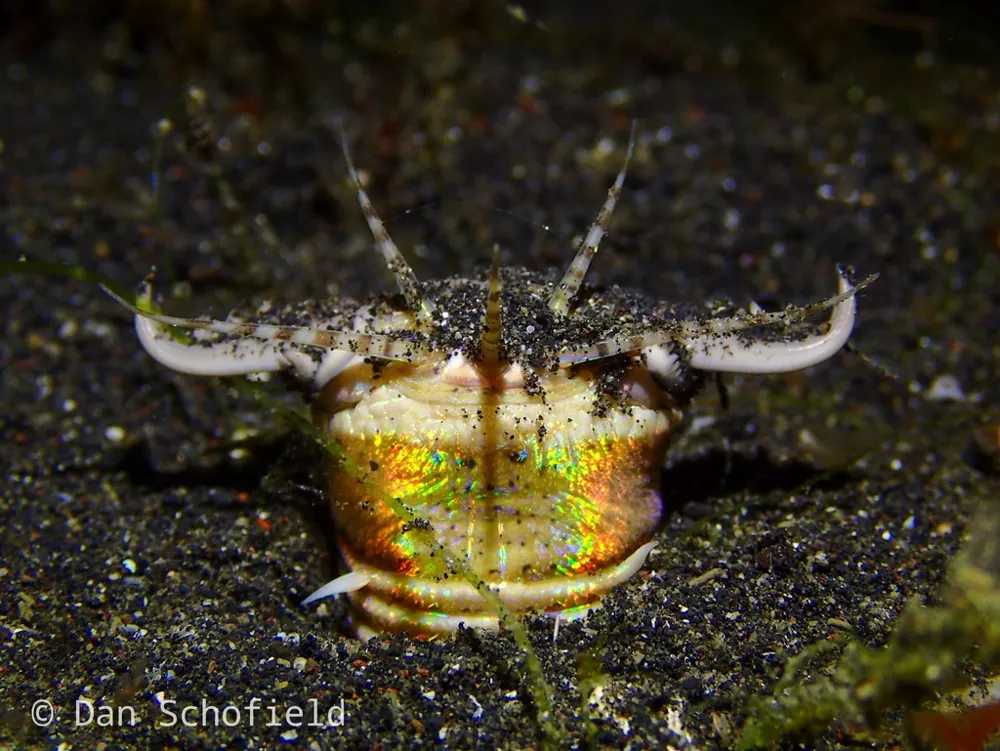
Bobbit worm
 Ukuluma
The bobbit worm is a long, slim sea worm that hides in the sand or mud on the ocean floor. It waits with its whole body buried, then strikes passing fish and other prey with sharp jaws. It lives in warm seas, mainly in the Atlantic and the Indo-Pacific, and can grow to nearly 3 metres long.1


 Indlela yokusiqaphela
Amandla etyhefu yokuluma nokuhlaba
Ityhefu iphuma ngamazinyo aso etyhefu okanye ngamazinyo aso xa siluma.
Siyingozi kangakanani ebantwini?
Ingozi ebantwini: KubuhlunguKunokuba buhlungu ngokwenene, kodwa phantse akusoze kube kubi kakhulu. Ukuba siyaluma
- Faka inxeba emanzini ashushu, ashushu kangangoko umntu angakwazi ukunyamezela ngaphandle kokutshiswa, kwaye ufumane uncedo lwezonyango ukuze kususwe amava. Musa ukuwemba ngokwakho.
Soloko utsalela inombolo kaxakeka kuqala (112, 000, 911). Esi sisikhokelo soncedo lokuqala ngokubanzi, asilocebiso lwezonyango. Iziseko zoncedo lokuqala
 Hlala ukhuselekile
- Ungaze uchukumise, ubambe okanye uqhule isilwanyana sasendle, nokuba sincinci, kwaye nokuba sibonakala silele okanye sifile.
- Sinike indawo. Ukuba udibana naso, hlala uzolile, buyela umva kancinci kwaye usiyeke sihambe ngendlela yaso.
- Ukuba siyakuluma: hlala uzolile, musa ukushukuma, tsalela inombolo kaxakeka (112, 000, 911) okanye uye esibhedlele ngokukhawuleza. Khumbula ukuba sasikhangeleka njani, ifoto iyanceda.
Asikuzingeli. Sisebenzisa ityhefu yaso ukubamba ukutya okanye ukuzikhusela, kwaye singakhetha ukuzimela. Okungakumbi malunga nokuhlala ukhuselekile
Phi emhlabeni?
Sikhulu kangakanani?
Side kangakanani?
 ubude obulingana nezinja eziyi-3 ukusuka empumlweni ukuya emsileni
 ubude obulingana neebhanana eziyi-17 zilandelelana
U-Bobbit worm mkhulu kangakanani xa uthelekisa NAWE?
Zizibalo nje kwibhrawuza yakho. Akukho nto igcinwayo okanye ithunyelwa naphi na.
Sikhawuleza kangakanani?


Iinyaniso
It is the longest known member of the polychaete class of bristle worms, with the largest specimen on record reaching 299 cm.1
Some fish mob the worm by directing jets of water into its burrow to disorient it.1
It hunts by burrowing its whole body into soft sediment and waiting until its antennae detect prey.1
Fossil burrows from Miocene rocks in northeastern Taiwan, about 20 million years old, have been linked to this species.1
Despite its length, its body is only about 25.5 mm wide.1
Umqhekezi weentsomi
Intsomi: The worm can reproduce by splitting into several pieces.
Inyaniso: There is no scientific evidence that it reproduces this way. Reports of this appear to come from misreading movement in dead or injured worms. It can regenerate its rear segments, but it reproduces sexually.1
Kwiingcali zetyhefu
- Igama lenzululwazi
- Eunice aphroditois
- Iqela
- Ii-sea urchin, iinkwenkwezi zolwandle neentshulube
- Usapho
- Eunicidae2
- Ucwangco
- Eunicida
- Amazwekazi
- uLwandlekazi lwePasifiki, uLwandlekazi lwaseIndiya, uLwandlekazi lweAtlantiki, uLwandle oluBomvu, uLwandle lweMeditera, uLwandle lweKharibhiya, uLwandle lweTimor ne-Arafura, Iilwandlekazi
- Iintsana
- It releases sperm and eggs into the water, where fertilisation happens outside the body, and the young drift as larvae before settling and growing into juvenile worms.1
- Ingozi ebantwini
- 2 / 5: Kubuhlungu3
Apho iinyaniso zivela khona
- Eunice aphroditois (Wikipedia (CC BY-SA 4.0))
- Eunice aphroditois (iNaturalist): amagama nokuhlelwa.
- Venom Wiki: inqanaba lengozi, ubungakanani obuqhelekileyo noqikelelo lwesantya zezethu. Bona indlela esizifumana ngayo: Indlela esilinganisa ngayo ingozi.
Inyaniso nganye kweli phepha inenombolo ebonisa umthombo wayo. Ukuba senze impazamo, uxolo, sithanda izilwanyana, asiyomagazini yenzululwazi. Sixelele ku-[email protected] kwaye siza kuyilungisa.
 Unomadudwane ulambile! I-Venom Wiki yiprojekthi yomntu omnye: isimahla, ayinazibhengezo kwaye ayinazilandeli. Isipho esincinci sinceda ukuyigcina ikwi-intanethi.Yondla unomadudwane
Okungakumbi kwiqela elinye: Ii-sea urchin, iinkwenkwezi zolwandle neentshulube
 Crown-of-thorns starfishIi-sea urchin, iinkwenkwezi zolwandle neentshulubeKufuna ugqirhaMusa ukuchukumisa
 Flower urchinIi-sea urchin, iinkwenkwezi zolwandle neentshulubeSinokubulala
 Fire urchinIi-sea urchin, iinkwenkwezi zolwandle neentshulubeKufuna ugqirhaMusa ukuchukumisa
 Bearded firewormIi-sea urchin, iinkwenkwezi zolwandle neentshulubeKubuhlungu njeMusa ukuchukumisa
 Black long-spined urchinIi-sea urchin, iinkwenkwezi zolwandle neentshulubeKubuhlungu njeMusa ukuchukumisa
 BloodwormIi-sea urchin, iinkwenkwezi zolwandle neentshulubeKubuhlungu nje
Sikwahlala: uLwandlekazi lwePasifiki
 Australian box jellyfishIijelifishi nezinye izilwanyana zaselwandle ezihlabayoSiyabulalaMusa ukuchukumisa
 Geography coneIinkumba ze-cone neengwaneSiyabulala
 Greater blue-ringed octopusIinkumba ze-cone neengwaneSiyabulala
 Japanese pufferfishEzinye izilwanyana ezityhefayoSiyabulala
 Southern blue-ringed octopusIinkumba ze-cone neengwaneSiyabulala
 Hawksbill sea turtleEzinye izilwanyana ezityhefayoSinokubulala