
 IAfrika
 IAsiya
 IYurophu
 uMzantsi Melika
 IOstreliya neOceania
 IAntarctica
 uLwandlekazi lwePasifiki
 uLwandlekazi lweAtlantiki
 uLwandlekazi lwaseIndiya
 uLwandlekazi lweArctic
 uLwandle lweMeditera
 uLwandle oluBomvu
 uLwandle lweKharibhiya
 uLwandle lweCoral
 uLwandle lwaseMzantsi China
 uLwandle lwePhilippines
 uLwandle lweAndaman
 uLwandle lwaseMntla (North Sea)
 uLwandle lweTimor ne-Arafura
 iBhayi yaseBengal
 iGulf yaseCalifornia
Coastal taipan
 Ukuluma
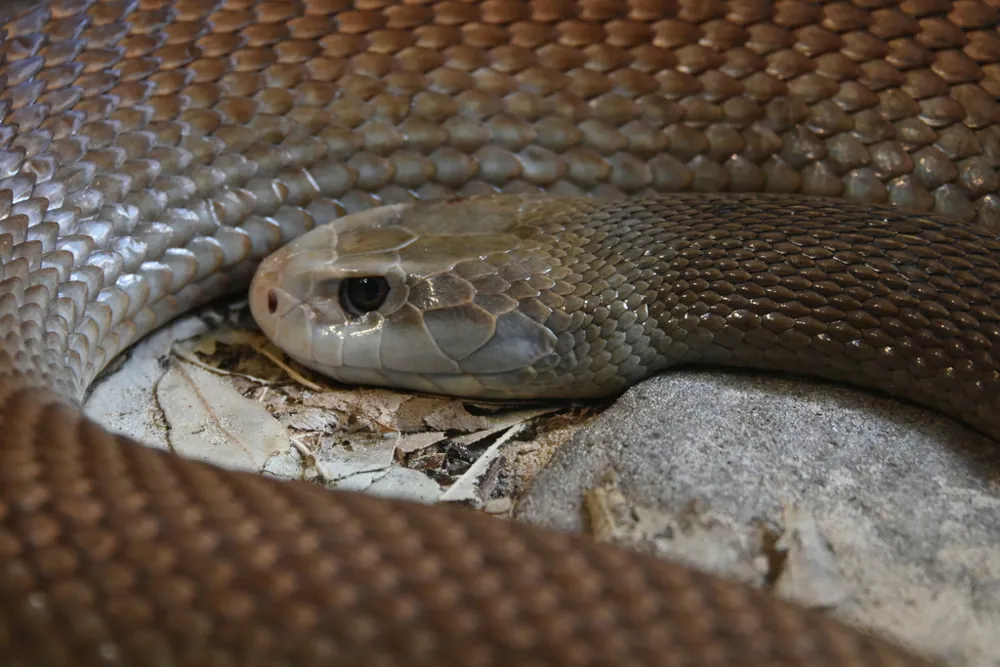
The coastal taipan is one of the most feared snakes in Australia. It is a large, fast snake with a powerful venom, and it lives along the coasts of northern and eastern Australia and on the island of New Guinea. It is one of the reasons snake bite safety matters so much in these areas.1



 Indlela yokusiqaphela
- Light olive or reddish-brown upperparts, sometimes dark grey to black1
- Paler sides and a creamy-white to pale yellow belly, often marked with orange or pink flecks1
- Long, narrow head with an angular brow and a lighter-coloured face1
- Large, round, light brown or hazel eyes with large pupils1
- Typically about 2.0 m long as an adult, with a slender body1
Sidla ngokubhidaniswa no: It is often confused with the eastern brown snake, northern brown snake and king brown snake. The coastal taipan has a larger head and a narrow neck, and a lighter face and snout. In the other species, the head and neck are the same width.1
Amandla etyhefu yokuluma nokuhlaba
Ityhefu iphuma ngamazinyo aso etyhefu okanye ngamazinyo aso xa siluma.
Ityhefu yaso yokuluma okanye yokuhlaba yenza ntoni?
Its venom is mainly neurotoxic, which means it attacks the nerves, and it is also coagulopathic, which means it disturbs blood clotting. In a recorded bite case, the victim became unwell within 15 to 30 minutes, with drooping eyelids, nausea and difficulty breathing. Some victims have also lost their sense of smell for a time.1
Siyingozi kangakanani ebantwini?
Ingozi ebantwini: SiyabulalaEsinye sezona zilwanyana ziyingozi emhlabeni.It is considered one of the most dangerous snakes in the region and is classified by the World Health Organization as a snake of medical importance. Several deaths were recorded from its bites in the 1930s and 1940s, and more were added later as historical cases.1
 Iindaba ezimnandi: oogqirha banamayeza (i-antivenom) okanye unyango lwale nto.1
Senza ntoni xa soyika?
It tends to avoid confrontation but becomes highly defensive if provoked.1
 Ukuba siyaluma
- Any suspected bite needs urgent medical care. In one recorded case, the bitten man was taken to hospital, where he was given fluids and tiger snake antivenom, and he recovered after 19 days in hospital.1
- Ukubopha ngoxinzelelo nokunqanda ukushukuma (pressure immobilisation): songa ibhandeji eqinileyo enwebekayo phezu kwendawo elunyiweyo uze unyuke ngelungu lonke, uliqinise ngesiplinti, kwaye ugcine umntu engashukumi kwaphela de kufike uncedo.
- Musa ukuhlamba indawo elunyiweyo: izibhedlele zinokuvavanya ityhefu eseleyo esikhumbeni ukuze zikhethe i-antivenom echanekileyo.
Soloko utsalela inombolo kaxakeka kuqala (112, 000, 911). Esi sisikhokelo soncedo lokuqala ngokubanzi, asilocebiso lwezonyango. Iziseko zoncedo lokuqala
 Hlala ukhuselekile
- Ungaze uchukumise, ubambe okanye uqhule isilwanyana sasendle, nokuba sincinci, kwaye nokuba sibonakala silele okanye sifile.
- Sinike indawo. Ukuba udibana naso, hlala uzolile, buyela umva kancinci kwaye usiyeke sihambe ngendlela yaso.
- Ukuba siyakuluma: hlala uzolile, musa ukushukuma, tsalela inombolo kaxakeka (112, 000, 911) okanye uye esibhedlele ngokukhawuleza. Khumbula ukuba sasikhangeleka njani, ifoto iyanceda.
Asikuzingeli. Sisebenzisa ityhefu yaso ukubamba ukutya okanye ukuzikhusela, kwaye singakhetha ukuzimela. Okungakumbi malunga nokuhlala ukhuselekile
Sikhulu kangakanani?
Side kangakanani?
Sinzima kangakanani?
 ubude obulingana nezinja eziyi-3 ukusuka empumlweni ukuya emsileni
 ubude obulingana neebhanana eziyi-16 zilandelelana
 malunga nobunzima bekati yasekhaya
 singagqiba iimitha ezili-100 ngemizuzwana eyi-41 (owona mntu ukhawulezayo udinga i-9,6)
U-Coastal taipan mkhulu kangakanani xa uthelekisa NAWE?
Zizibalo nje kwibhrawuza yakho. Akukho nto igcinwayo okanye ithunyelwa naphi na.
Sikhawuleza kangakanani?


Iinyaniso
The longest recorded coastal taipan was 2.9 m long and weighed 6.5 kg, and larger specimens of up to 3.3 m are widely believed to exist.1
Its hunting method, freezing, striking and releasing prey, is similar to that of the African black mamba.1
It is the second-longest venomous snake in Australia, after the king brown snake.1
Newly hatched young grow quickly, reaching about 1.0 m in their first year.1
It may have become more common since cane toads were introduced to Australia in 1935.1
Umqhekezi weentsomi
Intsomi: The snake hides in trees and drops onto people, and it chases people for hours.
Inyaniso: Stories of it hiding in trees and dropping on victims were spread in newspapers and books, but snake handlers say it is shy and avoids confrontation. It only becomes highly defensive when provoked.1
Kwiingcali zetyhefu
- Igama lenzululwazi
- Oxyuranus scutellatus
- Iqela
- Iinyoka zaseOstreliya
- Usapho
- Elapidae2
- Ucwangco
- Squamata
- Amazwekazi
- IOstreliya neOceania
- Iintsana
- It lays a clutch of 7 to 20 eggs. The eggs take 60 to 80 days to hatch, and the young are 30 to 34 cm long.1
- Imeko yaso endle
- Least Concern (IUCN)1
- Ingozi ebantwini
- 5 / 5: Siyabulala3
Apho iinyaniso zivela khona
- Coastal taipan (Wikipedia (CC BY-SA 4.0))
- Oxyuranus scutellatus (iNaturalist): amagama nokuhlelwa.
- Venom Wiki: inqanaba lengozi, ubungakanani obuqhelekileyo noqikelelo lwesantya zezethu. Bona indlela esizifumana ngayo: Indlela esilinganisa ngayo ingozi.
Inyaniso nganye kweli phepha inenombolo ebonisa umthombo wayo. Ukuba senze impazamo, uxolo, sithanda izilwanyana, asiyomagazini yenzululwazi. Sixelele ku-[email protected] kwaye siza kuyilungisa.
 Unomadudwane ulambile! I-Venom Wiki yiprojekthi yomntu omnye: isimahla, ayinazibhengezo kwaye ayinazilandeli. Isipho esincinci sinceda ukuyigcina ikwi-intanethi.Yondla unomadudwane
Okungakumbi kwiqela elinye: Iinyoka zaseOstreliya
 Common death adderIinyoka zaseOstreliyaSiyabulala
 Eastern brown snakeIinyoka zaseOstreliyaSiyabulala
 Inyoka ityhefu yaseOstreliya (Inland taipan)Iinyoka zaseOstreliyaSiyabulala
 Inyoka yengweIinyoka zaseOstreliyaSiyabulala
 Collett's snakeIinyoka zaseOstreliyaSinokubulala
 Desert death adderIinyoka zaseOstreliyaSinokubulala
Sikwahlala: IOstreliya neOceania
 Sydney funnel-web spiderIi-tarantula nee-funnel-webSiyabulala
 Redback spiderIzigcawuKufuna ugqirha
 Brown tree snakeIinyoka ezinamazinyo etyhefu ngasemvaKubuhlungu nje
 Hooded pitohuiEzinye izilwanyana ezityhefayoKubuhlungu njeMusa ukuchukumisa
 PlatypusIzilwanyana ezincancisayo ezinetyhefuKubuhlungu nje
 Northern tree-dwelling funnel-web spiderIi-tarantula nee-funnel-webSiyabulala