
 IAfrika
 IAsiya
 IYurophu
 uMzantsi Melika
 IOstreliya neOceania
 IAntarctica
 uLwandlekazi lwePasifiki
 uLwandlekazi lweAtlantiki
 uLwandlekazi lwaseIndiya
 uLwandlekazi lweArctic
 uLwandle lweMeditera
 uLwandle oluBomvu
 uLwandle lweKharibhiya
 uLwandle lweCoral
 uLwandle lwaseMzantsi China
 uLwandle lwePhilippines
 uLwandle lweAndaman
 uLwandle lwaseMntla (North Sea)
 uLwandle lweTimor ne-Arafura
 iBhayi yaseBengal
 iGulf yaseCalifornia
Giant Pacific octopus
 Ukuluma
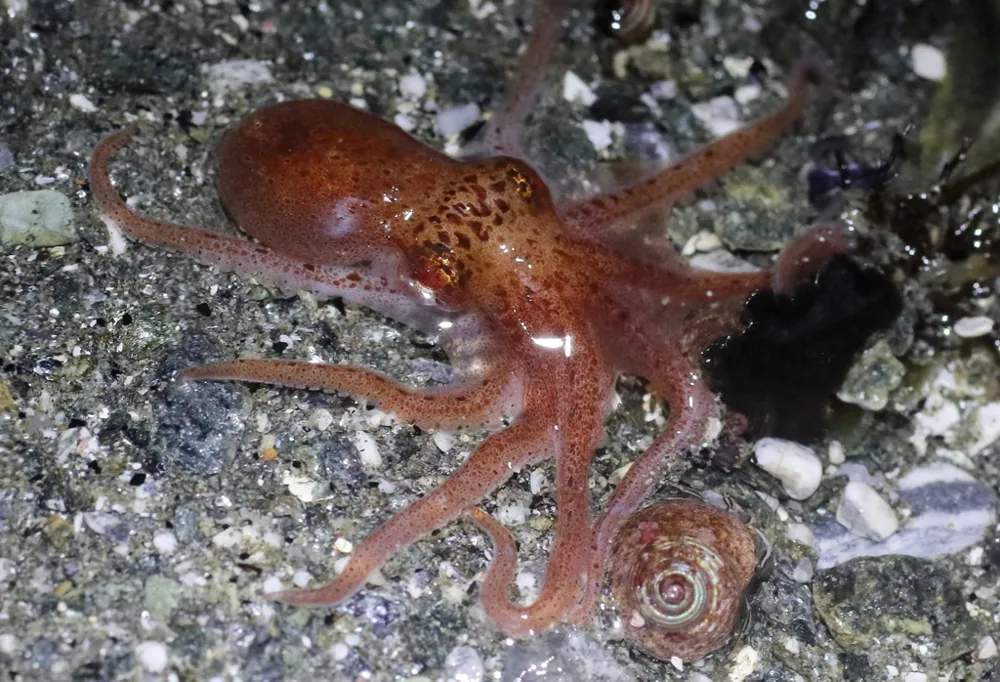
The giant Pacific octopus is the largest octopus species on Earth. It lives along the coasts of the North Pacific, from Baja California up to Alaska and across to Japan and Korea. It plays an important part in the health of deep sea ecosystems.1



 Indlela yokusiqaphela
- It is the largest octopus species, with adults usually weighing around 15 kg.1
- Its arm span can reach up to 4.3 m.1
- Its largest suckers are about 6.4 cm across.1
- It is well camouflaged and often hides in kelp or its den.1
- Piles of shells and bones outside a den, called den litter, can show that one is nearby.1
Amandla etyhefu yokuluma nokuhlaba
Ityhefu iphuma ngamazinyo aso etyhefu okanye ngamazinyo aso xa siluma.
Siyingozi kangakanani ebantwini?
Ingozi ebantwini: KuthambileNjengokuhlatywa yinyosi okanye ngaphantsi. Phantse asinangozi ebantwini. Ukuba siyaluma
- Ukubopha ngoxinzelelo nokunqanda ukushukuma (pressure immobilisation): songa ibhandeji eqinileyo enwebekayo phezu kwendawo elunyiweyo uze unyuke ngelungu lonke, uliqinise ngesiplinti, kwaye ugcine umntu engashukumi kwaphela de kufike uncedo.
- Ingwane enamakhonkco aluhlaza okwesibhakabhaka okanye inkumba ye-cone inokwenza umntu ayeke ukuphefumla esaphaphile: biza uncedo kwaye ulungele ukumphefumlela (rescue breaths) de i-ambulensi ithathe izintambo.
Soloko utsalela inombolo kaxakeka kuqala (112, 000, 911). Esi sisikhokelo soncedo lokuqala ngokubanzi, asilocebiso lwezonyango. Iziseko zoncedo lokuqala
 Hlala ukhuselekile
- Ungaze uchukumise, ubambe okanye uqhule isilwanyana sasendle, nokuba sincinci, kwaye nokuba sibonakala silele okanye sifile.
- Sinike indawo. Ukuba udibana naso, hlala uzolile, buyela umva kancinci kwaye usiyeke sihambe ngendlela yaso.
- Ukuba siyakuluma: hlala uzolile, musa ukushukuma, tsalela inombolo kaxakeka (112, 000, 911) okanye uye esibhedlele ngokukhawuleza. Khumbula ukuba sasikhangeleka njani, ifoto iyanceda.
Asikuzingeli. Sisebenzisa ityhefu yaso ukubamba ukutya okanye ukuzikhusela, kwaye singakhetha ukuzimela. Okungakumbi malunga nokuhlala ukhuselekile
Phi emhlabeni?
Sikhulu kangakanani?
Side kangakanani?
Sinzima kangakanani?
 ubude obulingana nezinja eziyi-4 ukusuka empumlweni ukuya emsileni
 ubude obulingana neebhanana eziyi-24 zilandelelana
 singaqubha ubude bechibi elikhulu lokuqubha (50 m) ngemizuzwana eyi-7,2
U-Giant Pacific octopus mkhulu kangakanani xa uthelekisa NAWE?
Zizibalo nje kwibhrawuza yakho. Akukho nto igcinwayo okanye ithunyelwa naphi na.
Sikhawuleza kangakanani?

Iinyaniso
Octopuses are ranked as the most intelligent invertebrates, and this species can recognise people it often meets and open childproof bottles.1
Its largest suckers can each support about 16 kg.1
The largest individual may have weighed 270 kg, with an arm span of 9.8 m, according to the fisherman who caught it.1
It spends about 94% of its time hidden in dens, kelp or camouflage.1
Unlike most octopuses, which live about one year, it lives three to five years.1
It is the largest octopus species on Earth.1
Kwiingcali zetyhefu
- Igama lenzululwazi
- Enteroctopus dofleini
- Iqela
- Iinkumba ze-cone neengwane
- Usapho
- Enteroctopodidae2
- Ucwangco
- Octopoda
- Amazwekazi
- uLwandlekazi lwePasifiki, Iilwandlekazi
- Iintsana
- The female lays between 120,000 and 400,000 eggs on a hard surface and guards them for about 6 months, until they hatch. She dies soon after the young hatch. Hatchlings are about the size of a grain of rice, and very few survive to adulthood.1
- Ixesha lobomi
- malunga neminyaka eyi-51
- Ingozi ebantwini
- 1 / 5: Kuthambile3
Apho iinyaniso zivela khona
- Giant Pacific octopus (Wikipedia (CC BY-SA 4.0))
- Enteroctopus dofleini (iNaturalist): amagama nokuhlelwa.
- Venom Wiki: inqanaba lengozi, ubungakanani obuqhelekileyo noqikelelo lwesantya zezethu. Bona indlela esizifumana ngayo: Indlela esilinganisa ngayo ingozi.
Inyaniso nganye kweli phepha inenombolo ebonisa umthombo wayo. Ukuba senze impazamo, uxolo, sithanda izilwanyana, asiyomagazini yenzululwazi. Sixelele ku-[email protected] kwaye siza kuyilungisa.
 Unomadudwane ulambile! I-Venom Wiki yiprojekthi yomntu omnye: isimahla, ayinazibhengezo kwaye ayinazilandeli. Isipho esincinci sinceda ukuyigcina ikwi-intanethi.Yondla unomadudwane
Okungakumbi kwiqela elinye: Iinkumba ze-cone neengwane
 Geography coneIinkumba ze-cone neengwaneSiyabulala
 Greater blue-ringed octopusIinkumba ze-cone neengwaneSiyabulala
 Southern blue-ringed octopusIinkumba ze-cone neengwaneSiyabulala
 Blue sea dragonIinkumba ze-cone neengwaneKubuhlungu nje
 Common octopusIinkumba ze-cone neengwaneAsinangozi
 Blue-lined octopusIinkumba ze-cone neengwaneSiyabulala
Sikwahlala: uLwandlekazi lwePasifiki
 Australian box jellyfishIijelifishi nezinye izilwanyana zaselwandle ezihlabayoSiyabulalaMusa ukuchukumisa
 Japanese pufferfishEzinye izilwanyana ezityhefayoSiyabulala
 Hawksbill sea turtleEzinye izilwanyana ezityhefayoSinokubulala
 Irukandji jellyfishIijelifishi nezinye izilwanyana zaselwandle ezihlabayoSinokubulalaMusa ukuchukumisa
 Reef stonefishIintlanzi ezinetyhefuSinokubulalaMusa ukuchukumisa
 Crown-of-thorns starfishIi-sea urchin, iinkwenkwezi zolwandle neentshulubeKufuna ugqirhaMusa ukuchukumisa