
 IAfrika
 IAsiya
 IYurophu
 uMzantsi Melika
 IOstreliya neOceania
 IAntarctica
 uLwandlekazi lwePasifiki
 uLwandlekazi lweAtlantiki
 uLwandlekazi lwaseIndiya
 uLwandlekazi lweArctic
 uLwandle lweMeditera
 uLwandle oluBomvu
 uLwandle lweKharibhiya
 uLwandle lweCoral
 uLwandle lwaseMzantsi China
 uLwandle lwePhilippines
 uLwandle lweAndaman
 uLwandle lwaseMntla (North Sea)
 uLwandle lweTimor ne-Arafura
 iBhayi yaseBengal
 iGulf yaseCalifornia
Lace monitor
 Ukuluma
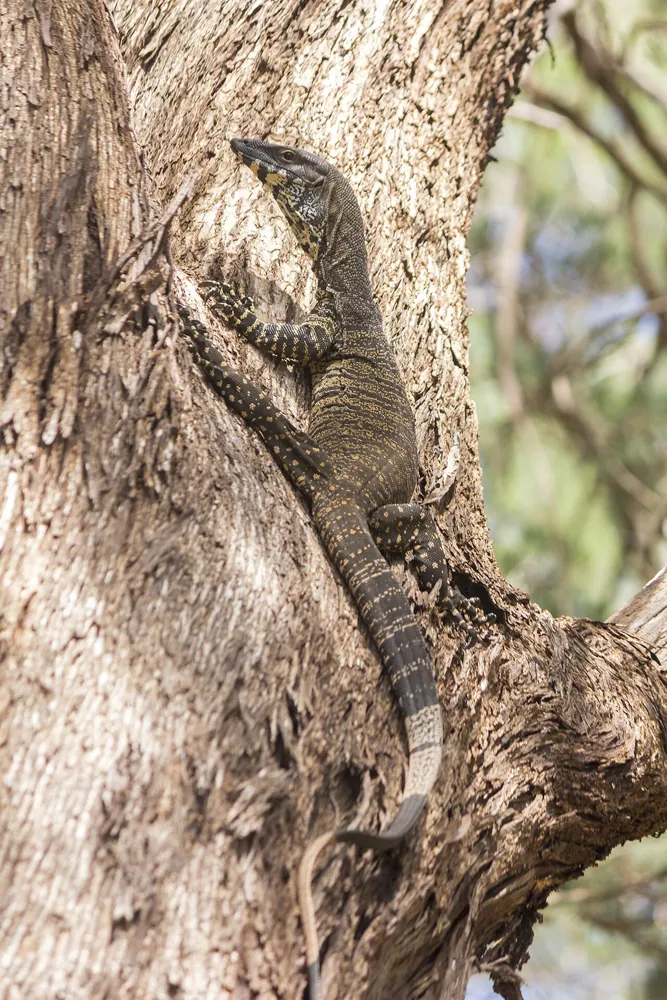
The lace monitor is a large lizard that lives in eastern Australia, and it can grow up to 2 metres long. It is a skilled climber that often lives in trees, and it is one of the country's biggest monitor lizards. It is also known as the tree goanna.1



 Indlela yokusiqaphela
- The main form is dark grey to dull bluish-black with scattered cream-coloured spots.1
- The head is black, and the snout has prominent black and yellow bands that extend under the chin and neck.1
- The tail has narrow black and cream bands that get wider towards the tip.1
- Bell's form has a yellow-brown or yellow base colour with fine black mottling and broad black or dark brown bands from the shoulders to the tail.1
- Juveniles have more defined banding, with five narrow black bands on the neck and eight on the body.1
Amandla etyhefu yokuluma nokuhlaba
Ityhefu iphuma ngamazinyo aso etyhefu okanye ngamazinyo aso xa siluma.
Ityhefu yaso yokuluma okanye yokuhlaba yenza ntoni?
Lace monitors have venom glands, and their venom is similar to snake venom, but it is not strong enough to cause serious harm. A bite on the hand can cause swelling within minutes, localised disruption of blood clotting (the blood clots less well in that area), and shooting pain up to the elbow. This pain can often last for several hours.1
Siyingozi kangakanani ebantwini?
Ingozi ebantwini: KubuhlunguKunokuba buhlungu ngokwenene, kodwa phantse akusoze kube kubi kakhulu.Its venom is not enough to cause serious harm. Scientists have cautioned that calling these lizards venomous overestimates the medical risk to bite victims.1
Senza ntoni xa soyika?
When disturbed, lace monitors retreat to a nearby tree.1
 Ukuba siyaluma
- Hlamba inxeba, gcina umntu ezolile kwaye ufumane uncedo lwezonyango.
Soloko utsalela inombolo kaxakeka kuqala (112, 000, 911). Esi sisikhokelo soncedo lokuqala ngokubanzi, asilocebiso lwezonyango. Iziseko zoncedo lokuqala
 Hlala ukhuselekile
- Ungaze uchukumise, ubambe okanye uqhule isilwanyana sasendle, nokuba sincinci, kwaye nokuba sibonakala silele okanye sifile.
- Sinike indawo. Ukuba udibana naso, hlala uzolile, buyela umva kancinci kwaye usiyeke sihambe ngendlela yaso.
- Ukuba siyakuluma: hlala uzolile, musa ukushukuma, tsalela inombolo kaxakeka (112, 000, 911) okanye uye esibhedlele ngokukhawuleza. Khumbula ukuba sasikhangeleka njani, ifoto iyanceda.
Asikuzingeli. Sisebenzisa ityhefu yaso ukubamba ukutya okanye ukuzikhusela, kwaye singakhetha ukuzimela. Okungakumbi malunga nokuhlala ukhuselekile
Sikhulu kangakanani?
Side kangakanani?
Sinzima kangakanani?
 ubude obulingana neekati zasekhaya eziyi-4 ukusuka empumlweni ukuya emsileni
 ubude obulingana neebhanana eziyi-11 zilandelelana
 singagqiba iimitha ezili-100 ngemizuzwana eyi-22 (owona mntu ukhawulezayo udinga i-9,6)
U-Lace monitor mkhulu kangakanani xa uthelekisa NAWE?
Zizibalo nje kwibhrawuza yakho. Akukho nto igcinwayo okanye ithunyelwa naphi na.
Sikhawuleza kangakanani?

,_photographed_in_the_Kindra_State_Forest.jpg)
Iinyaniso
Populations near rubbish tips were thirty five times greater than in natural forest, and individuals were around twice as heavy.1
Lace monitors quickly learned to avoid cane toads after they had been poisoned by them.1
One lace monitor was recorded climbing a brick wall to find shelter during a thunderstorm.1
Its closest living relative is the Komodo dragon.1
Umqhekezi weentsomi
Intsomi: Bites from monitors were thought to be dangerous mainly because of infection from bacteria in their mouths.
Inyaniso: Researchers found in 2005 that the immediate effects of bites were more likely caused by venom.1
Kwiingcali zetyhefu
- Igama lenzululwazi
- Varanus varius
- Iqela
- Amacilikishe anetyhefu
- Usapho
- Varanidae2
- Ucwangco
- Squamata
- Amazwekazi
- IOstreliya neOceania
- Iintsana
- Females lay an average of eight eggs, and up to 12, in active termite nests on the ground or in trees. The eggs hatch 6 to 7 months later.1
- Ixesha lobomi
- malunga neminyaka eyi-201
- Imeko yaso endle
- Least Concern1
- Ingozi ebantwini
- 2 / 5: Kubuhlungu3
Apho iinyaniso zivela khona
- Lace monitor (Wikipedia (CC BY-SA 4.0))
- Varanus varius (iNaturalist): amagama nokuhlelwa.
- Venom Wiki: inqanaba lengozi, ubungakanani obuqhelekileyo noqikelelo lwesantya zezethu. Bona indlela esizifumana ngayo: Indlela esilinganisa ngayo ingozi.
Inyaniso nganye kweli phepha inenombolo ebonisa umthombo wayo. Ukuba senze impazamo, uxolo, sithanda izilwanyana, asiyomagazini yenzululwazi. Sixelele ku-[email protected] kwaye siza kuyilungisa.
 Unomadudwane ulambile! I-Venom Wiki yiprojekthi yomntu omnye: isimahla, ayinazibhengezo kwaye ayinazilandeli. Isipho esincinci sinceda ukuyigcina ikwi-intanethi.Yondla unomadudwane
Okungakumbi kwiqela elinye: Amacilikishe anetyhefu
 PerentieAmacilikishe anetyhefuKubuhlungu nje
 Spiny-tailed monitorAmacilikishe anetyhefuAsinangozi
 Yellow-spotted monitorAmacilikishe anetyhefuKubuhlungu nje
 Mitchell's water monitorAmacilikishe anetyhefuAsinangozi
 Komodo dragonAmacilikishe anetyhefuSinokubulala
 Gila monsterAmacilikishe anetyhefuKufuna ugqirha
Sikwahlala: IOstreliya neOceania
 Coastal taipanIinyoka zaseOstreliyaSiyabulala
 Common death adderIinyoka zaseOstreliyaSiyabulala
 Eastern brown snakeIinyoka zaseOstreliyaSiyabulala
 Inyoka ityhefu yaseOstreliya (Inland taipan)Iinyoka zaseOstreliyaSiyabulala
 Sydney funnel-web spiderIi-tarantula nee-funnel-webSiyabulala
 Inyoka yengweIinyoka zaseOstreliyaSiyabulala