
 IAfrika
 IAsiya
 IYurophu
 uMzantsi Melika
 IOstreliya neOceania
 IAntarctica
 uLwandlekazi lwePasifiki
 uLwandlekazi lweAtlantiki
 uLwandlekazi lwaseIndiya
 uLwandlekazi lweArctic
 uLwandle lweMeditera
 uLwandle oluBomvu
 uLwandle lweKharibhiya
 uLwandle lweCoral
 uLwandle lwaseMzantsi China
 uLwandle lwePhilippines
 uLwandle lweAndaman
 uLwandle lwaseMntla (North Sea)
 uLwandle lweTimor ne-Arafura
 iBhayi yaseBengal
 iGulf yaseCalifornia
Masked hunter
 Ukuluma
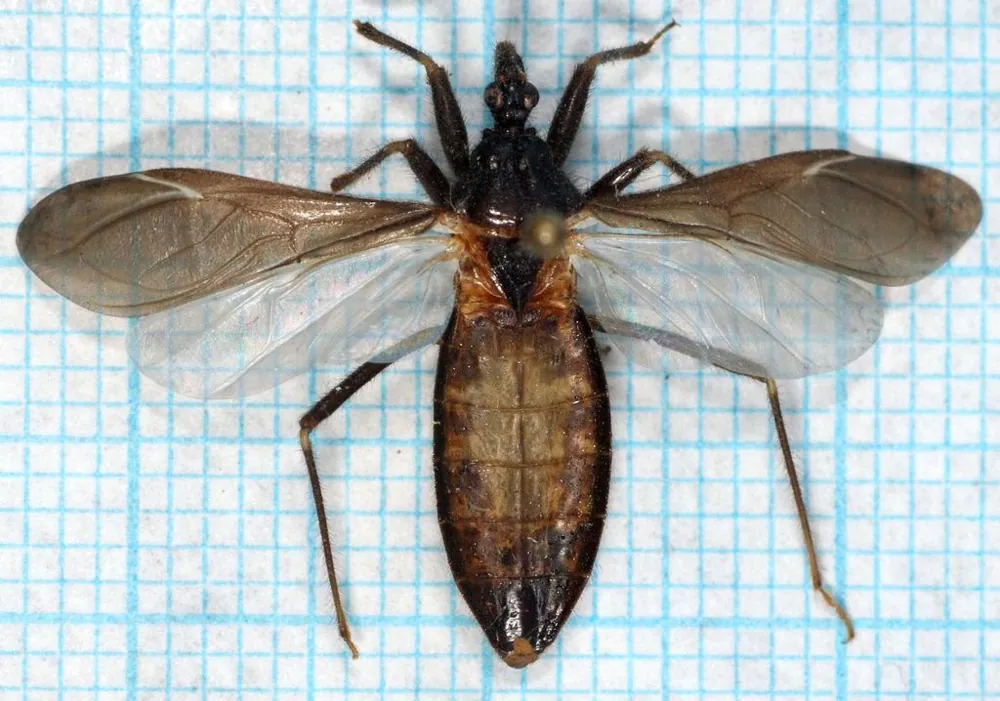
The masked hunter is a dark brown to black insect from the assassin bug family. It hunts small creatures such as bed bugs, woodlice and termites, and it is often found in homes. Its nymphs hide by covering their bodies with dust and debris.1

 Indlela yokusiqaphela
- Adults are uniformly dark brown to black and measure 17–22 mm in length.1
- The head is elongated, with a short, three-segmented beak and long, slender antennae.1
- The abdomen is wide and extends beyond the wings in the middle, showing the edges of its abdominal segments.1
- Nymphs look like small adults but are often grey or light-coloured, because a sticky body coat collects dust, lint and small particles.1
Sidla ngokubhidaniswa no: Masked hunters are sometimes mistaken for the kissing bug. Unlike the kissing bug, masked hunters do not carry Chagas disease.1
Amandla etyhefu yokuluma nokuhlaba
Ityhefu iphuma ngamazinyo aso etyhefu okanye ngamazinyo aso xa siluma.
Siyingozi kangakanani ebantwini?
Ingozi ebantwini: KubuhlunguKunokuba buhlungu ngokwenene, kodwa phantse akusoze kube kubi kakhulu.A handled or trapped masked hunter can deliver a rostral stab, which is painful and comparable to a bee's sting. The swelling can last for about a week. They do not feed on human blood.1
Senza ntoni xa soyika?
When handled or trapped, it defends itself by delivering a stab with its beak.1
 Ukuba siyaluma
- Kwiinwele zemibungu ehlabayo: zisuse ngeteyipu encamathelayo, emva koko uhlambe isikhumba. Musa ukukhuhla.
- Kukulunywa: hlamba uze upholise. Fumana uncedo lwezonyango ukuba umntu uziva engaphilanga kakuhle okanye wopha lula.
Soloko utsalela inombolo kaxakeka kuqala (112, 000, 911). Esi sisikhokelo soncedo lokuqala ngokubanzi, asilocebiso lwezonyango. Iziseko zoncedo lokuqala
 Hlala ukhuselekile
- Ungaze uchukumise, ubambe okanye uqhule isilwanyana sasendle, nokuba sincinci, kwaye nokuba sibonakala silele okanye sifile.
- Sinike indawo. Ukuba udibana naso, hlala uzolile, buyela umva kancinci kwaye usiyeke sihambe ngendlela yaso.
- Ukuba siyakuluma: hlala uzolile, musa ukushukuma, tsalela inombolo kaxakeka (112, 000, 911) okanye uye esibhedlele ngokukhawuleza. Khumbula ukuba sasikhangeleka njani, ifoto iyanceda.
Asikuzingeli. Sisebenzisa ityhefu yaso ukubamba ukutya okanye ukuzikhusela, kwaye singakhetha ukuzimela. Okungakumbi malunga nokuhlala ukhuselekile
Sikhulu kangakanani?
Side kangakanani?
 malunga nobude besiqhobosho sephepha
U-Masked hunter mkhulu kangakanani xa uthelekisa NAWE?
Zizibalo nje kwibhrawuza yakho. Akukho nto igcinwayo okanye ithunyelwa naphi na.
Sikhawuleza kangakanani?


Iinyaniso
Nymphs build two layers of camouflage on their bodies, an inner layer of fine particles and an outer layer of coarser ones, using their hind legs and a tarsal fan.1
Their sticky body coat catches dust, lint and other small particles, which hides them from both predators and prey.1
Because they hunt bed bugs, a masked hunter in the home can be a sign of a bed bug problem, and controlling the bed bugs usually deals with the hunters too.1
Masked hunters were probably introduced to North America by accident in the late 1800s to early 1900s. They were first found in Canada in 1905 and in the United States in 1917.1
Umqhekezi weentsomi
Intsomi: Masked hunters are kissing bugs and carry Chagas disease.
Inyaniso: Masked hunters are sometimes mistaken for kissing bugs, but they do not carry Chagas disease. Their stab is painful, but it does not spread that disease.1
Apho iinyaniso zivela khona
- Reduvius personatus (Wikipedia (CC BY-SA 4.0))
- Reduvius personatus (iNaturalist): amagama nokuhlelwa.
- Venom Wiki: inqanaba lengozi, ubungakanani obuqhelekileyo noqikelelo lwesantya zezethu. Bona indlela esizifumana ngayo: Indlela esilinganisa ngayo ingozi.
Inyaniso nganye kweli phepha inenombolo ebonisa umthombo wayo. Ukuba senze impazamo, uxolo, sithanda izilwanyana, asiyomagazini yenzululwazi. Sixelele ku-[email protected] kwaye siza kuyilungisa.
 Unomadudwane ulambile! I-Venom Wiki yiprojekthi yomntu omnye: isimahla, ayinazibhengezo kwaye ayinazilandeli. Isipho esincinci sinceda ukuyigcina ikwi-intanethi.Yondla unomadudwane
Okungakumbi kwiqela elinye: Imibungu nezinambuzane
 Oak processionaryImibungu nezinambuzaneKubuhlungu njeMusa ukuchukumisa
 Pine processionaryImibungu nezinambuzaneKubuhlungu njeMusa ukuchukumisa
 Common bombardier beetleImibungu nezinambuzaneAsinangozi
 Asian giant water bugImibungu nezinambuzaneKubuhlungu nje
 Blue-striped nettle grubImibungu nezinambuzaneKubuhlungu njeMusa ukuchukumisa
 Brown-tail mothImibungu nezinambuzaneKubuhlungu njeMusa ukuchukumisa
Sikwahlala: IYurophu
 Common European adderIi-viper namarhambaKufuna ugqirha
 Spanish flyEzinye izilwanyana ezityhefayoKufuna ugqirhaMusa ukuchukumisa
 Common waspIinyosi, oonomeva nee-hornetKubuhlungu nje
 European hornetIinyosi, oonomeva nee-hornetKubuhlungu nje
 Fire salamanderAmasele atyhefayo, amaxoxo nee-newtKubuhlungu njeMusa ukuchukumisa
 Western honey beeIinyosi, oonomeva nee-hornetKubuhlungu nje