
 IAfrika
 IAsiya
 IYurophu
 uMzantsi Melika
 IOstreliya neOceania
 IAntarctica
 uLwandlekazi lwePasifiki
 uLwandlekazi lweAtlantiki
 uLwandlekazi lwaseIndiya
 uLwandlekazi lweArctic
 uLwandle lweMeditera
 uLwandle oluBomvu
 uLwandle lweKharibhiya
 uLwandle lweCoral
 uLwandle lwaseMzantsi China
 uLwandle lwePhilippines
 uLwandle lweAndaman
 uLwandle lwaseMntla (North Sea)
 uLwandle lweTimor ne-Arafura
 iBhayi yaseBengal
 iGulf yaseCalifornia
Speckled forest pitviper
 Ukuluma
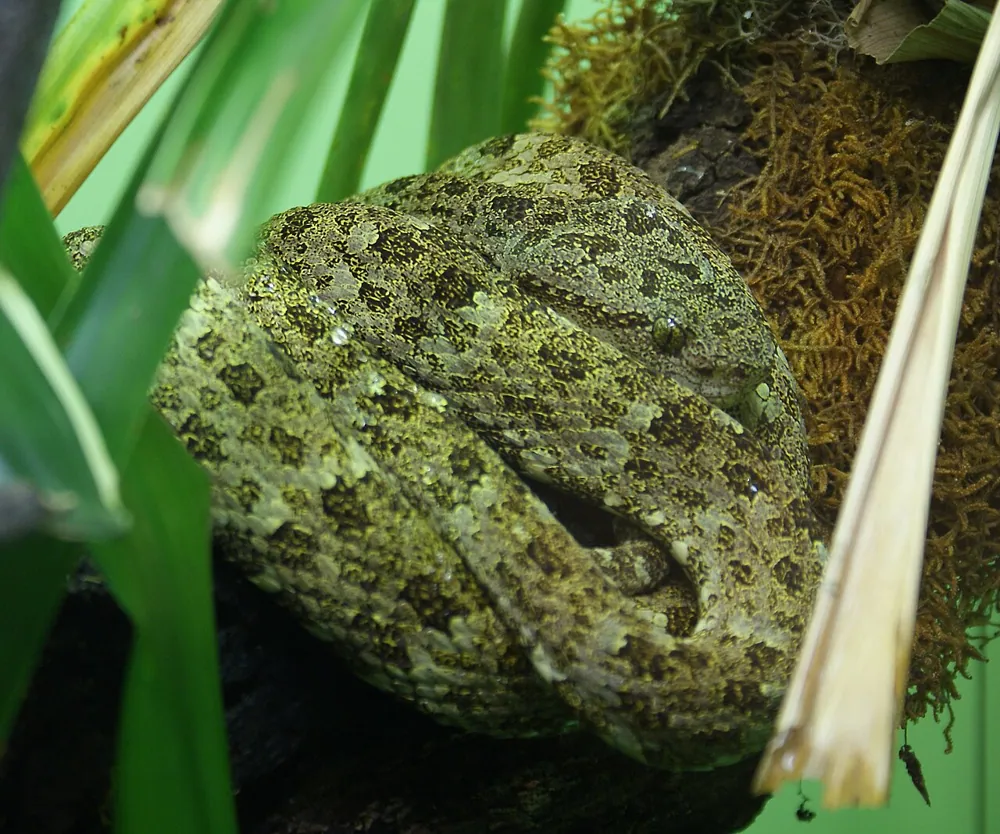
The speckled forest-pitviper is a slender, tree-living snake from the equatorial forests of South America. It is venomous, and it is known mainly from rainforests in Colombia, Ecuador, Peru, Brazil and several neighbouring countries. Few people have been bitten by it, but the bites that have been recorded were serious.1
 Indlela yokusiqaphela
- Slender body with a prehensile tail.1
- Very complex colour pattern, ranging from lavender grey to yellow green.1
- A row of bold white spots where the dorsal and ventral scales meet.1
- Mostly single subcaudal scales (the scales under the tail).1
Sidla ngokubhidaniswa no: It is distinguished from other members of the genus Bothrops by its mostly single subcaudal scales and the row of bold white spots where the dorsal and ventral scales meet.1
Amandla etyhefu yokuluma nokuhlaba
Ityhefu iphuma ngamazinyo aso etyhefu okanye ngamazinyo aso xa siluma.
Ityhefu yaso yokuluma okanye yokuhlaba yenza ntoni?
Only two bites from this species have been documented. Both caused severe local swelling of the entire bitten limb. In the second case, tissue damage was so severe that the limb had to be amputated, even though antivenin treatment was given.1
Siyingozi kangakanani ebantwini?
Ingozi ebantwini: Siyingozi kakhuluSinokubulala umntu ongafumani nyango.Only two bites have been documented, so little is known about how dangerous this snake is. Both bites caused severe swelling and tissue damage, and one led to amputation.1
 Iindaba ezimnandi: oogqirha banamayeza (i-antivenom) okanye unyango lwale nto.1
 Ukuba siyaluma
- Gcina umntu engashukumi kwaye ezolile, gcina ilungu elilunyiweyo kwinqanaba lentliziyo, susa imisesane nezinto eziqinileyo, uze umse esibhedlele ngokukhawuleza.
Soloko utsalela inombolo kaxakeka kuqala (112, 000, 911). Esi sisikhokelo soncedo lokuqala ngokubanzi, asilocebiso lwezonyango. Iziseko zoncedo lokuqala
 Hlala ukhuselekile
- Ungaze uchukumise, ubambe okanye uqhule isilwanyana sasendle, nokuba sincinci, kwaye nokuba sibonakala silele okanye sifile.
- Sinike indawo. Ukuba udibana naso, hlala uzolile, buyela umva kancinci kwaye usiyeke sihambe ngendlela yaso.
- Ukuba siyakuluma: hlala uzolile, musa ukushukuma, tsalela inombolo kaxakeka (112, 000, 911) okanye uye esibhedlele ngokukhawuleza. Khumbula ukuba sasikhangeleka njani, ifoto iyanceda.
Asikuzingeli. Sisebenzisa ityhefu yaso ukubamba ukutya okanye ukuzikhusela, kwaye singakhetha ukuzimela. Okungakumbi malunga nokuhlala ukhuselekile
Sikhulu kangakanani?
Side kangakanani?
 ubude obulingana neekati zasekhaya eziyi-4 ukusuka empumlweni ukuya emsileni
 ubude obulingana neebhanana eziyi-10 zilandelelana
 singagqiba iimitha ezili-100 ngemizuzwana eyi-97 (owona mntu ukhawulezayo udinga i-9,6)
U-Speckled forest pitviper mkhulu kangakanani xa uthelekisa NAWE?
Zizibalo nje kwibhrawuza yakho. Akukho nto igcinwayo okanye ithunyelwa naphi na.
Sikhawuleza kangakanani?


Iinyaniso
Apho iinyaniso zivela khona
- Bothrops taeniatus (Wikipedia (CC BY-SA 4.0))
- Bothrops taeniatus (iNaturalist): amagama nokuhlelwa.
- Venom Wiki: inqanaba lengozi, ubungakanani obuqhelekileyo noqikelelo lwesantya zezethu. Bona indlela esizifumana ngayo: Indlela esilinganisa ngayo ingozi.
Inyaniso nganye kweli phepha inenombolo ebonisa umthombo wayo. Ukuba senze impazamo, uxolo, sithanda izilwanyana, asiyomagazini yenzululwazi. Sixelele ku-[email protected] kwaye siza kuyilungisa.
 Unomadudwane ulambile! I-Venom Wiki yiprojekthi yomntu omnye: isimahla, ayinazibhengezo kwaye ayinazilandeli. Isipho esincinci sinceda ukuyigcina ikwi-intanethi.Yondla unomadudwane
Okungakumbi kwiqela elinye: Ii-pit viper
 Terciopelo
 Eyelash viper
 Golden lancehead
 South American bushmaster
 Common lancehead
 Jararaca
.jpg)
Sikwahlala: uMzantsi Melika
 Golden poison frogAmasele atyhefayo, amaxoxo nee-newtSiyabulalaMusa ukuchukumisa
 Brazilian wandering spiderIzigcawuSinokubulala
 Cane toadAmasele atyhefayo, amaxoxo nee-newtKufuna ugqirhaMusa ukuchukumisa
 Peruvian giant centipedeIinkumeKufuna ugqirha
 Bullet antIimbovaneKubuhlungu nje
 Common vampire batIzilwanyana ezincancisayo ezinetyhefuKubuhlungu nje