
 Áfíríkà
 Éṣíà
Éṣíà Yúróòpù
 Gúúsù Amẹ́ríkà
 Ọsirélíà àti Òṣéáníà
 Antáktíkà
 Òkun Pàsífíìkì
 Òkun Àtìláńtíìkì
 Òkun Íńdíà
 Òkun Áktíkì
 Òkun Mẹditaréníà
 Òkun Pupa
 Òkun Káríbíànù
 Òkun Coral
 Òkun Gúúsù Ṣáínà
 Òkun Fílípínì
 Òkun Andaman
 Òkun Àríwá
 Òkun Tímọ̀ àti Òkun Àráfúrà
 Ìyawọlẹ̀ Òkun Bẹ̀ngál
 Ìyawọlẹ̀ Òkun Kalifọ́níà
Black house spider
 Ìbùjẹ
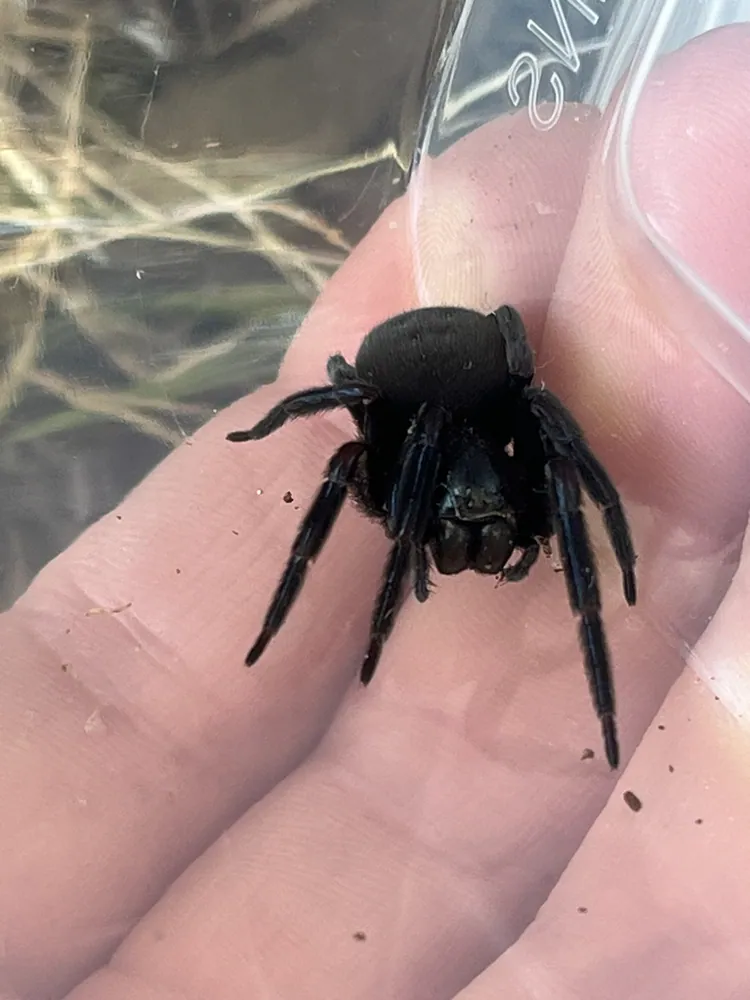
ÌbùjẹThe black house spider is a dark, sturdy spider that lives across Australia. It was carried to New Zealand and Japan, and it often lives in homes, where it sits in a messy web in corners and near windows. It is venomous, but its bite is rarely a serious danger to people.1

 Bí o ṣe lè dá a mọ̀
- A dark, robust spider. Females have a body up to 18 mm long and a leg span of 30 mm.1
- Males are smaller, about 10 mm long, with longer legs in proportion to their body.1
- The body and legs are dark brown to black. The abdomen (rear part) is charcoal grey, with light markings that are sometimes faint, and it is covered in fine, velvety hair.1
- The web looks messy, with irregular sail-like sheets of silk and a funnel-shaped retreat, usually in the middle or corner of the web.1
A sábà máa ń ṣì í mọ̀ sí: The grey house spider (Badumna longinqua) is similar and has a similar range. It is slightly smaller, at about 14 mm, has a greyish top section (carapace) and black-brown legs. It is more often found outdoors.1
Agbára oró
Oró ń jáde láti inú eyín oró tàbí eyín rẹ̀ nígbà tí ó bá bùjẹ.
Kí ni oró rẹ̀ máa ń ṣe?
The bite is venomous. It may be excruciatingly painful and cause local swelling. Nausea, vomiting, sweating and dizziness are occasionally recorded. In a few cases, skin lesions (arachnogenic necrosis, damage to the skin and tissue) have developed after several bites.1
Báwo ló ṣe léwu tó fún ènìyàn?
Ewu fún ènìyàn: Ó ń dunniÓ lè dunni gan-an, ṣùgbọ́n kì í fẹ́rẹ̀ẹ́ le rárá.Black house spiders are venomous but are not considered dangerous. They are timid, and bites from them are infrequent.1
 Bí ó bá bùjẹ
- Fọ ibi ìbùjẹ náà kí o sì fi àpò yìnyín lé e fún ìrora. Wá ìrànlọ́wọ́ ìṣègùn bí ìrora bá le, tí ó ń tàn kálẹ̀, tàbí tí ara ẹni náà kò bá yá.
Máa kọ́kọ́ pe nọ́ńbà pàjáwìrì rẹ nígbà gbogbo (112, 000, 911). Èyí jẹ́ ìtọ́sọ́nà ìtọ́jú àkọ́kọ́ gbogbogbò, kì í ṣe ìmọ̀ràn ìṣègùn. Ìpìlẹ̀ ìtọ́jú àkọ́kọ́
 Wà láìléwu
- Má ṣe fọwọ́ kan, mú tàbí yọ ẹranko igbó lẹ́nu láéláé, kódà bí ó bá kéré, kódà bí ó bá dà bí ẹni pé ó ń sùn tàbí ó ti kú.
- Fún un ní àyè. Bí o bá pàdé ọ̀kan, farabalẹ̀, sẹ́yìn díẹ̀díẹ̀ kí o sì jẹ́ kí ó máa bá ọ̀nà rẹ̀ lọ.
- Bí ọ̀kan bá bù ọ́ jẹ: farabalẹ̀, má ṣe mira, pe nọ́ńbà pàjáwìrì rẹ (112, 000, 911) tàbí lọ sí ilé ìwòsàn kíákíá. Rántí bí ó ṣe rí, fọ́tò máa ń ṣèrànwọ́.
Kò wá ọ kiri láti ṣe ọ́ léṣe. Ó ń lo oró rẹ̀ láti mú oúnjẹ tàbí láti dáàbò bo ara rẹ̀, ó sì fẹ́ràn láti farapamọ́ jù. Sí i nípa wíwà láìléwu
Báwo ló ṣe tóbi tó?
Báwo ló ṣe gùn tó?
 ó kúrú ju ọmọdínrín ìka rẹ lọ
Báwo ni Black house spider ṣe tóbi tó tí a bá fi wé ÌWỌ?
Ìṣirò nìkan nínú bráwúsà rẹ. A kò fi ohunkóhun pamọ́, a kò sì fi ránṣẹ́ sí ibikíbi.
Báwo ló ṣe yára tó?


Òtítọ́
A male plucks the female's web to attract her attention before he approaches to mate. They may stay together for several days and mate several times.1
The spider rarely moves its web, so old webs become messy, with dust and small objects stuck in them.1
At night, the spider repairs and adds to its web, often by laying new silk over the old.1
The female almost never leaves her web unless she is forced to.1
Predators include the white-tailed spider, as well as parasitic wasps and flies.1
Olùfọ́ àròsọ
Àròsọ: Black house spiders are dangerous spiders.
Òtítọ́: They are venomous, but they are not considered dangerous. They are timid, and their bites are infrequent.1
Fún àwọn amòye oró
- Orúkọ sáyẹ́ǹsì
- Badumna insignis
- Ẹgbẹ́
- Alántakùn
- Ìdílé
- Desidae2
- Ètò
- Araneae
- Àwọn kọ́ńtínẹ́ńtì
- Ọsirélíà àti Òṣéáníà
- Àwọn ọmọ
- The female builds several white silk egg sacs inside the web retreat and stays with the eggs until they hatch. The young may leave or stay in the mother's web for some time.1
- Ewu fún ènìyàn
- 2 / 5: Ó ń dunni3
Ibi tí àwọn òtítọ́ ti wá
- Black house spider (Wikipedia (CC BY-SA 4.0))
- Badumna insignis (iNaturalist): orúkọ àti ìpínsísọ̀rí.
- Venom Wiki: ìpele ewu, ìtóbi déédé àti àfojúbù ìyára jẹ́ tiwa. Wo bí a ṣe ń ṣírò wọn: Bí a ṣe ń díwọ̀n ewu.
Gbogbo òtítọ́ ojú-ìwé yìí ní nọ́ńbà tó tọ́ka sí orísun rẹ̀. Bí a bá ṣe àṣìṣe, má bínú, olólùfẹ́ ẹranko ni wá, kì í ṣe ìwé ìròyìn sáyẹ́ǹsì. Sọ fún wa ní [email protected] a ó sì tún un ṣe.
 Ebi ń pa àkekèé! Iṣẹ́ akanṣe ẹnì kan ṣoṣo ni Venom Wiki: ọ̀fẹ́ ni, kò sí ìpolówó, kò sì sí olùtọpinpin. Ẹ̀bùn kékeré ń ràn án lọ́wọ́ láti wà lórí íńtánẹ́ẹ̀tì.Bọ́ àkekèé
 Redback spider
 Katipo
 White-tailed spider
 Peacock spider
 Badge huntsman spider
 Eastern white-tailed spider
 Coastal taipan
 Common death adder
 Eastern brown snake
 Ejò taipan inú ilẹ̀
 Sydney funnel-web spider
 Ejò ẹkùn