
 Áfíríkà
 Éṣíà
Éṣíà Yúróòpù
 Gúúsù Amẹ́ríkà
 Ọsirélíà àti Òṣéáníà
 Antáktíkà
 Òkun Pàsífíìkì
 Òkun Àtìláńtíìkì
 Òkun Íńdíà
 Òkun Áktíkì
 Òkun Mẹditaréníà
 Òkun Pupa
 Òkun Káríbíànù
 Òkun Coral
 Òkun Gúúsù Ṣáínà
 Òkun Fílípínì
 Òkun Andaman
 Òkun Àríwá
 Òkun Tímọ̀ àti Òkun Àráfúrà
 Ìyawọlẹ̀ Òkun Bẹ̀ngál
 Ìyawọlẹ̀ Òkun Kalifọ́níà
Cinnabar moth
 Onímájèlé tí a bá jẹ ẹ́
The cinnabar moth is a brightly coloured day-flying moth with red and black wings. It is native to Europe and parts of Asia, and it has been introduced to New Zealand, Australia and North America. Its bright colours warn predators that it is poisonous.1


 Bí o ṣe lè dá a mọ̀
- Predominantly black wings with red patches1
- Adults are about 2 cm long, with a wingspan of 3.4 to 4.6 cm1
- Often seen flying in daylight, though it is also active at night1
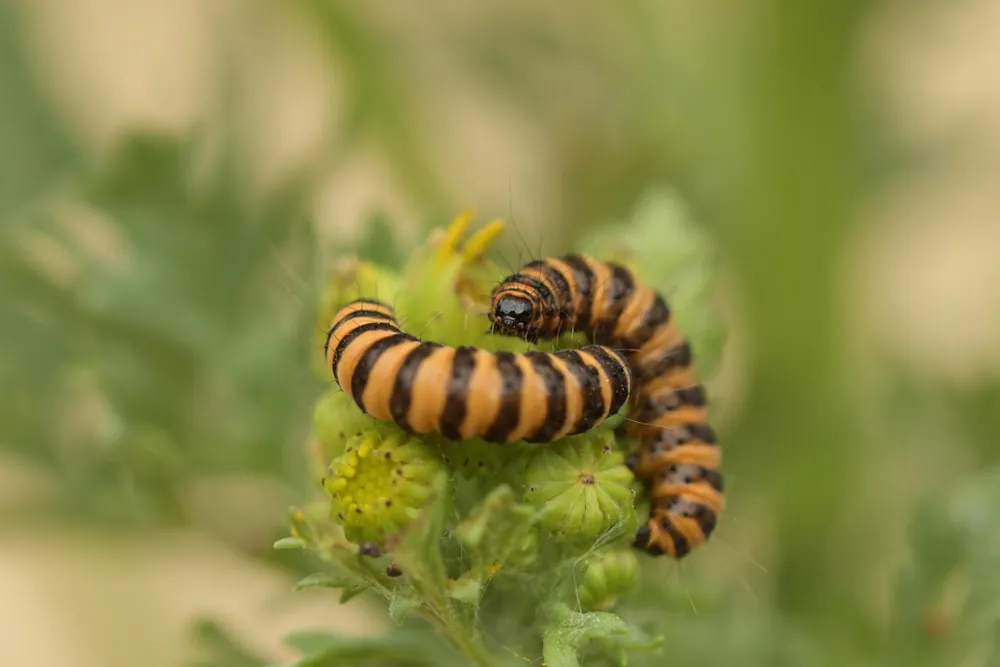
- Young caterpillars are pale yellow; later caterpillars are jet-black with orange or yellow stripes1
- Rarely, the red can be yellow, the forewing can be all red with a black border, or the wings can be completely black1
Agbára májèlé
Ó léwu kìkì bí ohun kan bá jẹ ẹ́.
Báwo ló ṣe léwu tó fún ènìyàn?
Ewu fún ènìyàn: Fúyẹ́Bí ìtani oyin tàbí kò tó bẹ́ẹ̀. Kò fẹ́rẹ̀ẹ́ léwu fún ènìyàn.Kí ni ó máa ń ṣe nígbà tí ẹ̀rù bá bà á?
Its bright red and black colours warn predators that it is unpalatable, and predators seldom eat it.1
 Bí ẹnìkan bá fọwọ́ kàn án tàbí jẹ ẹ́
- Bí ẹnìkan bá jẹ ẹ́ tàbí tí ó ní àmì àìsàn lẹ́yìn tí ó jẹ ẹ́: pe nọ́ńbà pàjáwìrì rẹ tàbí ibùdó ìmọ̀ràn májèlé lẹ́sẹ̀kẹsẹ̀.
Máa kọ́kọ́ pe nọ́ńbà pàjáwìrì rẹ nígbà gbogbo (112, 000, 911). Èyí jẹ́ ìtọ́sọ́nà ìtọ́jú àkọ́kọ́ gbogbogbò, kì í ṣe ìmọ̀ràn ìṣègùn. Ìpìlẹ̀ ìtọ́jú àkọ́kọ́
 Wà láìléwu
- Má ṣe fọwọ́ kan, mú tàbí yọ ẹranko igbó lẹ́nu láéláé, kódà bí ó bá kéré, kódà bí ó bá dà bí ẹni pé ó ń sùn tàbí ó ti kú.
- Fún un ní àyè. Bí o bá pàdé ọ̀kan, farabalẹ̀, sẹ́yìn díẹ̀díẹ̀ kí o sì jẹ́ kí ó máa bá ọ̀nà rẹ̀ lọ.
- Bí o bá fọwọ́ kàn án tàbí jẹ ẹ́: má ṣe fọwọ́ pa ojú tàbí ẹnu rẹ, fọ ọwọ́ rẹ kí o sì wá ìrànlọ́wọ́ ìṣègùn.
Kò wá ọ kiri láti ṣe ọ́ léṣe. Májèlé rẹ̀ wà níbẹ̀ kìkì kí ohunkóhun má baà jẹ ẹ́. Sí i nípa wíwà láìléwu
Báwo ló ṣe tóbi tó?
Báwo ló ṣe gùn tó?
 ó gùn tó pínì ìwé (paper clip)
 lè fò kọjá gbogbo pápá bọ́ọ̀lù ní ìṣẹ́jú-àáyá 42
Báwo ni Cinnabar moth ṣe tóbi tó tí a bá fi wé ÌWỌ?
Ìṣirò nìkan nínú bráwúsà rẹ. A kò fi ohunkóhun pamọ́, a kò sì fi ránṣẹ́ sí ibikíbi.
Báwo ló ṣe yára tó?


Òtítọ́
The caterpillars can turn cannibalistic, mainly when food is short, and will eat other cinnabar caterpillars.1
Cuckoos are an exception to the moth's protection, as some species eat its hairy, poisonous caterpillars.1
The moth was used as a biocontrol agent against ragwort, working alongside the Tansy ragwort flea beetle in the western United States.1
Very few caterpillars usually survive to the pupal stage, because they can eat their food plant bare before they mature.1
Evidence suggests the Brown long-eared bat preys on this moth.1
The caterpillars overwinter as cocoons on the ground.1
Ibi tí àwọn òtítọ́ ti wá
- Cinnabar moth (Wikipedia (CC BY-SA 4.0))
- Tyria jacobaeae (iNaturalist): orúkọ àti ìpínsísọ̀rí.
- Venom Wiki: ìpele ewu, ìtóbi déédé àti àfojúbù ìyára jẹ́ tiwa. Wo bí a ṣe ń ṣírò wọn: Bí a ṣe ń díwọ̀n ewu.
Gbogbo òtítọ́ ojú-ìwé yìí ní nọ́ńbà tó tọ́ka sí orísun rẹ̀. Bí a bá ṣe àṣìṣe, má bínú, olólùfẹ́ ẹranko ni wá, kì í ṣe ìwé ìròyìn sáyẹ́ǹsì. Sọ fún wa ní [email protected] a ó sì tún un ṣe.
 Ebi ń pa àkekèé! Iṣẹ́ akanṣe ẹnì kan ṣoṣo ni Venom Wiki: ọ̀fẹ́ ni, kò sí ìpolówó, kò sì sí olùtọpinpin. Ẹ̀bùn kékeré ń ràn án lọ́wọ́ láti wà lórí íńtánẹ́ẹ̀tì.Bọ́ àkekèé
Sí i láti inú ẹgbẹ́ kan náà: Àwọn ẹranko onímájèlé mìíràn
 Spanish flyÀwọn ẹranko onímájèlé mìírànÓ nílò dókítàMá ṣe fọwọ́ kàn án
 Green spotted pufferÀwọn ẹranko onímájèlé mìírànÓ nílò dókítà
 Common quailÀwọn ẹranko onímájèlé mìírànÓ kàn ń dunni
 Black oil beetleÀwọn ẹranko onímájèlé mìírànÓ kàn ń dunniMá ṣe fọwọ́ kàn án
 Red-striped oil beetleÀwọn ẹranko onímájèlé mìírànÓ kàn ń dunniMá ṣe fọwọ́ kàn án
 Six-spot burnetÀwọn ẹranko onímájèlé mìírànAláìléwu
Ó tún ń gbé ní: Yúróòpù
 Common European adderViper àti paramọ́lẹ̀Ó nílò dókítà
 Common waspOyin, agbọ́n àti agbọ́n ńláÓ kàn ń dunni
 European hornetOyin, agbọ́n àti agbọ́n ńláÓ kàn ń dunni
 Fire salamanderÀkèré onímájèlé, ọ̀pọ̀lọ́ àti newtÓ kàn ń dunniMá ṣe fọwọ́ kàn án
 Western honey beeOyin, agbọ́n àti agbọ́n ńláÓ kàn ń dunni
 Blunt-nosed viperViper àti paramọ́lẹ̀Ó lè pani