
 Áfíríkà
 Éṣíà
Éṣíà Yúróòpù
 Gúúsù Amẹ́ríkà
 Ọsirélíà àti Òṣéáníà
 Antáktíkà
 Òkun Pàsífíìkì
 Òkun Àtìláńtíìkì
 Òkun Íńdíà
 Òkun Áktíkì
 Òkun Mẹditaréníà
 Òkun Pupa
 Òkun Káríbíànù
 Òkun Coral
 Òkun Gúúsù Ṣáínà
 Òkun Fílípínì
 Òkun Andaman
 Òkun Àríwá
 Òkun Tímọ̀ àti Òkun Àráfúrà
 Ìyawọlẹ̀ Òkun Bẹ̀ngál
 Ìyawọlẹ̀ Òkun Kalifọ́níà
European purseweb spider
 Ìbùjẹ
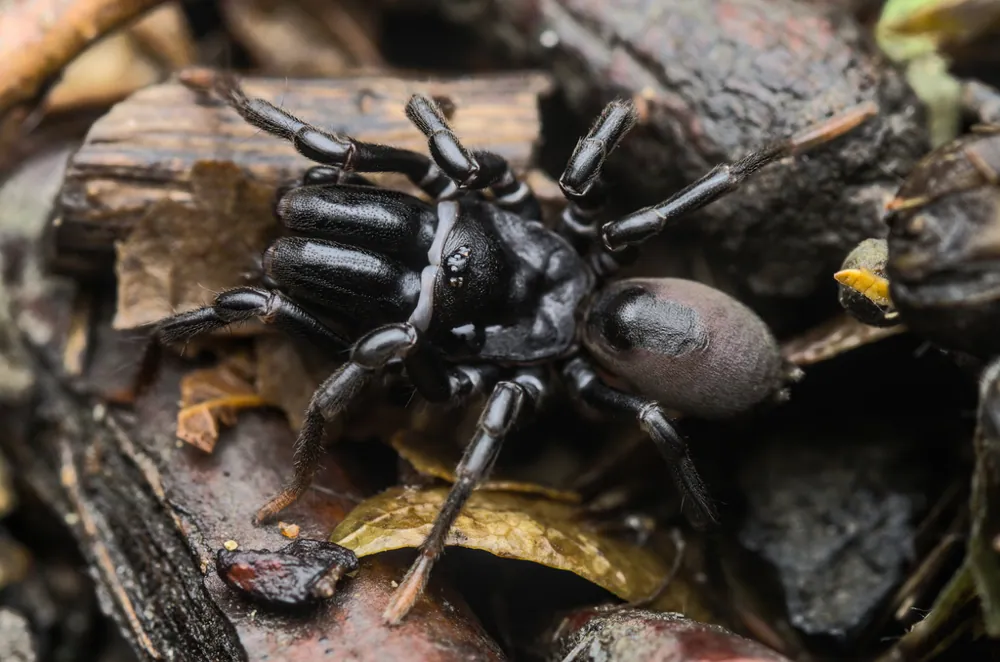
ÌbùjẹThe European purseweb spider is a small, hidden spider that lives in the ground. It is found in mainland Europe, Great Britain and North Africa, and it is the only mygalomorph spider found in the Nordic countries and the United Kingdom. It is special because it builds a silk tube partly under the ground and catches insects that walk onto it.1

 Bí o ṣe lè dá a mọ̀
- Black or brownish in colour1
- Not particularly large: males are 7–9 mm and females are 10–15 mm long1
- Builds a silk tube that is partly underground, with the part above ground covered in leaves and other debris1
- Usually stays inside its web and does not leave except to mate1
- Young spiderlings are often very lightly coloured1
A sábà máa ń ṣì í mọ̀ sí: It looks much like Atypus piceus. Spiderlings of the European purseweb spider are often very lightly coloured, and its three-part posterior spinnerets do not have a light blot, which helps tell them apart.1
Agbára oró
Oró ń jáde láti inú eyín oró tàbí eyín rẹ̀ nígbà tí ó bá bùjẹ.
Báwo ló ṣe léwu tó fún ènìyàn?
Ewu fún ènìyàn: Fúyẹ́Bí ìtani oyin tàbí kò tó bẹ́ẹ̀. Kò fẹ́rẹ̀ẹ́ léwu fún ènìyàn. Bí ó bá bùjẹ
- Fọ ibi ìbùjẹ náà kí o sì tù ú. Wá ìrànlọ́wọ́ ìṣègùn bí ìrora bá le tàbí tí ara ẹni náà kò bá yá.
Máa kọ́kọ́ pe nọ́ńbà pàjáwìrì rẹ nígbà gbogbo (112, 000, 911). Èyí jẹ́ ìtọ́sọ́nà ìtọ́jú àkọ́kọ́ gbogbogbò, kì í ṣe ìmọ̀ràn ìṣègùn. Ìpìlẹ̀ ìtọ́jú àkọ́kọ́
 Wà láìléwu
- Má ṣe fọwọ́ kan, mú tàbí yọ ẹranko igbó lẹ́nu láéláé, kódà bí ó bá kéré, kódà bí ó bá dà bí ẹni pé ó ń sùn tàbí ó ti kú.
- Fún un ní àyè. Bí o bá pàdé ọ̀kan, farabalẹ̀, sẹ́yìn díẹ̀díẹ̀ kí o sì jẹ́ kí ó máa bá ọ̀nà rẹ̀ lọ.
- Bí ọ̀kan bá bù ọ́ jẹ: farabalẹ̀, má ṣe mira, pe nọ́ńbà pàjáwìrì rẹ (112, 000, 911) tàbí lọ sí ilé ìwòsàn kíákíá. Rántí bí ó ṣe rí, fọ́tò máa ń ṣèrànwọ́.
Kò wá ọ kiri láti ṣe ọ́ léṣe. Ó ń lo oró rẹ̀ láti mú oúnjẹ tàbí láti dáàbò bo ara rẹ̀, ó sì fẹ́ràn láti farapamọ́ jù. Sí i nípa wíwà láìléwu
Báwo ló ṣe tóbi tó?
Báwo ló ṣe gùn tó?
 ó kúrú ju ọmọdínrín ìka rẹ lọ
 lè sáré mítà 100 ní ìṣẹ́jú-àáyá 330 (ènìyàn tó yára jùlọ nílò 9.6)
Báwo ni European purseweb spider ṣe tóbi tó tí a bá fi wé ÌWỌ?
Ìṣirò nìkan nínú bráwúsà rẹ. A kò fi ohunkóhun pamọ́, a kò sì fi ránṣẹ́ sí ibikíbi.
Báwo ló ṣe yára tó?


Òtítọ́
Its fangs point straight down rather than crossing, as in other mygalomorph spiders.1
Autumn is its mating season. The male enters the female's burrow, where they live together until the male dies soon after mating.1
It is a mygalomorph spider, and it is the only mygalomorph spider found in the Nordic countries and the United Kingdom.1
It becomes sexually mature at about 4 years old.1
Olùfọ́ àròsọ
Àròsọ: The European purseweb spider lives in Ireland.
Òtítọ́: It was once listed for Ireland, based on a single silk tube found in 1896. This is now thought to be most likely from a plant nursery import, and the species is no longer recognised as living on the island.1
Ibi tí àwọn òtítọ́ ti wá
- Atypus affinis (Wikipedia (CC BY-SA 4.0))
- Atypus affinis (iNaturalist): orúkọ àti ìpínsísọ̀rí.
- Venom Wiki: ìpele ewu, ìtóbi déédé àti àfojúbù ìyára jẹ́ tiwa. Wo bí a ṣe ń ṣírò wọn: Bí a ṣe ń díwọ̀n ewu.
Gbogbo òtítọ́ ojú-ìwé yìí ní nọ́ńbà tó tọ́ka sí orísun rẹ̀. Bí a bá ṣe àṣìṣe, má bínú, olólùfẹ́ ẹranko ni wá, kì í ṣe ìwé ìròyìn sáyẹ́ǹsì. Sọ fún wa ní [email protected] a ó sì tún un ṣe.
 Ebi ń pa àkekèé! Iṣẹ́ akanṣe ẹnì kan ṣoṣo ni Venom Wiki: ọ̀fẹ́ ni, kò sí ìpolówó, kò sì sí olùtọpinpin. Ẹ̀bùn kékeré ń ràn án lọ́wọ́ láti wà lórí íńtánẹ́ẹ̀tì.Bọ́ àkekèé
Sí i láti inú ẹgbẹ́ kan náà: Tarantula àti funnel-web
 Gibraltar funnel-web spiderTarantula àti funnel-webÓ kàn ń dunni
 Andalusian tarantulaTarantula àti funnel-webAláìléwu
 Sydney funnel-web spiderTarantula àti funnel-webApani
 Goliath birdeaterTarantula àti funnel-webÓ kàn ń dunni
 Mexican redknee tarantulaTarantula àti funnel-webAláìléwu
 Northern tree-dwelling funnel-web spiderTarantula àti funnel-webApani
Ó tún ń gbé ní: Yúróòpù
 Common European adderViper àti paramọ́lẹ̀Ó nílò dókítà
 Spanish flyÀwọn ẹranko onímájèlé mìírànÓ nílò dókítàMá ṣe fọwọ́ kàn án
 Common waspOyin, agbọ́n àti agbọ́n ńláÓ kàn ń dunni
 European hornetOyin, agbọ́n àti agbọ́n ńláÓ kàn ń dunni
 Fire salamanderÀkèré onímájèlé, ọ̀pọ̀lọ́ àti newtÓ kàn ń dunniMá ṣe fọwọ́ kàn án
 Western honey beeOyin, agbọ́n àti agbọ́n ńláÓ kàn ń dunni