
 Áfíríkà
 Éṣíà
Éṣíà Yúróòpù
 Gúúsù Amẹ́ríkà
 Ọsirélíà àti Òṣéáníà
 Antáktíkà
 Òkun Pàsífíìkì
 Òkun Àtìláńtíìkì
 Òkun Íńdíà
 Òkun Áktíkì
 Òkun Mẹditaréníà
 Òkun Pupa
 Òkun Káríbíànù
 Òkun Coral
 Òkun Gúúsù Ṣáínà
 Òkun Fílípínì
 Òkun Andaman
 Òkun Àríwá
 Òkun Tímọ̀ àti Òkun Àráfúrà
 Ìyawọlẹ̀ Òkun Bẹ̀ngál
 Ìyawọlẹ̀ Òkun Kalifọ́níà
Golden mantella
 Májèlé nínú awọ rẹ̀
The golden mantella is a small frog, only about 2 to 2.6 cm long, that is found only on the island of Madagascar. Its bright yellow, orange or red skin is a warning that it is poisonous. It is one of the most threatened amphibians on the island.1


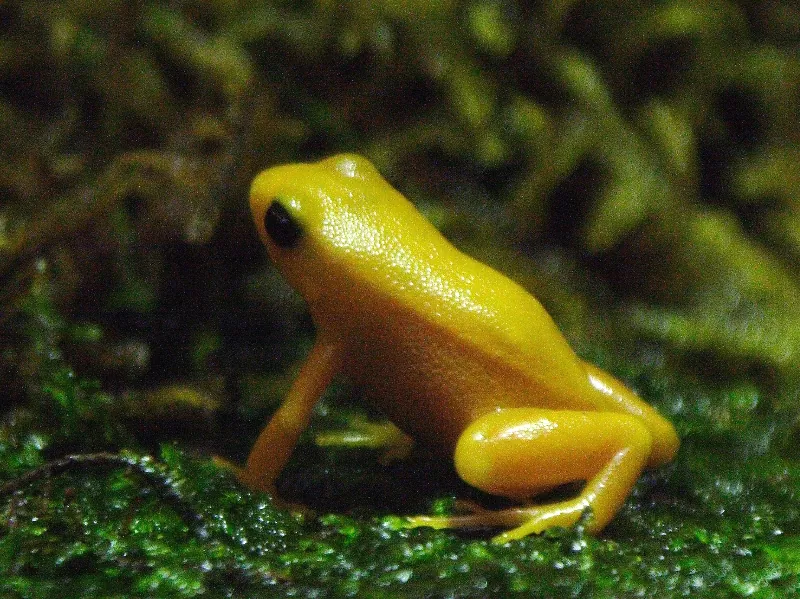
 Bí o ṣe lè dá a mọ̀
Agbára májèlé
Awọ rẹ̀ ní májèlé. Ó léwu láti fọwọ́ kàn án, lá a tàbí jẹ ẹ́.
Báwo ló ṣe léwu tó fún ènìyàn?
Ewu fún ènìyàn: Fúyẹ́Bí ìtani oyin tàbí kò tó bẹ́ẹ̀. Kò fẹ́rẹ̀ẹ́ léwu fún ènìyàn.Kí ni ó máa ń ṣe nígbà tí ẹ̀rù bá bà á?
Its bright colours warn predators that it is poisonous.1
 Bí ẹnìkan bá fọwọ́ kàn án tàbí jẹ ẹ́
- Bí ẹnìkan bá fọwọ́ kan ọ̀kan: fọ ọwọ́ dáadáa, má sì fọwọ́ kan ojú tàbí ẹnu. Bí ọmọdé tàbí ẹran ọ̀sìn bá lá ọ̀kan tàbí jẹ ẹ́: pe ibùdó ìmọ̀ràn májèlé tàbí nọ́ńbà pàjáwìrì.
Máa kọ́kọ́ pe nọ́ńbà pàjáwìrì rẹ nígbà gbogbo (112, 000, 911). Èyí jẹ́ ìtọ́sọ́nà ìtọ́jú àkọ́kọ́ gbogbogbò, kì í ṣe ìmọ̀ràn ìṣègùn. Ìpìlẹ̀ ìtọ́jú àkọ́kọ́
 Wà láìléwu
- Má ṣe fọwọ́ kan, mú tàbí yọ ẹranko igbó lẹ́nu láéláé, kódà bí ó bá kéré, kódà bí ó bá dà bí ẹni pé ó ń sùn tàbí ó ti kú.
- Fún un ní àyè. Bí o bá pàdé ọ̀kan, farabalẹ̀, sẹ́yìn díẹ̀díẹ̀ kí o sì jẹ́ kí ó máa bá ọ̀nà rẹ̀ lọ.
- Bí o bá fọwọ́ kàn án tàbí jẹ ẹ́: má ṣe fọwọ́ pa ojú tàbí ẹnu rẹ, fọ ọwọ́ rẹ kí o sì wá ìrànlọ́wọ́ ìṣègùn.
Kò wá ọ kiri láti ṣe ọ́ léṣe. Májèlé rẹ̀ wà níbẹ̀ kìkì kí ohunkóhun má baà jẹ ẹ́. Sí i nípa wíwà láìléwu
Báwo ló ṣe tóbi tó?
Báwo ló ṣe gùn tó?
 ó gùn tó pínì ìwé (paper clip)
 lè sáré mítà 100 ní ìṣẹ́jú-àáyá 110 (ènìyàn tó yára jùlọ nílò 9.6)
Báwo ni Golden mantella ṣe tóbi tó tí a bá fi wé ÌWỌ?
Ìṣirò nìkan nínú bráwúsà rẹ. A kò fi ohunkóhun pamọ́, a kò sì fi ránṣẹ́ sí ibikíbi.
Báwo ló ṣe yára tó?


Òtítọ́
The golden mantella's skin toxins come from the small invertebrates it eats, not from its own body.1
A snake called Thamnosophis lateralis and a skink of the genus Zonosaurus have been seen preying on it at Torotorofotsy Wetland, even though it is poisonous.1
Its bright colours are an example of aposematism, a warning signal to predators about its poison.1
It has a convergent evolution link with the poison dart frogs of Central and South America, which are not closely related but share similar traits.1
It is popular in the pet trade because it is active during the day, has attractive colours and is fairly easy to keep.1
Males often call from hidden spots near water, and their call is a pleasant, repeated click.1
Fún àwọn amòye oró
- Orúkọ sáyẹ́ǹsì
- Mantella aurantiaca
- Ẹgbẹ́
- Àkèré onímájèlé, ọ̀pọ̀lọ́ àti newt
- Ìdílé
- Mantellidae2
- Ètò
- Anura
- Àwọn kọ́ńtínẹ́ńtì
- Áfíríkà
- Àwọn ọmọ
- Eggs are laid on land in moist leaf litter near water. When the rains come, the tadpoles are washed from the land into the water.1
- Bí ó ṣe ń ṣe nínú igbó
- Critically endangered1
- Ewu fún ènìyàn
- 1 / 5: Fúyẹ́3
Ibi tí àwọn òtítọ́ ti wá
- Golden mantella (Wikipedia (CC BY-SA 4.0))
- Mantella aurantiaca (iNaturalist): orúkọ àti ìpínsísọ̀rí.
- Venom Wiki: ìpele ewu, ìtóbi déédé àti àfojúbù ìyára jẹ́ tiwa. Wo bí a ṣe ń ṣírò wọn: Bí a ṣe ń díwọ̀n ewu.
Gbogbo òtítọ́ ojú-ìwé yìí ní nọ́ńbà tó tọ́ka sí orísun rẹ̀. Bí a bá ṣe àṣìṣe, má bínú, olólùfẹ́ ẹranko ni wá, kì í ṣe ìwé ìròyìn sáyẹ́ǹsì. Sọ fún wa ní [email protected] a ó sì tún un ṣe.
 Ebi ń pa àkekèé! Iṣẹ́ akanṣe ẹnì kan ṣoṣo ni Venom Wiki: ọ̀fẹ́ ni, kò sí ìpolówó, kò sì sí olùtọpinpin. Ẹ̀bùn kékeré ń ràn án lọ́wọ́ láti wà lórí íńtánẹ́ẹ̀tì.Bọ́ àkekèé
Sí i láti inú ẹgbẹ́ kan náà: Àkèré onímájèlé, ọ̀pọ̀lọ́ àti newt
 Iberian ribbed newtÀkèré onímájèlé, ọ̀pọ̀lọ́ àti newtAláìléwu
 Tomato frogÀkèré onímájèlé, ọ̀pọ̀lọ́ àti newtAláìléwu
 African common toadÀkèré onímájèlé, ọ̀pọ̀lọ́ àti newtÓ kàn ń dunniMá ṣe fọwọ́ kàn án
 Baron's mantellaÀkèré onímájèlé, ọ̀pọ̀lọ́ àti newtAláìléwu
 Blue-legged mantellaÀkèré onímájèlé, ọ̀pọ̀lọ́ àti newtAláìléwu
 Climbing mantellaÀkèré onímájèlé, ọ̀pọ̀lọ́ àti newtAláìléwu
 Black mamba
 Deathstalker
 Egyptian cobra
 Puff adder
 Boomslang
 Fat-tailed scorpion