
 Áfíríkà
 Éṣíà
Éṣíà Yúróòpù
 Gúúsù Amẹ́ríkà
 Ọsirélíà àti Òṣéáníà
 Antáktíkà
 Òkun Pàsífíìkì
 Òkun Àtìláńtíìkì
 Òkun Íńdíà
 Òkun Áktíkì
 Òkun Mẹditaréníà
 Òkun Pupa
 Òkun Káríbíànù
 Òkun Coral
 Òkun Gúúsù Ṣáínà
 Òkun Fílípínì
 Òkun Andaman
 Òkun Àríwá
 Òkun Tímọ̀ àti Òkun Àráfúrà
 Ìyawọlẹ̀ Òkun Bẹ̀ngál
 Ìyawọlẹ̀ Òkun Kalifọ́níà
Hura centipede
 Ìbùjẹ
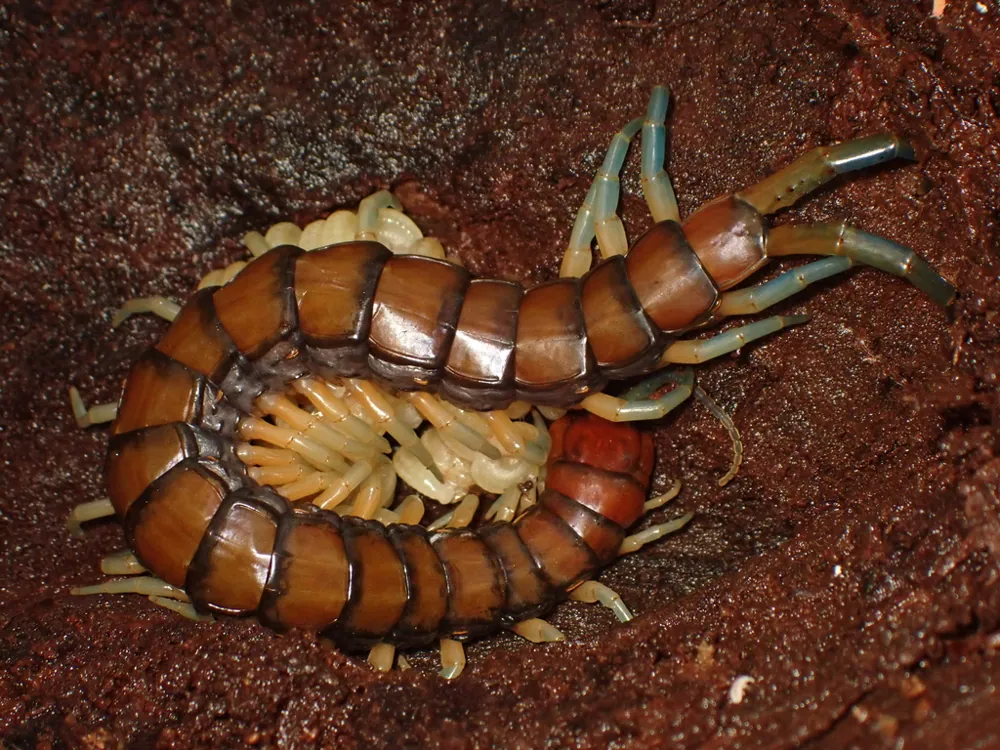
ÌbùjẹThe hura, also called the giant centipede, is a centipede found in Australia and New Zealand. In New Zealand it can grow to over 20 centimetres, which makes it one of the largest centipedes there. It hunts small animals and can give a painful bite when threatened.1


 Bí o ṣe lè dá a mọ̀
- The head and first body plate are reddish-brown, and the other body plates are olive-brown.1
- It has large black forcipules, which are fang-like claws near the head.1
- Its legs are yellowish at the base and turn green towards the tip.1
- The last pair of legs has light blue tips.1
- In New Zealand it can exceed 20 cm long, but in Australia it usually reaches only about 3.9 cm.1
Agbára oró
Oró ń jáde láti inú eyín oró tàbí eyín rẹ̀ nígbà tí ó bá bùjẹ.
Kí ni oró rẹ̀ máa ń ṣe?
The bite can cause swelling. In one recorded case it caused severe pain and vomiting.1
Báwo ló ṣe léwu tó fún ènìyàn?
Ewu fún ènìyàn: Ó ń dunniÓ lè dunni gan-an, ṣùgbọ́n kì í fẹ́rẹ̀ẹ́ le rárá.When threatened, it can inflict a painful bite.1
Kí ni ó máa ń ṣe nígbà tí ẹ̀rù bá bà á?
When threatened, it uses its forcipules to bite.1
 Bí ó bá bùjẹ
- Fọ ibi ìbùjẹ náà, tù ú tàbí rì í sínú omi lílọ́wọ́ọ́wọ́ fún ìrora, kí o sì wá ìrànlọ́wọ́ ìṣègùn bí ó bá ń burú sí i.
Máa kọ́kọ́ pe nọ́ńbà pàjáwìrì rẹ nígbà gbogbo (112, 000, 911). Èyí jẹ́ ìtọ́sọ́nà ìtọ́jú àkọ́kọ́ gbogbogbò, kì í ṣe ìmọ̀ràn ìṣègùn. Ìpìlẹ̀ ìtọ́jú àkọ́kọ́
 Wà láìléwu
- Má ṣe fọwọ́ kan, mú tàbí yọ ẹranko igbó lẹ́nu láéláé, kódà bí ó bá kéré, kódà bí ó bá dà bí ẹni pé ó ń sùn tàbí ó ti kú.
- Fún un ní àyè. Bí o bá pàdé ọ̀kan, farabalẹ̀, sẹ́yìn díẹ̀díẹ̀ kí o sì jẹ́ kí ó máa bá ọ̀nà rẹ̀ lọ.
- Bí ọ̀kan bá bù ọ́ jẹ: farabalẹ̀, má ṣe mira, pe nọ́ńbà pàjáwìrì rẹ (112, 000, 911) tàbí lọ sí ilé ìwòsàn kíákíá. Rántí bí ó ṣe rí, fọ́tò máa ń ṣèrànwọ́.
Kò wá ọ kiri láti ṣe ọ́ léṣe. Ó ń lo oró rẹ̀ láti mú oúnjẹ tàbí láti dáàbò bo ara rẹ̀, ó sì fẹ́ràn láti farapamọ́ jù. Sí i nípa wíwà láìléwu
Báwo ló ṣe tóbi tó?
Báwo ló ṣe gùn tó?
 ó gùn tó bíríkì ìṣeré 6 tí a tò sí ìlà kan
 lè sáré mítà 100 ní ìṣẹ́jú-àáyá 180 (ènìyàn tó yára jùlọ nílò 9.6)
Báwo ni Hura centipede ṣe tóbi tó tí a bá fi wé ÌWỌ?
Ìṣirò nìkan nínú bráwúsà rẹ. A kò fi ohunkóhun pamọ́, a kò sì fi ránṣẹ́ sí ibikíbi.
Báwo ló ṣe yára tó?


Òtítọ́
In a study on the Three Kings Islands, researchers reportedly had to wrap their sleeping bags in tinfoil to warn them of the centipedes nearby.1
In New Zealand, introduced rats and European hedgehogs eat hura, so the centipedes are most common on islands without these pests.1
North Island brown kiwi are known to prey on hura.1
Its blood-like fluid, called haemolymph, has a high concentration of protein and is thought to be typical of more primitive arthropods.1
Ibi tí àwọn òtítọ́ ti wá
- Cormocephalus rubriceps (Wikipedia (CC BY-SA 4.0))
- Cormocephalus rubriceps (iNaturalist): orúkọ àti ìpínsísọ̀rí.
- Venom Wiki: ìpele ewu, ìtóbi déédé àti àfojúbù ìyára jẹ́ tiwa. Wo bí a ṣe ń ṣírò wọn: Bí a ṣe ń díwọ̀n ewu.
Gbogbo òtítọ́ ojú-ìwé yìí ní nọ́ńbà tó tọ́ka sí orísun rẹ̀. Bí a bá ṣe àṣìṣe, má bínú, olólùfẹ́ ẹranko ni wá, kì í ṣe ìwé ìròyìn sáyẹ́ǹsì. Sọ fún wa ní [email protected] a ó sì tún un ṣe.
 Ebi ń pa àkekèé! Iṣẹ́ akanṣe ẹnì kan ṣoṣo ni Venom Wiki: ọ̀fẹ́ ni, kò sí ìpolówó, kò sì sí olùtọpinpin. Ẹ̀bùn kékeré ń ràn án lọ́wọ́ láti wà lórí íńtánẹ́ẹ̀tì.Bọ́ àkekèé
Sí i láti inú ẹgbẹ́ kan náà: Àwọn centipede (ọ̀kùn olóró)
 Giant Australian centipedeÀwọn centipede (ọ̀kùn olóró)Ó kàn ń dunni
 Orange-footed centipedeÀwọn centipede (ọ̀kùn olóró)Ó kàn ń dunni
 Tanzanian blue ringleg centipedeÀwọn centipede (ọ̀kùn olóró)Ó kàn ń dunni
 Peruvian giant centipedeÀwọn centipede (ọ̀kùn olóró)Ó nílò dókítà
 Chinese red-headed centipedeÀwọn centipede (ọ̀kùn olóró)Ó nílò dókítà
 Giant desert centipedeÀwọn centipede (ọ̀kùn olóró)Ó kàn ń dunni
 Coastal taipan
 Common death adder
 Eastern brown snake
 Ejò taipan inú ilẹ̀
 Sydney funnel-web spider
 Ejò ẹkùn