
 Áfíríkà
 Éṣíà
Éṣíà Yúróòpù
 Gúúsù Amẹ́ríkà
 Ọsirélíà àti Òṣéáníà
 Antáktíkà
 Òkun Pàsífíìkì
 Òkun Àtìláńtíìkì
 Òkun Íńdíà
 Òkun Áktíkì
 Òkun Mẹditaréníà
 Òkun Pupa
 Òkun Káríbíànù
 Òkun Coral
 Òkun Gúúsù Ṣáínà
 Òkun Fílípínì
 Òkun Andaman
 Òkun Àríwá
 Òkun Tímọ̀ àti Òkun Àráfúrà
 Ìyawọlẹ̀ Òkun Bẹ̀ngál
 Ìyawọlẹ̀ Òkun Kalifọ́níà
Northern brown snake
 Ìbùjẹ
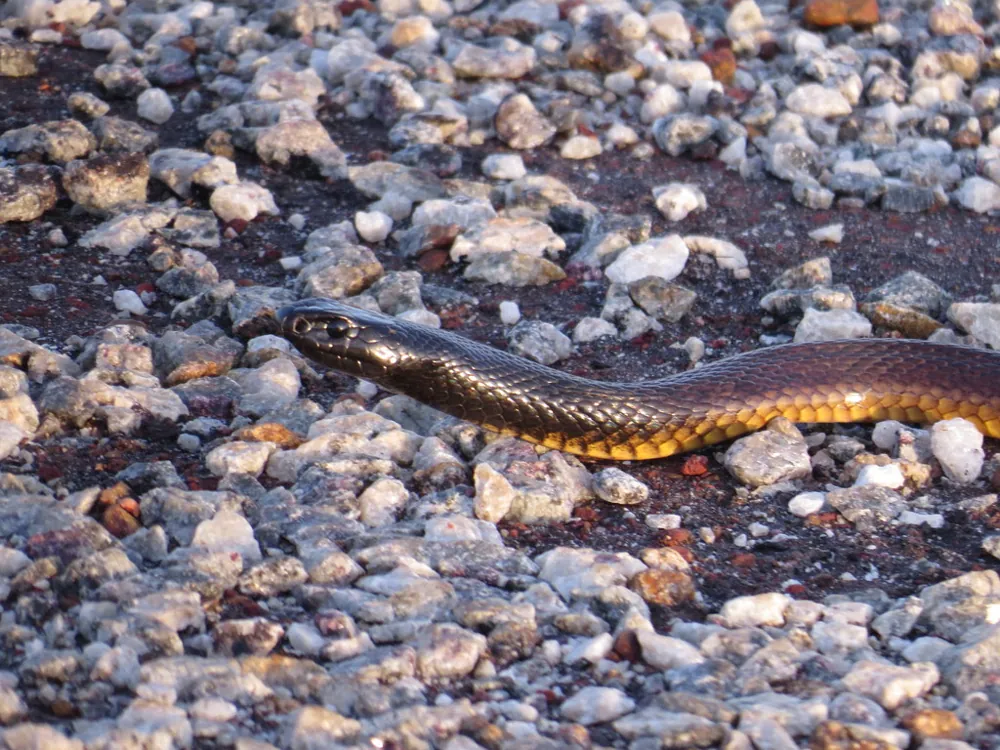
ÌbùjẹThe northern brown snake is a fast, highly venomous snake found across the north of Australia. It lives in dry country, woodlands and grasslands, and sometimes near towns. It matters because its bite can be deadly, so it is important to know what it looks like and to keep your distance.1


 Bí o ṣe lè dá a mọ̀
- Its back can be shades of orange-brown with flecks and bands, or it can be plain.1
- Its belly is cream to orange with pink blotches.1
- Some individuals have jet black heads.1
- Others have a black 'V' shape on the back of the neck, just below the head.1
- It grows up to 1.8 m in total length, including the tail.1
A sábà máa ń ṣì í mọ̀ sí: Some northern brown snakes have jet black heads, which can cause them to be confused with the black-headed python.1
Agbára oró
Oró ń jáde láti inú eyín oró tàbí eyín rẹ̀ nígbà tí ó bá bùjẹ.
Kí ni oró rẹ̀ máa ń ṣe?
Its venom contains neurotoxins, which attack the nerves, nephrotoxins, which damage the kidneys, and a procoagulant, which affects blood clotting. Although its venom is not the most toxic in the brown snake genus, each bite can deliver a relatively large amount, so it has a high potential to cause a deadly bite. Human symptoms include headache, nausea or vomiting, abdominal pain, severe coagulopathy (serious blood clotting problems) and sometimes kidney damage.1
Báwo ló ṣe léwu tó fún ènìyàn?
Ewu fún ènìyàn: Ó léwu gan-anÓ lè pa ènìyàn tí kò bá rí ìtọ́jú.The northern brown snake has a high potential to deliver a deadly bite. The bite is usually painless and is difficult to see because the fangs are small, so a bite can go unnoticed. In dogs and cats, paralysis is also likely to occur.1
Kí ni ó máa ń ṣe nígbà tí ẹ̀rù bá bà á?
It usually prefers to retreat from danger, but it is very aggressive when disturbed or threatened and will defend itself if cornered.1
 Bí ó bá bùjẹ
- Dídì pẹ̀lú ìfúnpá láìmira (pressure immobilisation): fi bándéèjì rọ́bà (elastic) tó le wé ibi ìbùjẹ náà, lẹ́yìn náà wé e sókè títí bo gbogbo apá tàbí ẹsẹ̀ náà, fi igi ìdábùú (splint) dì í, kí o sì jẹ́ kí ẹni náà wà láìmira rárá títí ìrànlọ́wọ́ yóò fi dé.
- Má ṣe fọ ibi ìbùjẹ náà: ilé ìwòsàn lè ṣàyẹ̀wò oró tó kù lára awọ láti yan oògùn apa-oró (antivenom) tó tọ́.
Máa kọ́kọ́ pe nọ́ńbà pàjáwìrì rẹ nígbà gbogbo (112, 000, 911). Èyí jẹ́ ìtọ́sọ́nà ìtọ́jú àkọ́kọ́ gbogbogbò, kì í ṣe ìmọ̀ràn ìṣègùn. Ìpìlẹ̀ ìtọ́jú àkọ́kọ́
 Wà láìléwu
- Má ṣe fọwọ́ kan, mú tàbí yọ ẹranko igbó lẹ́nu láéláé, kódà bí ó bá kéré, kódà bí ó bá dà bí ẹni pé ó ń sùn tàbí ó ti kú.
- Fún un ní àyè. Bí o bá pàdé ọ̀kan, farabalẹ̀, sẹ́yìn díẹ̀díẹ̀ kí o sì jẹ́ kí ó máa bá ọ̀nà rẹ̀ lọ.
- Bí ọ̀kan bá bù ọ́ jẹ: farabalẹ̀, má ṣe mira, pe nọ́ńbà pàjáwìrì rẹ (112, 000, 911) tàbí lọ sí ilé ìwòsàn kíákíá. Rántí bí ó ṣe rí, fọ́tò máa ń ṣèrànwọ́.
Kò wá ọ kiri láti ṣe ọ́ léṣe. Ó ń lo oró rẹ̀ láti mú oúnjẹ tàbí láti dáàbò bo ara rẹ̀, ó sì fẹ́ràn láti farapamọ́ jù. Sí i nípa wíwà láìléwu
Báwo ló ṣe tóbi tó?
Báwo ló ṣe gùn tó?
 ó gùn tó ológbò ilé 4 láti imú dé ìrù
 ó gùn tó ọ̀gẹ̀dẹ̀ 10 tí a tò tẹ̀léra
 lè sáré mítà 100 ní ìṣẹ́jú-àáyá 48 (ènìyàn tó yára jùlọ nílò 9.6)
Báwo ni Northern brown snake ṣe tóbi tó tí a bá fi wé ÌWỌ?
Ìṣirò nìkan nínú bráwúsà rẹ. A kò fi ohunkóhun pamọ́, a kò sì fi ránṣẹ́ sí ibikíbi.
Báwo ló ṣe yára tó?


Òtítọ́
Although it is generally shy, it has been known to practise cannibalism, though this is not common.1
It can climb small shrubs or trees, although it is not a tree-dwelling species.1
Its name, gwardar, is an Aboriginal word meaning "go the long way around".1
It may become active at night during the warmer months, but it is otherwise active during the day and enjoys sunlight.1
Olùfọ́ àròsọ
Àròsọ: Snakes like this one always attack people.
Òtítọ́: The northern brown snake is generally cautious and shy, and it usually retreats rather than attacks. It only defends itself strongly when it is cornered or threatened.1
Fún àwọn amòye oró
Ibi tí àwọn òtítọ́ ti wá
- Pseudonaja nuchalis (Wikipedia (CC BY-SA 4.0))
- Pseudonaja nuchalis (iNaturalist): orúkọ àti ìpínsísọ̀rí.
- Venom Wiki: ìpele ewu, ìtóbi déédé àti àfojúbù ìyára jẹ́ tiwa. Wo bí a ṣe ń ṣírò wọn: Bí a ṣe ń díwọ̀n ewu.
Gbogbo òtítọ́ ojú-ìwé yìí ní nọ́ńbà tó tọ́ka sí orísun rẹ̀. Bí a bá ṣe àṣìṣe, má bínú, olólùfẹ́ ẹranko ni wá, kì í ṣe ìwé ìròyìn sáyẹ́ǹsì. Sọ fún wa ní [email protected] a ó sì tún un ṣe.
 Ebi ń pa àkekèé! Iṣẹ́ akanṣe ẹnì kan ṣoṣo ni Venom Wiki: ọ̀fẹ́ ni, kò sí ìpolówó, kò sì sí olùtọpinpin. Ẹ̀bùn kékeré ń ràn án lọ́wọ́ láti wà lórí íńtánẹ́ẹ̀tì.Bọ́ àkekèé
Sí i láti inú ẹgbẹ́ kan náà: Àwọn ejò Ọsirélíà
 Coastal taipan
 Common death adder
 Eastern brown snake
 Ejò taipan inú ilẹ̀
 Ejò ẹkùn
 Collett's snake
Ó tún ń gbé ní: Ọsirélíà àti Òṣéáníà
 Sydney funnel-web spiderTarantula àti funnel-webApani
 Redback spiderAlántakùnÓ nílò dókítà
 Brown tree snakeEjò oníyín ẹ̀yìnÓ kàn ń dunni
 Hooded pitohuiÀwọn ẹranko onímájèlé mìírànÓ kàn ń dunniMá ṣe fọwọ́ kàn án
 PlatypusẸranko afọmúbọ́mọ olóróÓ kàn ń dunni
 Northern tree-dwelling funnel-web spiderTarantula àti funnel-webApani