
 Áfíríkà
 Éṣíà
Éṣíà Yúróòpù
 Gúúsù Amẹ́ríkà
 Ọsirélíà àti Òṣéáníà
 Antáktíkà
 Òkun Pàsífíìkì
 Òkun Àtìláńtíìkì
 Òkun Íńdíà
 Òkun Áktíkì
 Òkun Mẹditaréníà
 Òkun Pupa
 Òkun Káríbíànù
 Òkun Coral
 Òkun Gúúsù Ṣáínà
 Òkun Fílípínì
 Òkun Andaman
 Òkun Àríwá
 Òkun Tímọ̀ àti Òkun Àráfúrà
 Ìyawọlẹ̀ Òkun Bẹ̀ngál
 Ìyawọlẹ̀ Òkun Kalifọ́níà
Brown tree snake
 Ìbùjẹ
ÌbùjẹThe brown tree snake is a slender, night-active snake that climbs well and hunts in trees and on the ground. It lives in coastal northern and eastern Australia, eastern Indonesia, Papua New Guinea and nearby islands. It is famous for harming wildlife on the island of Guam, where it was introduced by accident.1



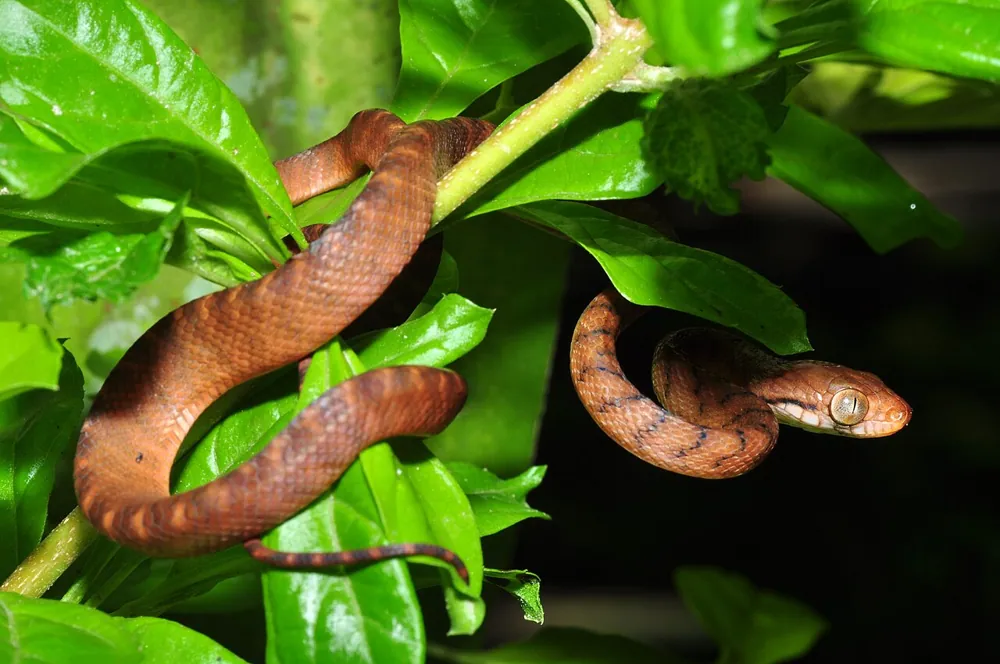
 Bí o ṣe lè dá a mọ̀
Agbára oró
Oró ń jáde láti inú eyín oró tàbí eyín rẹ̀ nígbà tí ó bá bùjẹ.
Kí ni oró rẹ̀ máa ń ṣe?
It has two small, grooved fangs at the back of the mouth, so venom flows into the bite slowly rather than being injected in one go. The venom is weakly neurotoxic, meaning it affects the nerves, and may also damage cells locally. Its effects are trivial for adults, and it is mainly used to subdue lizards.1
Báwo ló ṣe léwu tó fún ènìyàn?
Ewu fún ènìyàn: Ó ń dunniÓ lè dunni gan-an, ṣùgbọ́n kì í fẹ́rẹ̀ẹ́ le rárá.The snake is considered aggressive when threatened but not dangerous to adult humans. Serious medical consequences have been limited to children, who are more affected because of their low body mass. On Guam, it has caused widespread power outages, pet losses and emotional distress to residents.1
Kí ni ó máa ń ṣe nígbà tí ẹ̀rù bá bà á?
When threatened it is highly aggressive, lunging and striking at the attacker repeatedly.1
 Bí ó bá bùjẹ
- Fọ ibi ìbùjẹ náà, jẹ́ kí ẹni náà farabalẹ̀, kí o sì wá ìrànlọ́wọ́ ìṣègùn. Àwọn irú kan (bí boomslang) lè pani ní wákàtí púpọ̀ lẹ́yìn náà.
Máa kọ́kọ́ pe nọ́ńbà pàjáwìrì rẹ nígbà gbogbo (112, 000, 911). Èyí jẹ́ ìtọ́sọ́nà ìtọ́jú àkọ́kọ́ gbogbogbò, kì í ṣe ìmọ̀ràn ìṣègùn. Ìpìlẹ̀ ìtọ́jú àkọ́kọ́
 Wà láìléwu
- Má ṣe fọwọ́ kan, mú tàbí yọ ẹranko igbó lẹ́nu láéláé, kódà bí ó bá kéré, kódà bí ó bá dà bí ẹni pé ó ń sùn tàbí ó ti kú.
- Fún un ní àyè. Bí o bá pàdé ọ̀kan, farabalẹ̀, sẹ́yìn díẹ̀díẹ̀ kí o sì jẹ́ kí ó máa bá ọ̀nà rẹ̀ lọ.
- Bí ọ̀kan bá bù ọ́ jẹ: farabalẹ̀, má ṣe mira, pe nọ́ńbà pàjáwìrì rẹ (112, 000, 911) tàbí lọ sí ilé ìwòsàn kíákíá. Rántí bí ó ṣe rí, fọ́tò máa ń ṣèrànwọ́.
Kò wá ọ kiri láti ṣe ọ́ léṣe. Ó ń lo oró rẹ̀ láti mú oúnjẹ tàbí láti dáàbò bo ara rẹ̀, ó sì fẹ́ràn láti farapamọ́ jù. Sí i nípa wíwà láìléwu
Báwo ló ṣe tóbi tó?
Báwo ló ṣe gùn tó?
 ó gùn tó ológbò ilé 4 láti imú dé ìrù
 ó gùn tó ọ̀gẹ̀dẹ̀ 11 tí a tò tẹ̀léra
 lè sáré mítà 100 ní ìṣẹ́jú-àáyá 60 (ènìyàn tó yára jùlọ nílò 9.6)
Báwo ni Brown tree snake ṣe tóbi tó tí a bá fi wé ÌWỌ?
Ìṣirò nìkan nínú bráwúsà rẹ. A kò fi ohunkóhun pamọ́, a kò sì fi ránṣẹ́ sí ibikíbi.
Báwo ló ṣe yára tó?


Òtítọ́
Snakes on Guam have been seen moving up large smooth cylinders using a method called 'lasso locomotion', which had not been recorded in snakes before. It is tiring, so they move slowly and stop often.1
On Guam, where prey is plentiful and there are few predators, the snakes have grown to 3 m, much longer than their typical 1 to 2 m in their native range.1
Shortly after World War II, the snake reached Guam by accident, probably as a stowaway in ship cargo or in aircraft landing gear. Its numbers then grew to unprecedented levels.1
Trained dogs are used on Guam to find and remove snakes before cargo and transport vessels leave the island.1
Female brown tree snakes have been seen performing courtship behaviours normally used by males, such as tongue-flicking and head-jerking.1
Brown tree snakes can survive for long periods without food.1
Olùfọ́ àròsọ
Àròsọ: The brown tree snake is a deadly snake that is dangerous to adults.
Òtítọ́: It is not considered dangerous to adult humans. Its venom is weak and serious effects have mainly been seen in young children.1
Fún àwọn amòye oró
Ibi tí àwọn òtítọ́ ti wá
- Brown tree snake (Wikipedia (CC BY-SA 4.0))
- Boiga irregularis (iNaturalist): orúkọ àti ìpínsísọ̀rí.
- Venom Wiki: ìpele ewu, ìtóbi déédé àti àfojúbù ìyára jẹ́ tiwa. Wo bí a ṣe ń ṣírò wọn: Bí a ṣe ń díwọ̀n ewu.
Gbogbo òtítọ́ ojú-ìwé yìí ní nọ́ńbà tó tọ́ka sí orísun rẹ̀. Bí a bá ṣe àṣìṣe, má bínú, olólùfẹ́ ẹranko ni wá, kì í ṣe ìwé ìròyìn sáyẹ́ǹsì. Sọ fún wa ní [email protected] a ó sì tún un ṣe.
 Ebi ń pa àkekèé! Iṣẹ́ akanṣe ẹnì kan ṣoṣo ni Venom Wiki: ọ̀fẹ́ ni, kò sí ìpolówó, kò sì sí olùtọpinpin. Ẹ̀bùn kékeré ń ràn án lọ́wọ́ láti wà lórí íńtánẹ́ẹ̀tì.Bọ́ àkekèé
 Tiger keelback
 Red-necked keelback
 Green cat snake
 Mangrove snake
 Asian vine snake
 Golden tree snake
 Deathstalker
 Indian cobra
 Indian saw-scaled viper
 King cobra
 Puff adder
 Paramọlẹ Russell
_(8387580552).jpg)