
 Áfíríkà
 Éṣíà
Éṣíà Yúróòpù
 Gúúsù Amẹ́ríkà
 Ọsirélíà àti Òṣéáníà
 Antáktíkà
 Òkun Pàsífíìkì
 Òkun Àtìláńtíìkì
 Òkun Íńdíà
 Òkun Áktíkì
 Òkun Mẹditaréníà
 Òkun Pupa
 Òkun Káríbíànù
 Òkun Coral
 Òkun Gúúsù Ṣáínà
 Òkun Fílípínì
 Òkun Andaman
 Òkun Àríwá
 Òkun Tímọ̀ àti Òkun Àráfúrà
 Ìyawọlẹ̀ Òkun Bẹ̀ngál
 Ìyawọlẹ̀ Òkun Kalifọ́níà
Port Jackson shark
 Ẹ̀gún olóró
The Port Jackson shark is a bottom-dwelling shark that lives in the cool coastal waters of southern Australia. It is active mostly at night, when it hunts shellfish, sea urchins and fish. It is harmless to people, though its spines have a reputation that is not confirmed.1



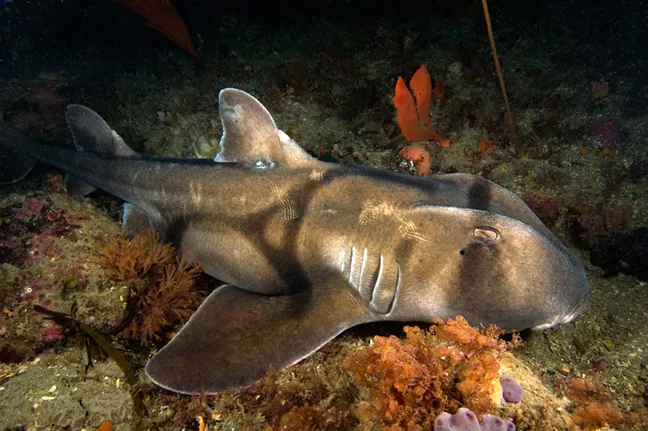
 Bí o ṣe lè dá a mọ̀
- Grey-brown body with dark brown, harness-like bands, including one that runs across the eyes.1
- Large, blunt, flat head with raised ridges above the eyes.1
- A spine at the front edge of each of its two dorsal fins, which are nearly equal in size.1
- Front teeth are small and pointed, while back teeth are flat and blunt.1
- Adults can grow up to 1.65 metres long.1
Agbára oró
Ẹ̀gún mímú ló ń gbé oró náà. Títẹ̀ ẹ́ mọ́lẹ̀ tàbí dídì í mú máa ń dunni.
Báwo ló ṣe léwu tó fún ènìyàn?
Ewu fún ènìyàn: Fúyẹ́Bí ìtani oyin tàbí kò tó bẹ́ẹ̀. Kò fẹ́rẹ̀ẹ́ léwu fún ènìyàn.The shark poses no danger to humans. In October 2011, a man was bitten at Elwood Beach near Melbourne, but the bite did not pierce the skin and he was able to swim away while the shark was still attached to his calf.1
 Bí ẹ̀gún rẹ̀ bá gún ọ
- Fi ọgbẹ́ náà sínú omi gbígbóná, tó gbóná tó bí ẹni náà ṣe lè fara dà á láìjóná (fi ọwọ́ ara rẹ dán an wò), fún ìṣẹ́jú 30 sí 90. Wá ìrànlọ́wọ́ ìṣègùn, pàápàá fún ẹja òkúta àti stingray.
Máa kọ́kọ́ pe nọ́ńbà pàjáwìrì rẹ nígbà gbogbo (112, 000, 911). Èyí jẹ́ ìtọ́sọ́nà ìtọ́jú àkọ́kọ́ gbogbogbò, kì í ṣe ìmọ̀ràn ìṣègùn. Ìpìlẹ̀ ìtọ́jú àkọ́kọ́
 Wà láìléwu
- Má ṣe fọwọ́ kan, mú tàbí yọ ẹranko igbó lẹ́nu láéláé, kódà bí ó bá kéré, kódà bí ó bá dà bí ẹni pé ó ń sùn tàbí ó ti kú.
- Fún un ní àyè. Bí o bá pàdé ọ̀kan, farabalẹ̀, sẹ́yìn díẹ̀díẹ̀ kí o sì jẹ́ kí ó máa bá ọ̀nà rẹ̀ lọ.
- Bí ẹ̀gún rẹ̀ bá gún ọ: farabalẹ̀, má ṣe mira, pe nọ́ńbà pàjáwìrì rẹ (112, 000, 911) tàbí lọ sí ilé ìwòsàn kíákíá. Rántí bí ó ṣe rí, fọ́tò máa ń ṣèrànwọ́.
Kò wá ọ kiri láti ṣe ọ́ léṣe. Ó ń lo oró rẹ̀ láti mú oúnjẹ tàbí láti dáàbò bo ara rẹ̀, ó sì fẹ́ràn láti farapamọ́ jù. Sí i nípa wíwà láìléwu
Níbo ní ayé?
Báwo ló ṣe tóbi tó?
Báwo ló ṣe gùn tó?
 ó gùn tó ológbò ilé 3 láti imú dé ìrù
 ó gùn tó ọ̀gẹ̀dẹ̀ 9 tí a tò tẹ̀léra
 lè lúwẹ̀ẹ́ gígùn adágún ìwẹ̀ ńlá (50 m) ní ìṣẹ́jú-àáyá 8.2
Báwo ni Port Jackson shark ṣe tóbi tó tí a bá fi wé ÌWỌ?
Ìṣirò nìkan nínú bráwúsà rẹ. A kò fi ohunkóhun pamọ́, a kò sì fi ránṣẹ́ sí ibikíbi.
Báwo ló ṣe yára tó?

Òtítọ́
It can turn its stomach inside out and spit out unwanted contents.1
It can breathe while lying still on the bottom. It pumps water in through its first gill slit and out through the others, so it does not need to swim with its mouth open.1
Juveniles have individual personalities. Some are bolder than others when exploring new places, and they respond differently to stress.1
Juveniles can learn to link bubbles, lights or sounds with food, and they can learn by watching other sharks.1
Adults are often seen resting together in caves, but juveniles do not seem to be social.1
Each year it migrates south in summer and returns north to breed in winter.1
Olùfọ́ àròsọ
Àròsọ: Port Jackson sharks are dangerous to people.
Òtítọ́: The shark poses no danger to humans. Its spines are rumoured to be venomous, but this has not been confirmed.1
Fún àwọn amòye oró
- Orúkọ sáyẹ́ǹsì
- Heterodontus portusjacksoni
- Ẹgbẹ́
- Ẹja olóró
- Ìdílé
- Heterodontidae2
- Ètò
- Heterodontiformes
- Àwọn kọ́ńtínẹ́ńtì
- Òkun Íńdíà, Òkun Gúúsù, Antáktíkà, Àwọn òkun ńlá
- Àwọn ọmọ
- It lays eggs rather than giving birth to live young. From late August to mid-November, the female lays pairs of eggs every 8 to 17 days, up to eight pairs in total, and the eggs take 10 to 11 months to hatch.1
- Bí ó ṣe ń ṣe nínú igbó
- Least Concern (IUCN Red List)1
- Ewu fún ènìyàn
- 1 / 5: Fúyẹ́3
Ibi tí àwọn òtítọ́ ti wá
- Port Jackson shark (Wikipedia (CC BY-SA 4.0))
- Heterodontus portusjacksoni (iNaturalist): orúkọ àti ìpínsísọ̀rí.
- Venom Wiki: ìpele ewu, ìtóbi déédé àti àfojúbù ìyára jẹ́ tiwa. Wo bí a ṣe ń ṣírò wọn: Bí a ṣe ń díwọ̀n ewu.
Gbogbo òtítọ́ ojú-ìwé yìí ní nọ́ńbà tó tọ́ka sí orísun rẹ̀. Bí a bá ṣe àṣìṣe, má bínú, olólùfẹ́ ẹranko ni wá, kì í ṣe ìwé ìròyìn sáyẹ́ǹsì. Sọ fún wa ní [email protected] a ó sì tún un ṣe.
 Ebi ń pa àkekèé! Iṣẹ́ akanṣe ẹnì kan ṣoṣo ni Venom Wiki: ọ̀fẹ́ ni, kò sí ìpolówó, kò sì sí olùtọpinpin. Ẹ̀bùn kékeré ń ràn án lọ́wọ́ láti wà lórí íńtánẹ́ẹ̀tì.Bọ́ àkekèé
Sí i láti inú ẹgbẹ́ kan náà: Ẹja olóró
 Reef stonefish
 Red lionfish
 Estuarine stonefish
 Short-tail stingray
 Striped eel catfish
 Bluespotted ribbontail ray
Ó tún ń gbé ní: Òkun Íńdíà
 Australian box jellyfishJellyfish àti àwọn ẹ̀dá òkun tó ń ta niApaniMá ṣe fọwọ́ kàn án
 Geography coneÌgbín cone àti octopusApani
 Greater blue-ringed octopusÌgbín cone àti octopusApani
 Southern blue-ringed octopusÌgbín cone àti octopusApani
 Hawksbill sea turtleÀwọn ẹranko onímájèlé mìírànÓ lè pani
 Irukandji jellyfishJellyfish àti àwọn ẹ̀dá òkun tó ń ta niÓ lè paniMá ṣe fọwọ́ kàn án