
 Áfíríkà
 Éṣíà
Éṣíà Yúróòpù
 Gúúsù Amẹ́ríkà
 Ọsirélíà àti Òṣéáníà
 Antáktíkà
 Òkun Pàsífíìkì
 Òkun Àtìláńtíìkì
 Òkun Íńdíà
 Òkun Áktíkì
 Òkun Mẹditaréníà
 Òkun Pupa
 Òkun Káríbíànù
 Òkun Coral
 Òkun Gúúsù Ṣáínà
 Òkun Fílípínì
 Òkun Andaman
 Òkun Àríwá
 Òkun Tímọ̀ àti Òkun Àráfúrà
 Ìyawọlẹ̀ Òkun Bẹ̀ngál
 Ìyawọlẹ̀ Òkun Kalifọ́níà
Red-bellied black snake
 Ìbùjẹ
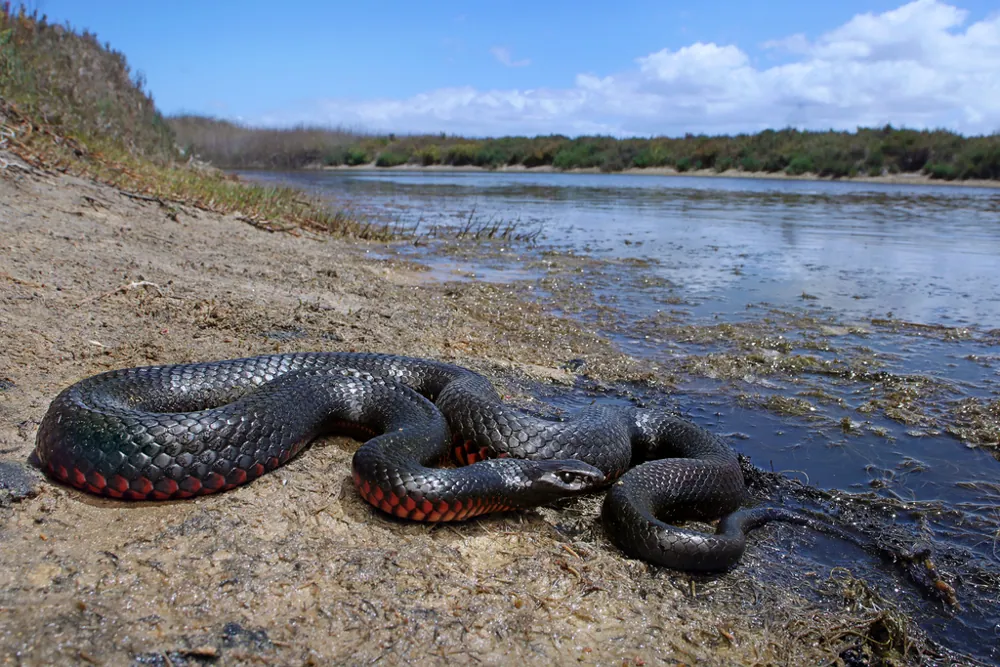
ÌbùjẹThe red-bellied black snake is a venomous snake found along the east coast of Australia, where it is one of the most commonly met snakes. It is glossy black on top, with bright red or orange sides. It often lives near water, and it sometimes turns up in backyards in towns and cities.1



 Bí o ṣe lè dá a mọ̀
- Glossy black upperparts with a light-grey snout and a completely black tail1
- Bright red or orange flanks that fade to a pink or dull red belly1
- No well-defined neck, so the head merges into the body1
- Adults average about 1.25 m in total length, including the tail1
A sábà máa ń ṣì í mọ̀ sí: Juveniles look similar to the eastern small-eyed snake, but that species lacks red flanks. Other similar snakes include the blue-bellied black snake and copperheads of the genus Austrelaps.1
Agbára oró
Oró ń jáde láti inú eyín oró tàbí eyín rẹ̀ nígbà tí ó bá bùjẹ.
Kí ni oró rẹ̀ máa ń ṣe?
Its venom contains neurotoxins, which attack the nerves, myotoxins, which damage muscle, and coagulants, which affect blood clotting. It also has haemolytic properties, meaning it can break down red blood cells. Bites can cause severe pain, local swelling, prolonged bleeding and local tissue death, especially on a finger. Victims can also lose their sense of smell, and nausea, vomiting, headache, abdominal pain, diarrhoea or heavy sweating can follow.1
Báwo ló ṣe léwu tó fún ènìyàn?
Ewu fún ènìyàn: Ó le gan-anÌbùjẹ nílò dókítà. Ikú kò wọ́pọ̀ rárá.No deaths have been recorded from its bite. It is less venomous than many other Australian elapid snakes, but it can still cause significant illness. It accounted for 16% of identified snakebite victims in Australia between 2005 and 2015. Severe local reactions may need surgery or, rarely, amputation.1
Kí ni ó máa ń ṣe nígbà tí ẹ̀rù bá bà á?
It is not aggressive and usually withdraws. If provoked, it raises its head and front body into a striking stance, widens and flattens its neck, and may bite as a last resort.1
 Bí ó bá bùjẹ
- Dídì pẹ̀lú ìfúnpá láìmira (pressure immobilisation): fi bándéèjì rọ́bà (elastic) tó le wé ibi ìbùjẹ náà, lẹ́yìn náà wé e sókè títí bo gbogbo apá tàbí ẹsẹ̀ náà, fi igi ìdábùú (splint) dì í, kí o sì jẹ́ kí ẹni náà wà láìmira rárá títí ìrànlọ́wọ́ yóò fi dé.
- Má ṣe fọ ibi ìbùjẹ náà: ilé ìwòsàn lè ṣàyẹ̀wò oró tó kù lára awọ láti yan oògùn apa-oró (antivenom) tó tọ́.
Máa kọ́kọ́ pe nọ́ńbà pàjáwìrì rẹ nígbà gbogbo (112, 000, 911). Èyí jẹ́ ìtọ́sọ́nà ìtọ́jú àkọ́kọ́ gbogbogbò, kì í ṣe ìmọ̀ràn ìṣègùn. Ìpìlẹ̀ ìtọ́jú àkọ́kọ́
 Wà láìléwu
- Má ṣe fọwọ́ kan, mú tàbí yọ ẹranko igbó lẹ́nu láéláé, kódà bí ó bá kéré, kódà bí ó bá dà bí ẹni pé ó ń sùn tàbí ó ti kú.
- Fún un ní àyè. Bí o bá pàdé ọ̀kan, farabalẹ̀, sẹ́yìn díẹ̀díẹ̀ kí o sì jẹ́ kí ó máa bá ọ̀nà rẹ̀ lọ.
- Bí ọ̀kan bá bù ọ́ jẹ: farabalẹ̀, má ṣe mira, pe nọ́ńbà pàjáwìrì rẹ (112, 000, 911) tàbí lọ sí ilé ìwòsàn kíákíá. Rántí bí ó ṣe rí, fọ́tò máa ń ṣèrànwọ́.
Kò wá ọ kiri láti ṣe ọ́ léṣe. Ó ń lo oró rẹ̀ láti mú oúnjẹ tàbí láti dáàbò bo ara rẹ̀, ó sì fẹ́ràn láti farapamọ́ jù. Sí i nípa wíwà láìléwu
Báwo ló ṣe tóbi tó?
Báwo ló ṣe gùn tó?
Báwo ló ṣe wúwo tó?

 ó gùn tó ajá 2.5 láti imú dé ìrù
 ó gùn tó ọ̀gẹ̀dẹ̀ 14 tí a tò tẹ̀léra
 lè sáré mítà 100 ní ìṣẹ́jú-àáyá 46 (ènìyàn tó yára jùlọ nílò 9.6)
Báwo ni Red-bellied black snake ṣe tóbi tó tí a bá fi wé ÌWỌ?
Ìṣirò nìkan nínú bráwúsà rẹ. A kò fi ohunkóhun pamọ́, a kò sì fi ránṣẹ́ sí ibikíbi.
Báwo ló ṣe yára tó?


Òtítọ́
It can stay underwater for as long as 23 minutes after fleeing into water.1
Some populations have evolved increased resistance to cane toad toxin in less than 75 years.1
Males of the species may wrestle in ritualised combat in spring, and rarely bite while doing so.1
A male was reported to travel 1,220 m in a single day while roaming for mates in spring.1
In winter it becomes relatively inactive rather than truly hibernating, and groups of up to six have been found under concrete slabs.1
Olùfọ́ àròsọ
Àròsọ: The red-bellied black snake is harmless and not venomous, because it has no visible fangs.
Òtítọ́: It is venomous and front-fanged, like all elapid snakes. It is less dangerous than many other Australian species, and no deaths have been recorded from its bite.1
Fún àwọn amòye oró
- Orúkọ sáyẹ́ǹsì
- Pseudechis porphyriacus
- Ẹgbẹ́
- Àwọn ejò Ọsirélíà
- Ìdílé
- Elapidae2
- Ètò
- Squamata
- Àwọn kọ́ńtínẹ́ńtì
- Ọsirélíà àti Òṣéáníà
- Àwọn ọmọ
- It gives birth to live young, usually in February or March, with between eight and 40 young per litter.1
- Ọjọ́ ayé
- nǹkan bí ọdún 251
- Bí ó ṣe ń ṣe nínú igbó
- Least concern (IUCN), although its numbers are thought to be declining1
- Ewu fún ènìyàn
- 3 / 5: Ó le gan-an3
Ibi tí àwọn òtítọ́ ti wá
- Red-bellied black snake (Wikipedia (CC BY-SA 4.0))
- Pseudechis porphyriacus (iNaturalist): orúkọ àti ìpínsísọ̀rí.
- Venom Wiki: ìpele ewu, ìtóbi déédé àti àfojúbù ìyára jẹ́ tiwa. Wo bí a ṣe ń ṣírò wọn: Bí a ṣe ń díwọ̀n ewu.
Gbogbo òtítọ́ ojú-ìwé yìí ní nọ́ńbà tó tọ́ka sí orísun rẹ̀. Bí a bá ṣe àṣìṣe, má bínú, olólùfẹ́ ẹranko ni wá, kì í ṣe ìwé ìròyìn sáyẹ́ǹsì. Sọ fún wa ní [email protected] a ó sì tún un ṣe.
 Ebi ń pa àkekèé! Iṣẹ́ akanṣe ẹnì kan ṣoṣo ni Venom Wiki: ọ̀fẹ́ ni, kò sí ìpolówó, kò sì sí olùtọpinpin. Ẹ̀bùn kékeré ń ràn án lọ́wọ́ láti wà lórí íńtánẹ́ẹ̀tì.Bọ́ àkekèé
Sí i láti inú ẹgbẹ́ kan náà: Àwọn ejò Ọsirélíà
 Coastal taipan
 Common death adder
 Eastern brown snake
 Ejò taipan inú ilẹ̀
 Ejò ẹkùn
 Collett's snake
Ó tún ń gbé ní: Ọsirélíà àti Òṣéáníà
 Sydney funnel-web spiderTarantula àti funnel-webApani
 Redback spiderAlántakùnÓ nílò dókítà
 Brown tree snakeEjò oníyín ẹ̀yìnÓ kàn ń dunni
 Hooded pitohuiÀwọn ẹranko onímájèlé mìírànÓ kàn ń dunniMá ṣe fọwọ́ kàn án
 PlatypusẸranko afọmúbọ́mọ olóróÓ kàn ń dunni
 Northern tree-dwelling funnel-web spiderTarantula àti funnel-webApani