
 Áfíríkà
 Éṣíà
Éṣíà Yúróòpù
 Gúúsù Amẹ́ríkà
 Ọsirélíà àti Òṣéáníà
 Antáktíkà
 Òkun Pàsífíìkì
 Òkun Àtìláńtíìkì
 Òkun Íńdíà
 Òkun Áktíkì
 Òkun Mẹditaréníà
 Òkun Pupa
 Òkun Káríbíànù
 Òkun Coral
 Òkun Gúúsù Ṣáínà
 Òkun Fílípínì
 Òkun Andaman
 Òkun Àríwá
 Òkun Tímọ̀ àti Òkun Àráfúrà
 Ìyawọlẹ̀ Òkun Bẹ̀ngál
 Ìyawọlẹ̀ Òkun Kalifọ́níà
Socotra Island blue baboon spider
 Ìbùjẹ
ÌbùjẹThe Socotra Island blue baboon tarantula is a large, vivid blue spider that lives on the ground. It is found only on Socotra Island, which is part of Yemen, and it is known for its unusual group behaviour, where mother spiders guard their young. Its venom has not been studied enough to know how strong it is.1
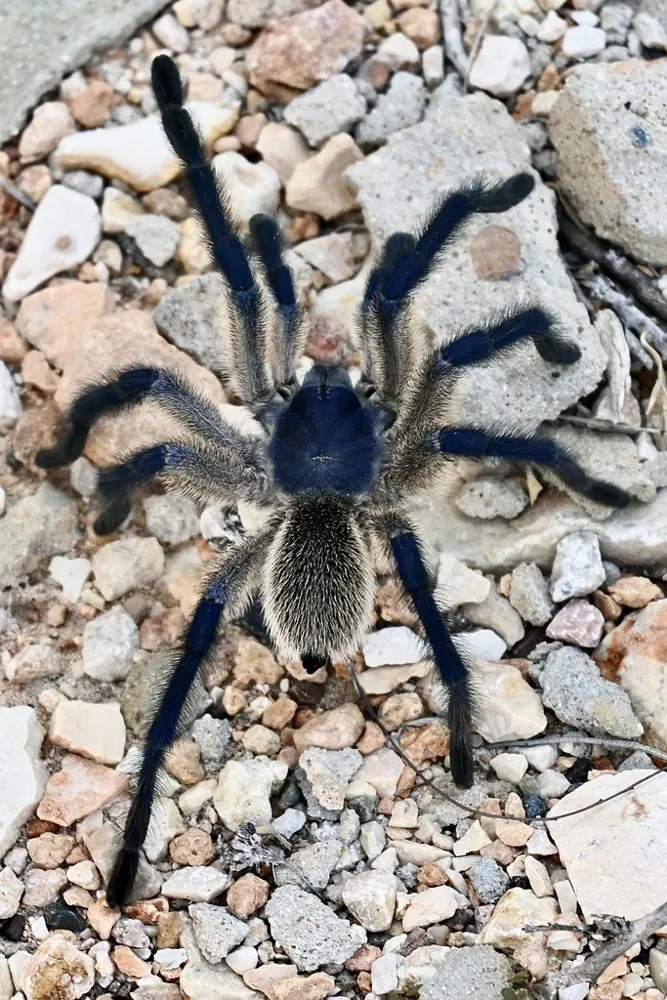
 Bí o ṣe lè dá a mọ̀
Agbára oró
Oró ń jáde láti inú eyín oró tàbí eyín rẹ̀ nígbà tí ó bá bùjẹ.
Kí ni oró rẹ̀ máa ń ṣe?
The potency of its venom is not known. Some people believe it can kill a dromedary (a one-humped camel), but this is most likely not the case.1
Báwo ló ṣe léwu tó fún ènìyàn?
Ewu fún ènìyàn: Ó ń dunniÓ lè dunni gan-an, ṣùgbọ́n kì í fẹ́rẹ̀ẹ́ le rárá.How strong its venom is has not been established. When provoked, especially when a mother is protecting an egg sac, it will deliver a fast strike and bite.1
Kí ni ó máa ń ṣe nígbà tí ẹ̀rù bá bà á?
When threatened, it rears up on its hind legs and bares its chelicerae (fang-bearing mouthparts) in a characteristic threat pose. Further provocation leads to a fast strike and bite.1
 Bí ó bá bùjẹ
- Fọ ibi ìbùjẹ náà kí o sì tù ú. Wá ìrànlọ́wọ́ ìṣègùn bí ìrora bá le tàbí tí ara ẹni náà kò bá yá.
Máa kọ́kọ́ pe nọ́ńbà pàjáwìrì rẹ nígbà gbogbo (112, 000, 911). Èyí jẹ́ ìtọ́sọ́nà ìtọ́jú àkọ́kọ́ gbogbogbò, kì í ṣe ìmọ̀ràn ìṣègùn. Ìpìlẹ̀ ìtọ́jú àkọ́kọ́
 Wà láìléwu
- Má ṣe fọwọ́ kan, mú tàbí yọ ẹranko igbó lẹ́nu láéláé, kódà bí ó bá kéré, kódà bí ó bá dà bí ẹni pé ó ń sùn tàbí ó ti kú.
- Fún un ní àyè. Bí o bá pàdé ọ̀kan, farabalẹ̀, sẹ́yìn díẹ̀díẹ̀ kí o sì jẹ́ kí ó máa bá ọ̀nà rẹ̀ lọ.
- Bí ọ̀kan bá bù ọ́ jẹ: farabalẹ̀, má ṣe mira, pe nọ́ńbà pàjáwìrì rẹ (112, 000, 911) tàbí lọ sí ilé ìwòsàn kíákíá. Rántí bí ó ṣe rí, fọ́tò máa ń ṣèrànwọ́.
Kò wá ọ kiri láti ṣe ọ́ léṣe. Ó ń lo oró rẹ̀ láti mú oúnjẹ tàbí láti dáàbò bo ara rẹ̀, ó sì fẹ́ràn láti farapamọ́ jù. Sí i nípa wíwà láìléwu
Báwo ló ṣe tóbi tó?
Báwo ló ṣe gùn tó?
 ó gùn tó bíríkì ìṣeré 4 tí a tò sí ìlà kan
 lè sáré mítà 100 ní ìṣẹ́jú-àáyá 220 (ènìyàn tó yára jùlọ nílò 9.6)
Báwo ni Socotra Island blue baboon spider ṣe tóbi tó tí a bá fi wé ÌWỌ?
Ìṣirò nìkan nínú bráwúsà rẹ. A kò fi ohunkóhun pamọ́, a kò sì fi ránṣẹ́ sí ibikíbi.
Báwo ló ṣe yára tó?


Òtítọ́
Its vivid blue colour is the striking feature of the adult, although red and amber forms have been seen very rarely.1
This tarantula is communal: mother spiders care for their young and will attack predators that get too close to their egg sac.1
In captivity, several males and females of different ages can live together without attacking one another, as long as they have enough food and proper care.1
Females live for about 10 to 14 years, while males tend to live for only about 3 to 4 years.1
Because it is an Old World tarantula, it does not have urticating hairs, the irritating hairs that some New World tarantulas flick at attackers.1
Olùfọ́ àròsọ
Àròsọ: It can kill a dromedary (one-humped camel).
Òtítọ́: Some people believe this, but it is most likely not the case. Its venom potency is not known.1
Ibi tí àwọn òtítọ́ ti wá
- Monocentropus balfouri (Wikipedia (CC BY-SA 4.0))
- Monocentropus balfouri (iNaturalist): orúkọ àti ìpínsísọ̀rí.
- Venom Wiki: ìpele ewu, ìtóbi déédé àti àfojúbù ìyára jẹ́ tiwa. Wo bí a ṣe ń ṣírò wọn: Bí a ṣe ń díwọ̀n ewu.
Gbogbo òtítọ́ ojú-ìwé yìí ní nọ́ńbà tó tọ́ka sí orísun rẹ̀. Bí a bá ṣe àṣìṣe, má bínú, olólùfẹ́ ẹranko ni wá, kì í ṣe ìwé ìròyìn sáyẹ́ǹsì. Sọ fún wa ní [email protected] a ó sì tún un ṣe.
 Ebi ń pa àkekèé! Iṣẹ́ akanṣe ẹnì kan ṣoṣo ni Venom Wiki: ọ̀fẹ́ ni, kò sí ìpolówó, kò sì sí olùtọpinpin. Ẹ̀bùn kékeré ń ràn án lọ́wọ́ láti wà lórí íńtánẹ́ẹ̀tì.Bọ́ àkekèé
Sí i láti inú ẹgbẹ́ kan náà: Tarantula àti funnel-web
 Gooty sapphire tarantulaTarantula àti funnel-webÓ nílò dókítà
 Indian ornamental tarantulaTarantula àti funnel-webÓ nílò dókítà
 Cobalt blue tarantulaTarantula àti funnel-webÓ kàn ń dunni
 Chinese bird spiderTarantula àti funnel-webÓ nílò dókítà
 Chinese black earth tiger tarantulaTarantula àti funnel-webÓ nílò dókítà
 Fringed ornamental tarantulaTarantula àti funnel-webÓ nílò dókítà
 Deathstalker
 Indian cobra
 Indian saw-scaled viper
 King cobra
 Puff adder
 Paramọlẹ Russell