
 Áfíríkà
 Éṣíà
Éṣíà Yúróòpù
 Gúúsù Amẹ́ríkà
 Ọsirélíà àti Òṣéáníà
 Antáktíkà
 Òkun Pàsífíìkì
 Òkun Àtìláńtíìkì
 Òkun Íńdíà
 Òkun Áktíkì
 Òkun Mẹditaréníà
 Òkun Pupa
 Òkun Káríbíànù
 Òkun Coral
 Òkun Gúúsù Ṣáínà
 Òkun Fílípínì
 Òkun Andaman
 Òkun Àríwá
 Òkun Tímọ̀ àti Òkun Àráfúrà
 Ìyawọlẹ̀ Òkun Bẹ̀ngál
 Ìyawọlẹ̀ Òkun Kalifọ́níà
Stephens' banded snake
 Ìbùjẹ
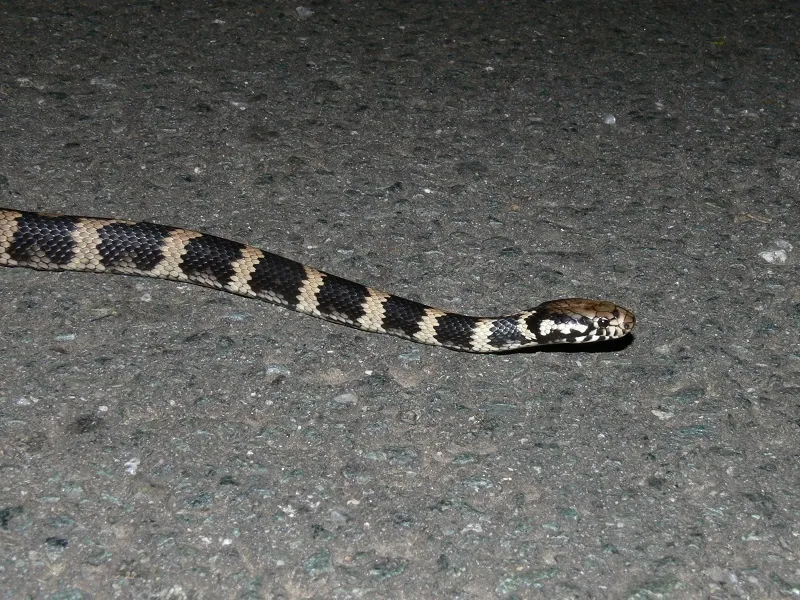
ÌbùjẹStephens' banded snake is a tree-dwelling snake that lives only on the east coast of Australia. It is highly venomous, and its venom affects the blood, so it is one of the snakes that people should give plenty of space. It spends most of its life high in the trees of forests.1



 Bí o ṣe lè dá a mọ̀
- Alternating bands of grey or black and dirty-white along the back, with over 40 of each colour from the back of the head to the tip of the tail1
- A flat, mostly dirty-white belly, with occasional grey splotches towards the head and tail1
- A dark brown top of the head, with pale blotches or bars along the lips1
- A slender body with a broadened, arrow-shaped head1
- Mostly active at night, and often found in tree hollows high in the canopy1
A sábà máa ń ṣì í mọ̀ sí: Its closest relatives are the broad-headed snake, which shares its coastal range, and the pale-headed snake, which lives further inland. All three are tree-dwelling snakes in the same genus.1
Agbára oró
Oró ń jáde láti inú eyín oró tàbí eyín rẹ̀ nígbà tí ó bá bùjẹ.
Kí ni oró rẹ̀ máa ń ṣe?
Its venom is procoagulant, meaning it makes blood clot. It contains prothrombinase, which triggers the production of thrombin in the blood, causing tiny clots throughout the body. Symptoms include nausea, headache, abdominal pain, vomiting, diarrhoea and sweating. If left untreated, the clotting leads to excessive bleeding as blood vessels rupture.1
Báwo ló ṣe léwu tó fún ènìyàn?
Ewu fún ènìyàn: Ó le gan-anÌbùjẹ nílò dókítà. Ikú kò wọ́pọ̀ rárá.It is described as a ready biter, and its envenoming is potentially fatal. Only one death has been recorded: an elderly man in his 60s in Kalang, New South Wales, whose rescue was delayed by torrential rain and floods.1
 Ìròyìn ayọ̀: àwọn dókítà ní oògùn (antivenom) tàbí ìtọ́jú fún èyí.1
Kí ni ó máa ń ṣe nígbà tí ẹ̀rù bá bà á?
It is described as nervous and defensive towards other animals, and it is a ready biter when threatened.1
 Bí ó bá bùjẹ
- Victims have been successfully treated with up to four doses of 3,000 unit tiger snake antivenom. The wounded person must be transported to hospital for medical treatment.1
- Dídì pẹ̀lú ìfúnpá láìmira (pressure immobilisation): fi bándéèjì rọ́bà (elastic) tó le wé ibi ìbùjẹ náà, lẹ́yìn náà wé e sókè títí bo gbogbo apá tàbí ẹsẹ̀ náà, fi igi ìdábùú (splint) dì í, kí o sì jẹ́ kí ẹni náà wà láìmira rárá títí ìrànlọ́wọ́ yóò fi dé.
- Má ṣe fọ ibi ìbùjẹ náà: ilé ìwòsàn lè ṣàyẹ̀wò oró tó kù lára awọ láti yan oògùn apa-oró (antivenom) tó tọ́.
Máa kọ́kọ́ pe nọ́ńbà pàjáwìrì rẹ nígbà gbogbo (112, 000, 911). Èyí jẹ́ ìtọ́sọ́nà ìtọ́jú àkọ́kọ́ gbogbogbò, kì í ṣe ìmọ̀ràn ìṣègùn. Ìpìlẹ̀ ìtọ́jú àkọ́kọ́
 Wà láìléwu
- Má ṣe fọwọ́ kan, mú tàbí yọ ẹranko igbó lẹ́nu láéláé, kódà bí ó bá kéré, kódà bí ó bá dà bí ẹni pé ó ń sùn tàbí ó ti kú.
- Fún un ní àyè. Bí o bá pàdé ọ̀kan, farabalẹ̀, sẹ́yìn díẹ̀díẹ̀ kí o sì jẹ́ kí ó máa bá ọ̀nà rẹ̀ lọ.
- Bí ọ̀kan bá bù ọ́ jẹ: farabalẹ̀, má ṣe mira, pe nọ́ńbà pàjáwìrì rẹ (112, 000, 911) tàbí lọ sí ilé ìwòsàn kíákíá. Rántí bí ó ṣe rí, fọ́tò máa ń ṣèrànwọ́.
Kò wá ọ kiri láti ṣe ọ́ léṣe. Ó ń lo oró rẹ̀ láti mú oúnjẹ tàbí láti dáàbò bo ara rẹ̀, ó sì fẹ́ràn láti farapamọ́ jù. Sí i nípa wíwà láìléwu
Báwo ló ṣe tóbi tó?
Báwo ló ṣe gùn tó?
Báwo ló ṣe wúwo tó?
 ó gùn tó ológbò ilé 2.5 láti imú dé ìrù
 ó gùn tó ọ̀gẹ̀dẹ̀ 7 tí a tò tẹ̀léra
 lè sáré mítà 100 ní ìṣẹ́jú-àáyá 55 (ènìyàn tó yára jùlọ nílò 9.6)
Báwo ni Stephens' banded snake ṣe tóbi tó tí a bá fi wé ÌWỌ?
Ìṣirò nìkan nínú bráwúsà rẹ. A kò fi ohunkóhun pamọ́, a kò sì fi ránṣẹ́ sí ibikíbi.
Báwo ló ṣe yára tó?


Òtítọ́
It is one of the few mainly tree-dwelling elapid snakes in Australia.1
A single individual may use up to 30 different trees within its range.1
It hibernates, or brumates, for up to five months through winter inside a tree hollow.1
Males may use home ranges averaging 20.2 hectares, while females average 5.4 hectares.1
It is the largest species in the genus Hoplocephalus, and females are usually larger than males.1
It is slow to mature, with males reaching sexual maturity at three years and females at four years.1
Fún àwọn amòye oró
- Orúkọ sáyẹ́ǹsì
- Hoplocephalus stephensii
- Ẹgbẹ́
- Àwọn ejò Ọsirélíà
- Ìdílé
- Elapidae2
- Ètò
- Squamata
- Àwọn kọ́ńtínẹ́ńtì
- Ọsirélíà àti Òṣéáníà
- Àwọn ọmọ
- It gives birth to live young, with between one and nine offspring per litter. Females are only pregnant every two years.1
- Bí ó ṣe ń ṣe nínú igbó
- Near Threatened (IUCN Red List)1
- Ewu fún ènìyàn
- 3 / 5: Ó le gan-an3
Ibi tí àwọn òtítọ́ ti wá
- Stephens's banded snake (Wikipedia (CC BY-SA 4.0))
- Hoplocephalus stephensii (iNaturalist): orúkọ àti ìpínsísọ̀rí.
- Venom Wiki: ìpele ewu, ìtóbi déédé àti àfojúbù ìyára jẹ́ tiwa. Wo bí a ṣe ń ṣírò wọn: Bí a ṣe ń díwọ̀n ewu.
Gbogbo òtítọ́ ojú-ìwé yìí ní nọ́ńbà tó tọ́ka sí orísun rẹ̀. Bí a bá ṣe àṣìṣe, má bínú, olólùfẹ́ ẹranko ni wá, kì í ṣe ìwé ìròyìn sáyẹ́ǹsì. Sọ fún wa ní [email protected] a ó sì tún un ṣe.
 Ebi ń pa àkekèé! Iṣẹ́ akanṣe ẹnì kan ṣoṣo ni Venom Wiki: ọ̀fẹ́ ni, kò sí ìpolówó, kò sì sí olùtọpinpin. Ẹ̀bùn kékeré ń ràn án lọ́wọ́ láti wà lórí íńtánẹ́ẹ̀tì.Bọ́ àkekèé
Sí i láti inú ẹgbẹ́ kan náà: Àwọn ejò Ọsirélíà
 Coastal taipan
 Common death adder
 Eastern brown snake
 Ejò taipan inú ilẹ̀
 Ejò ẹkùn
 Collett's snake
Ó tún ń gbé ní: Ọsirélíà àti Òṣéáníà
 Sydney funnel-web spiderTarantula àti funnel-webApani
 Redback spiderAlántakùnÓ nílò dókítà
 Brown tree snakeEjò oníyín ẹ̀yìnÓ kàn ń dunni
 Hooded pitohuiÀwọn ẹranko onímájèlé mìírànÓ kàn ń dunniMá ṣe fọwọ́ kàn án
 PlatypusẸranko afọmúbọ́mọ olóróÓ kàn ń dunni
 Northern tree-dwelling funnel-web spiderTarantula àti funnel-webApani