
 Áfíríkà
 Éṣíà
Éṣíà Yúróòpù
 Gúúsù Amẹ́ríkà
 Ọsirélíà àti Òṣéáníà
 Antáktíkà
 Òkun Pàsífíìkì
 Òkun Àtìláńtíìkì
 Òkun Íńdíà
 Òkun Áktíkì
 Òkun Mẹditaréníà
 Òkun Pupa
 Òkun Káríbíànù
 Òkun Coral
 Òkun Gúúsù Ṣáínà
 Òkun Fílípínì
 Òkun Andaman
 Òkun Àríwá
 Òkun Tímọ̀ àti Òkun Àráfúrà
 Ìyawọlẹ̀ Òkun Bẹ̀ngál
 Ìyawọlẹ̀ Òkun Kalifọ́níà
Yellow stingray
 Ìtani
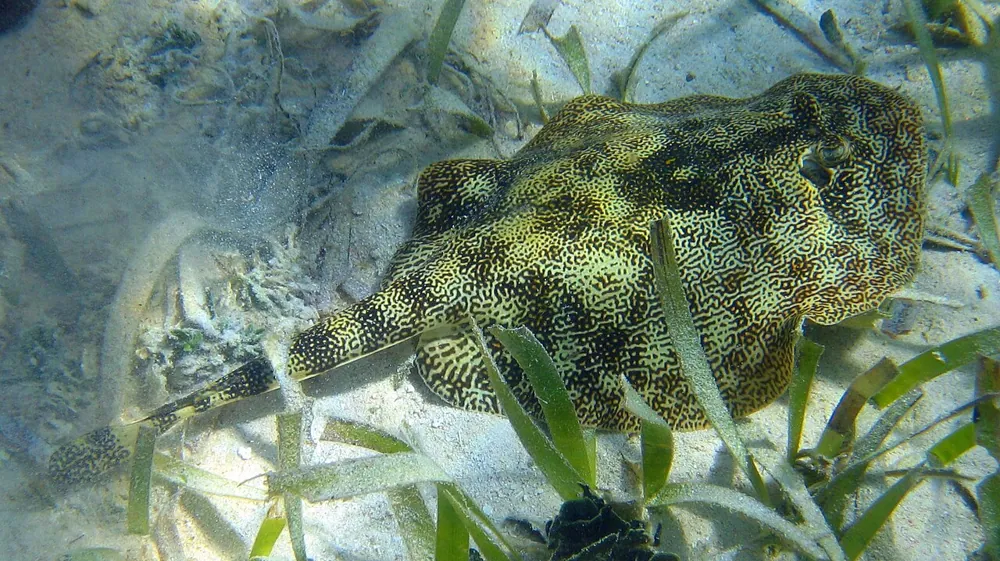
ÌtaniThe yellow stingray is a small ray that lives on the sandy, muddy or seagrass bottoms of shallow coastal waters in the western Atlantic, the Gulf of Mexico and the Caribbean. It spends much of the day buried under sand or lying still. It can sting with a venomous spine on its tail, but it usually ignores divers unless it is stepped on or provoked.1



 Bí o ṣe lè dá a mọ̀
- Nearly round pectoral fin disc with a short tail and a small, leaf-shaped tail fin.1
- Pattern of spots and blotches, either light on dark or dark on light, which varies a lot between individuals.1
- Can quickly change the tone and contrast of its colour to match its surroundings.1
- Underside is yellowish, greenish or brownish white, with small darker spots near the edge of the disc and the tail.1
- A serrated spine sits about halfway along the tail.1
Agbára oró
Oró ń jáde láti inú ohun ìtani.
Kí ni oró rẹ̀ máa ń ṣe?
The tail spine is coated in potent venom. The wound it causes is extremely painful, but it is seldom life-threatening.1
Báwo ló ṣe léwu tó fún ènìyàn?
Ewu fún ènìyàn: Ó ń dunniÓ lè dunni gan-an, ṣùgbọ́n kì í fẹ́rẹ̀ẹ́ le rárá.It is not aggressive towards people. It injures people only when it is stepped on or otherwise provoked, and the resulting wound is very painful but seldom life-threatening.1
Kí ni ó máa ń ṣe nígbà tí ẹ̀rù bá bà á?
When threatened it mostly stays still, buried under sediment or lying in vegetation, and if stepped on or provoked it defends itself with its tail spine.1
 Bí ó bá ta ni
- Fi ọgbẹ́ náà sínú omi gbígbóná, tó gbóná tó bí ẹni náà ṣe lè fara dà á láìjóná (fi ọwọ́ ara rẹ dán an wò), fún ìṣẹ́jú 30 sí 90. Wá ìrànlọ́wọ́ ìṣègùn, pàápàá fún ẹja òkúta àti stingray.
Máa kọ́kọ́ pe nọ́ńbà pàjáwìrì rẹ nígbà gbogbo (112, 000, 911). Èyí jẹ́ ìtọ́sọ́nà ìtọ́jú àkọ́kọ́ gbogbogbò, kì í ṣe ìmọ̀ràn ìṣègùn. Ìpìlẹ̀ ìtọ́jú àkọ́kọ́
 Wà láìléwu
- Má ṣe fọwọ́ kan, mú tàbí yọ ẹranko igbó lẹ́nu láéláé, kódà bí ó bá kéré, kódà bí ó bá dà bí ẹni pé ó ń sùn tàbí ó ti kú.
- Fún un ní àyè. Bí o bá pàdé ọ̀kan, farabalẹ̀, sẹ́yìn díẹ̀díẹ̀ kí o sì jẹ́ kí ó máa bá ọ̀nà rẹ̀ lọ.
- Bí ọ̀kan bá ta ọ́: farabalẹ̀, má ṣe mira, pe nọ́ńbà pàjáwìrì rẹ (112, 000, 911) tàbí lọ sí ilé ìwòsàn kíákíá. Rántí bí ó ṣe rí, fọ́tò máa ń ṣèrànwọ́.
Kò wá ọ kiri láti ṣe ọ́ léṣe. Ó ń lo oró rẹ̀ láti mú oúnjẹ tàbí láti dáàbò bo ara rẹ̀, ó sì fẹ́ràn láti farapamọ́ jù. Sí i nípa wíwà láìléwu
Níbo ní ayé?
Báwo ló ṣe tóbi tó?
Báwo ló ṣe gùn tó?
 ó gùn tó ọ̀gẹ̀dẹ̀ 4 tí a tò tẹ̀léra
 lè lúwẹ̀ẹ́ gígùn adágún ìwẹ̀ ńlá (50 m) ní ìṣẹ́jú-àáyá 13
Báwo ni Yellow stingray ṣe tóbi tó tí a bá fi wé ÌWỌ?
Ìṣirò nìkan nínú bráwúsà rẹ. A kò fi ohunkóhun pamọ́, a kò sì fi ránṣẹ́ sí ibikíbi.
Báwo ló ṣe yára tó?

Òtítọ́
It glows green when lit by blue or ultraviolet light, a effect called biofluorescence that may help it communicate and camouflage itself.1
It can raise the front of its disc to form a shaded 'cave' that draws in small creatures looking for shelter.1
Off Jamaica, up to one yellow stingray per square metre gathers under mangrove roosts used by cattle egrets, possibly because bird droppings feed the small animals that attract the rays.1
Its eyes give it a 360° view of its surroundings, and each eye has a covering that controls how much light enters.1
It can live for 15 to 25 years.1
Olùfọ́ àròsọ
Àròsọ: Stingrays attack people in the water.
Òtítọ́: Yellow stingrays generally pay little attention to divers and can be approached closely. They only sting when they are stepped on or otherwise provoked.1
Fún àwọn amòye oró
- Orúkọ sáyẹ́ǹsì
- Urobatis jamaicensis
- Ẹgbẹ́
- Ẹja olóró
- Ìdílé
- Urotrygonidae2
- Ètò
- Myliobatiformes
- Àwọn kọ́ńtínẹ́ńtì
- Òkun Àtìláńtíìkì, Òkun Káríbíànù, Ìyawọlẹ̀ Òkun Mẹ́síkò, Àwọn òkun ńlá
- Àwọn ọmọ
- It gives birth to live young, with litters of up to seven. Females have two litters a year in seagrass beds after a gestation period of 5–6 months.1
- Ọjọ́ ayé
- nǹkan bí ọdún 251
- Bí ó ṣe ń ṣe nínú igbó
- Least Concern1
- Ewu fún ènìyàn
- 2 / 5: Ó ń dunni3
Ibi tí àwọn òtítọ́ ti wá
- Yellow stingray (Wikipedia (CC BY-SA 4.0))
- Urobatis jamaicensis (iNaturalist): orúkọ àti ìpínsísọ̀rí.
- Venom Wiki: ìpele ewu, ìtóbi déédé àti àfojúbù ìyára jẹ́ tiwa. Wo bí a ṣe ń ṣírò wọn: Bí a ṣe ń díwọ̀n ewu.
Gbogbo òtítọ́ ojú-ìwé yìí ní nọ́ńbà tó tọ́ka sí orísun rẹ̀. Bí a bá ṣe àṣìṣe, má bínú, olólùfẹ́ ẹranko ni wá, kì í ṣe ìwé ìròyìn sáyẹ́ǹsì. Sọ fún wa ní [email protected] a ó sì tún un ṣe.
 Ebi ń pa àkekèé! Iṣẹ́ akanṣe ẹnì kan ṣoṣo ni Venom Wiki: ọ̀fẹ́ ni, kò sí ìpolówó, kò sì sí olùtọpinpin. Ẹ̀bùn kékeré ń ràn án lọ́wọ́ láti wà lórí íńtánẹ́ẹ̀tì.Bọ́ àkekèé
Sí i láti inú ẹgbẹ́ kan náà: Ẹja olóró
 Reef stonefish
 Red lionfish
 Estuarine stonefish
 Short-tail stingray
 Striped eel catfish
 Bluespotted ribbontail ray
Ó tún ń gbé ní: Òkun Àtìláńtíìkì
 Hawksbill sea turtleÀwọn ẹranko onímájèlé mìírànÓ lè pani
 Portuguese man o' warJellyfish àti àwọn ẹ̀dá òkun tó ń ta niÓ nílò dókítàMá ṣe fọwọ́ kàn án
 Blue sea dragonÌgbín cone àti octopusÓ kàn ń dunni
 Greenland sharkÀwọn ẹranko onímájèlé mìírànÓ kàn ń dunni
 Lion's mane jellyfishJellyfish àti àwọn ẹ̀dá òkun tó ń ta niÓ kàn ń dunniMá ṣe fọwọ́ kàn án
 Common octopusÌgbín cone àti octopusAláìléwu