
 非洲
非洲 亚洲
亚洲 欧洲
欧洲 南美洲
南美洲 澳大利亚和大洋洲
 南极洲
南极洲 太平洋
太平洋 大西洋
大西洋 印度洋
印度洋 北冰洋
北冰洋 地中海
地中海 红海
红海 加勒比海
加勒比海 珊瑚海
珊瑚海 南海
南海 菲律宾海
菲律宾海 安达曼海
安达曼海 北海
北海 帝汶海和阿拉弗拉海
 孟加拉湾
孟加拉湾 加利福尼亚湾
Keyserling's wandering spider
 咬伤
咬伤Keyserling's wandering spider is a venomous spider found in Brazil. It belongs to the family Ctenidae. Scientists have studied its venom, which contains nerve toxins and a protein that can cause a dangerous allergic reaction.1
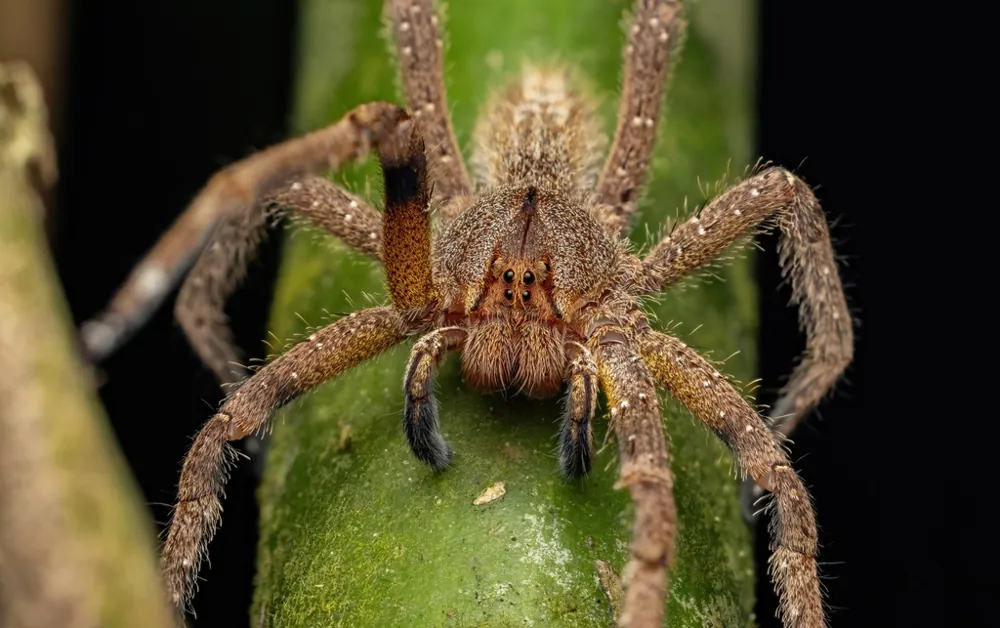
毒液之力
它咬的时候,毒液通过毒牙或牙齿出来。
它的毒液会造成什么?
The venom contains neurotoxins, which attack the nerves. They are similar to those isolated from Phoneutria nigriventer and act on the ion channels (gates that control charged particles such as calcium, sodium and potassium) in nerve cells, and on NMDA-type glutamate receptors (chemical receptors in the brain and nerves). The venom also contains CRISP-1, a protein that acts as an allergen.1
它对人有多危险?
对人的危险: 非常危险不治疗可能会害死人。This spider should be treated with caution. Studies on its close relatives are scarce, so less is known about this species than about some others. CRISP-1 is known to cause a dangerous allergic reaction in humans.1
 如果它咬人
如果它咬人 注意安全
注意安全
- 永远不要摸、抓或逗弄野生动物,即使是很小的,即使它看起来在睡觉或已经死了。
- 给它留出空间。如果遇到它,保持冷静,慢慢后退,让它走自己的路。
- 如果被它咬了:保持冷静,保持不动,拨打你的急救电话(112、000、911)或尽快去医院。记住它长什么样,拍张照片会有帮助。
它不是冲着你来的。它用毒液捕猎或保护自己,而且它更愿意躲起来。 更多安全知识
它有多大?
它有多长?
 和 4 块玩具积木排成一排一样长
 190 秒就能跑完 100 米(最快的人需要 9.6 秒)
Keyserling's wandering spider和你比起来有多大?
只是在你的浏览器里算一算。什么都不会被保存或发送到任何地方。
它有多快?


事实
Its venom contains neurotoxins that are similar to those of Phoneutria nigriventer, another species in the same genus.1
CRISP-1, a protein found in its venom, is basically an allergen, meaning it can trigger an allergic reaction.1
The family of proteins that includes CRISP has also been found in cephalopods, cone snails, scorpions, reptiles and ticks.1
Its venom neurotoxins act on NMDA-type glutamate receptors as well as ion channels in nerve cells.1
事实的来源
- Phoneutria keyserlingi (Wikipedia (CC BY-SA 4.0))
- Phoneutria keyserlingi (iNaturalist): 名称和分类。
- Venom Wiki: 危险等级、典型大小和速度估计都是我们自己给出的。看看我们是怎么算的: 我们如何评定危险.
本页的每个事实都有一个编号,指向它的来源。如果我们写错了,抱歉,我们是动物爱好者,不是科学期刊。请写信到 [email protected] 告诉我们,我们会改正。
 蝎子饿了! Venom Wiki 是一个人的项目:免费、没有广告、没有追踪器。一点小小的打赏能帮它继续在线。喂蝎子
 Brazilian wandering spider
 Amazon wandering spider
 Chilean recluse
 Golden silk orb-weaver
 Argentine black widow
 Bahia wandering spider
 金色箭毒蛙
金色箭毒蛙 粗鳞矛头蝮
粗鳞矛头蝮 Eyelash viper
 Golden lancehead
 South American bushmaster
 Cane toad