
 I-Afrika
 I-Asia
 I-Yurophu
 INingizimu Melika
 I-Australia ne-Oceania
 I-Antarctica
 ULwandlekazi iPacific
 ULwandlekazi i-Atlantic
 ULwandlekazi i-India
 ULwandlekazi i-Arctic
 Ulwandle iMediterranean
 Ulwandle Olubomvu
 Ulwandle iCaribbean
 Ulwandle iCoral
 Ulwandle lwaseNingizimu China
 Ulwandle lwasePhilippines
 Ulwandle i-Andaman
 Ulwandle i-North Sea
 Ulwandle lwaseTimor ne-Arafura
 Ichweba laseBengal
 Ichweba laseCalifornia
Ethiopian mountain adder
 Ukuluma
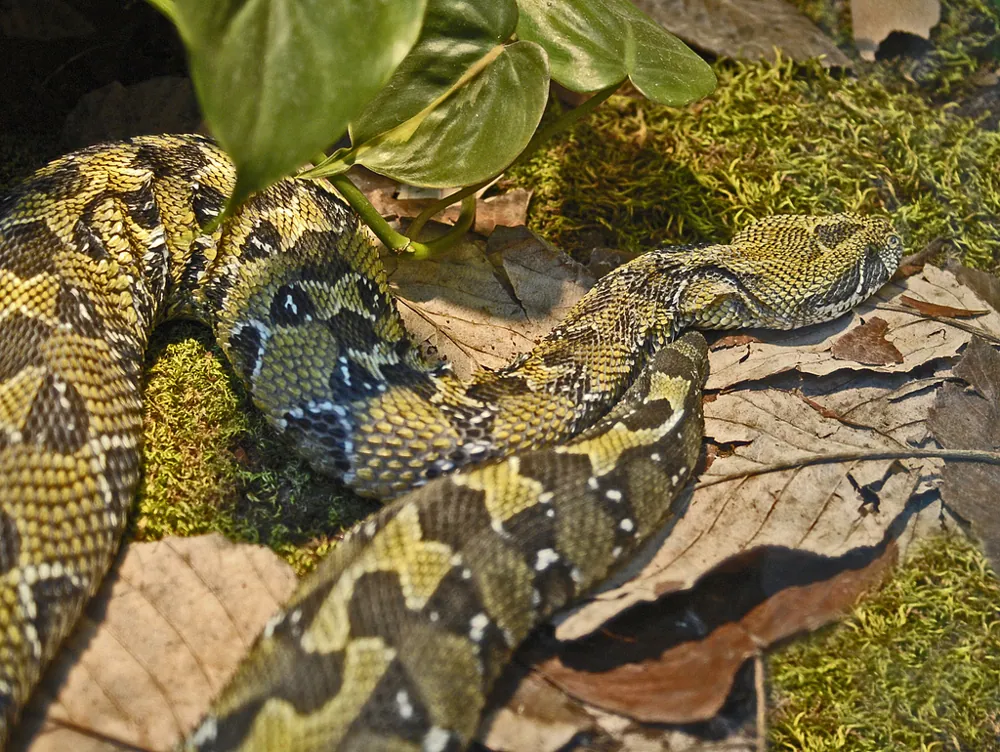
The Ethiopian mountain adder is a large venomous viper that lives only in Ethiopia. It has a broad head and striking geometric patterns along its back. Scientists knew very little about it for many years, and it is still being studied.1
 Indlela yokusibona
- It is large, with a broad, flat, triangular head that is distinct from its thin neck.1
- A pattern of black hexagons or diamonds runs down the centre of the back, linked by yellow butterfly-shaped markings.1
- Black triangular spots with white centres run down the upper flanks, and greenish-grey triangles with yellow edges sit on the lower flanks.1
- The head is brown with a dark triangle between the eyes and a dark hammer shape behind it.1
- The upper lip scales are white, and the chin and throat are white with black speckling.1
Amandla obuthi
Ubuthi buphuma ngamazinyo aso obuthi noma ngamazinyo uma siluma.
Ubuthi baso benzani?
Its venom was essentially unknown until recently, so its toxicity and make-up are still poorly understood. It is assumed to cause at least some of the bites reported in the densely populated areas where it lives. The venom can be neutralised by SAIMR antivenom.1
Siyingozi kangakanani ebantwini?
Ingozi ebantwini: Kuyingozi kakhuluSingabulala umuntu ongatholi kwelashwa.Local people regard it as very dangerous. The only well-documented bite involved a herpetologist from Texas in 2009, who was bitten on the finger by a young captive snake and survived.1
 Izindaba ezinhle: odokotela banomuthi (i-antivenom) noma indlela yokwelapha lokhu.1
Senzani uma sesabile?
In the one living specimen studied, it was less irritable than the puff adder and was not inclined to strike, but it hissed when teased and struggled furiously when restrained.1
 Uma siluma
- Gcina umuntu engashukumi futhi ezolile, gcina isitho esilunyiwe sisezingeni lenhliziyo, khipha izindandatho nezinto eziqinile, bese umusa esibhedlela ngokushesha.
Njalo shayela kuqala inombolo yezimo eziphuthumayo (112, 000, 911). Lokhu kuyiseluleko sosizo lokuqala esijwayelekile, akusona iseluleko sezokwelapha. Izisekelo zosizo lokuqala
 Hlala uphephile
- Ungalokothi uthinte, ubambe noma ugcone isilwane sasendle, ngisho noma sincane, futhi ngisho noma sibukeka silele noma sifile.
- Sinike isikhala. Uma uhlangana naso, hlala uzolile, uhlehle kancane bese usiyeka sihambe ngendlela yaso.
- Uma sikuluma: hlala uzolile, ungashukumi, shayela inombolo yezimo eziphuthumayo (112, 000, 911) noma uye esibhedlela ngokushesha. Khumbula ukuthi besibukeka kanjani, isithombe siyasiza.
Asikuzingeli wena. Sisebenzisa ubuthi baso ukuze sibambe ukudla noma ukuzivikela, futhi singancamela ukucasha. Okwengeziwe mayelana nokuhlala uphephile
Sikhulu kangakanani?
Side kangakanani?
 side njengamakati asekhaya angu-2.5 kusuka ekhaleni kuya emsileni
 side njengobhanana abangu-7 abalandelanayo
 singahamba amamitha ali-100 ngemizuzwana engu-100 (umuntu oshesha kunabo bonke udinga engu-9,6)
Ethiopian mountain adder mkhulu kangakanani uma uqhathanisa NAWE?
Yizibalo nje kusiphequluli sakho. Akukho okulondolozwayo noma okuthunyelwa ndawo.
Sishesha kangakanani?


Amaqiniso
The first specimen known to science was a road kill on the east side of the Rift Valley in Ethiopia.1
In 1995, the species was known from only three specimens.1
In 2007, an exporter transported 20 of these snakes to the United States.1
In 2014, the San Diego Zoo became the first U.S. zoo to successfully breed the species in captivity.1
Lapho amaqiniso evela khona
- Bitis parviocula (Wikipedia (CC BY-SA 4.0))
- Bitis parviocula (iNaturalist): amagama nokuhlelwa ngezigaba.
- Venom Wiki: izinga lengozi, usayizi ojwayelekile nesiqagela sejubane kungokwethu. Bona ukuthi sikubala kanjani: Indlela esilinganisa ngayo ingozi.
Iqiniso ngalinye kuleli khasi linenombolo ekhomba umthombo walo. Uma senze iphutha, uxolo, singabathandi bezilwane, hhayi iphephabhuku lesayensi. Sitshele ku-[email protected] futhi sizolilungisa.
 Ufezela ulambile! I-Venom Wiki iwumsebenzi womuntu oyedwa: imahhala, ayinazo izikhangiso noma izilandeli. Isipho esincane sisiza ukuyigcina ku-inthanethi.Phakela ufezela
 Ibululu
 Gaboon viper
 Northeast African carpet viper
 West African carpet viper
 Rhinoceros viper
 West African Gaboon viper
 Black mamba
 Deathstalker
 Egyptian cobra
 Boomslang
 Fat-tailed scorpion
 Western honey bee