
 I-Afrika
 I-Asia
 I-Yurophu
 INingizimu Melika
 I-Australia ne-Oceania
 I-Antarctica
 ULwandlekazi iPacific
 ULwandlekazi i-Atlantic
 ULwandlekazi i-India
 ULwandlekazi i-Arctic
 Ulwandle iMediterranean
 Ulwandle Olubomvu
 Ulwandle iCaribbean
 Ulwandle iCoral
 Ulwandle lwaseNingizimu China
 Ulwandle lwasePhilippines
 Ulwandle i-Andaman
 Ulwandle i-North Sea
 Ulwandle lwaseTimor ne-Arafura
 Ichweba laseBengal
 Ichweba laseCalifornia
Kayan River slow loris
 Ukuluma
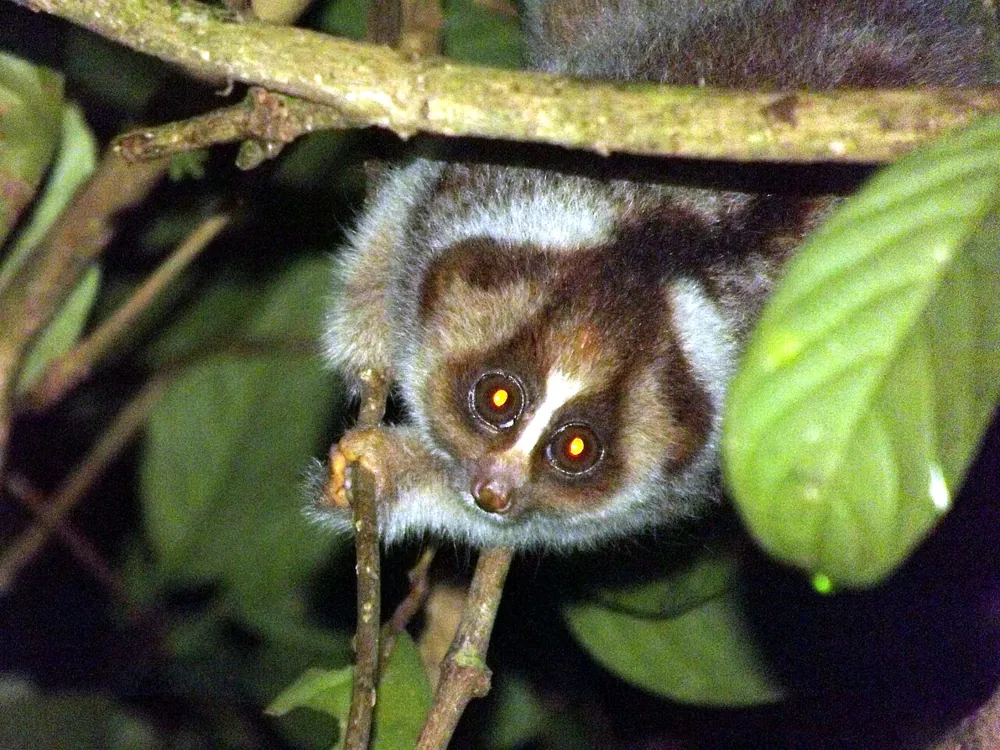
The Kayan River slow loris is a small, nocturnal primate that lives in the highlands of northern and central Borneo. It is the only primate known to have a toxic bite, which it uses to defend itself. It is classed as Vulnerable because its forest home is being lost.1



 Indlela yokusibona
- High contrast between its black and white facial markings1
- The stripe between its eyes is sometimes bulb-shaped rather than rectangular1
- The ears are always covered in hair1
- Its fur is generally longer and fluffier than that of the Bornean slow loris1
Ivamise ukudidaniswa ne: It is often confused with the Bornean slow loris (N. menagensis). The Kayan River slow loris has more contrast in its facial markings, hairy ears instead of naked ears, and longer, fluffier fur.1
Amandla obuthi
Ubuthi buphuma ngamazinyo aso obuthi noma ngamazinyo uma siluma.
Ubuthi baso benzani?
It has a toxic bite, which is unusual among primates. A pungent, clear, oily toxin is made in a gland on the inside of its elbow. The animal licks this gland, and the secretion mixes with its saliva to become active. The toxin is also rubbed onto its fur as protection for infants.1
Siyingozi kangakanani ebantwini?
Ingozi ebantwini: KubuhlunguKungaba buhlungu ngempela, kodwa cishe akukaze kube kubi kakhulu.Senzani uma sesabile?
When threatened, it wipes the toxin from its elbow gland onto its toothcomb, and it may bite the attacker. Slow lorises can be slow to let go of a bite, which helps deliver more toxin.1
 Uma siluma
- Geza inxeba kahle bese uthola usizo lwezokwelapha.
Njalo shayela kuqala inombolo yezimo eziphuthumayo (112, 000, 911). Lokhu kuyiseluleko sosizo lokuqala esijwayelekile, akusona iseluleko sezokwelapha. Izisekelo zosizo lokuqala
 Hlala uphephile
- Ungalokothi uthinte, ubambe noma ugcone isilwane sasendle, ngisho noma sincane, futhi ngisho noma sibukeka silele noma sifile.
- Sinike isikhala. Uma uhlangana naso, hlala uzolile, uhlehle kancane bese usiyeka sihambe ngendlela yaso.
- Uma sikuluma: hlala uzolile, ungashukumi, shayela inombolo yezimo eziphuthumayo (112, 000, 911) noma uye esibhedlela ngokushesha. Khumbula ukuthi besibukeka kanjani, isithombe siyasiza.
Asikuzingeli wena. Sisebenzisa ubuthi baso ukuze sibambe ukudla noma ukuzivikela, futhi singancamela ukucasha. Okwengeziwe mayelana nokuhlala uphephile
Sikhulu kangakanani?
Side kangakanani?
Sisinda kangakanani?

 side njengezitini zamathoyizi ezingu-9 ezilandelanayo
 singahamba amamitha ali-100 ngemizuzwana engu-180 (umuntu oshesha kunabo bonke udinga engu-9,6)
Kayan River slow loris mkhulu kangakanani uma uqhathanisa NAWE?
Yizibalo nje kusiphequluli sakho. Akukho okulondolozwayo noma okuthunyelwa ndawo.
Sishesha kangakanani?


Amaqiniso
It is one of the few primates known to have a toxic bite, and this is a unique feature among primates.1
Its face mask may help it recognise other lorises of its own kind, and it may also make its eyes look bigger than they really are, which can deter predators.1
It has a toothcomb, a set of specialised lower front teeth that it uses for grooming.1
Its population is estimated to have fallen by more than 30% over about 21 to 24 years.1
Umqothuli wezinganekwane
Inganekwane: The Kayan River slow loris was always known as a separate species.
Iqiniso: Until 2013 its museum specimens were identified as the Bornean slow loris. A study of facial markings then showed it was a distinct species.1
Lapho amaqiniso evela khona
- Nycticebus kayan (Wikipedia (CC BY-SA 4.0))
- Nycticebus kayan (iNaturalist): amagama nokuhlelwa ngezigaba.
- Venom Wiki: izinga lengozi, usayizi ojwayelekile nesiqagela sejubane kungokwethu. Bona ukuthi sikubala kanjani: Indlela esilinganisa ngayo ingozi.
Iqiniso ngalinye kuleli khasi linenombolo ekhomba umthombo walo. Uma senze iphutha, uxolo, singabathandi bezilwane, hhayi iphephabhuku lesayensi. Sitshele ku-[email protected] futhi sizolilungisa.
 Ufezela ulambile! I-Venom Wiki iwumsebenzi womuntu oyedwa: imahhala, ayinazo izikhangiso noma izilandeli. Isipho esincane sisiza ukuyigcina ku-inthanethi.Phakela ufezela
Okunye okuvela eqenjini elifanayo: Izilwane ezincelisayo ezinobuthi
 Bengal slow lorisIzilwane ezincelisayo ezinobuthiKubuhlungu nje
 Javan slow lorisIzilwane ezincelisayo ezinobuthiKubuhlungu nje
 Pygmy slow lorisIzilwane ezincelisayo ezinobuthiKubuhlungu nje
 Sunda slow lorisIzilwane ezincelisayo ezinobuthiKubuhlungu nje
 Philippine slow lorisIzilwane ezincelisayo ezinobuthiKubuhlungu nje
 Eurasian water shrewIzilwane ezincelisayo ezinobuthiAkunangozi
 Deathstalker
 Indian cobra
 Indian saw-scaled viper
 King cobra
 Ibululu
 Inhlangwane kaRussell