
 I-Afrika
 I-Asia
 I-Yurophu
 INingizimu Melika
 I-Australia ne-Oceania
 I-Antarctica
 ULwandlekazi iPacific
 ULwandlekazi i-Atlantic
 ULwandlekazi i-India
 ULwandlekazi i-Arctic
 Ulwandle iMediterranean
 Ulwandle Olubomvu
 Ulwandle iCaribbean
 Ulwandle iCoral
 Ulwandle lwaseNingizimu China
 Ulwandle lwasePhilippines
 Ulwandle i-Andaman
 Ulwandle i-North Sea
 Ulwandle lwaseTimor ne-Arafura
 Ichweba laseBengal
 Ichweba laseCalifornia
Philippine slow loris
 Ukuluma
The Philippine slow loris is a small primate with pale golden to red fur and large eyes. It lives in lowland forests, gardens and plantations on the north and east coasts of Borneo and in the Sulu Archipelago of the Philippines. It is special because it is one of the smallest slow lorises and one of the hardest to find in the wild.1

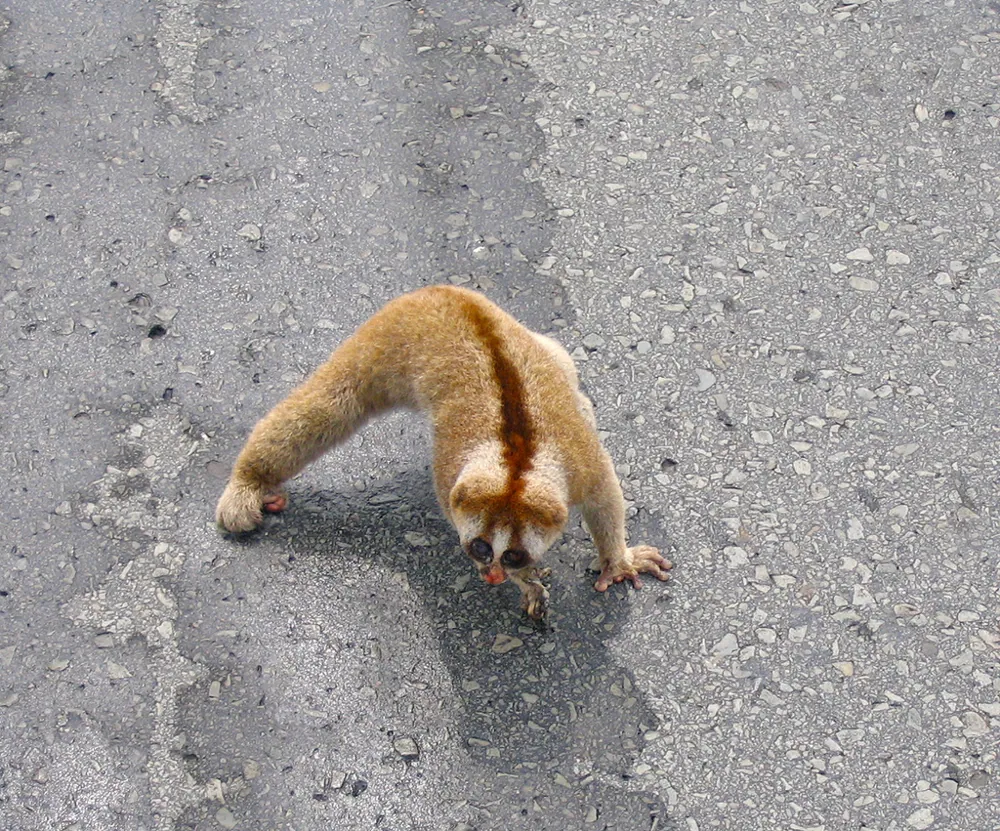
 Indlela yokusibona
- Pale golden to red fur1
- Low-contrast markings on the face and head, with no strong dark face mask1
- Short, unfluffed body hair1
- Consistently lacks a second upper incisor (front tooth)1
- Small body, with a vestigial tail, round head and short ears; it is nocturnal and moves through the trees1
Ivamise ukudidaniswa ne: It is often confused with other slow lorises. The Bornean kayan slow loris (N. kayan) also has pale body colour, but it has a dark, high-contrast face mask and longer, fluffier fur. Its face markings are much fainter than those of N. kayan.1
Amandla obuthi
Ubuthi buphuma ngamazinyo aso obuthi noma ngamazinyo uma siluma.
Ubuthi baso benzani?
This animal has a gland on the inside of its elbow that makes a pungent, clear, oily toxin. It spreads the toxin on its toothcomb (a set of lower front teeth) and uses it for defence.1
Siyingozi kangakanani ebantwini?
Ingozi ebantwini: KubuhlunguKungaba buhlungu ngempela, kodwa cishe akukaze kube kubi kakhulu.Senzani uma sesabile?
When threatened, it wipes toxin from its elbow gland onto its toothcomb.1
 Uma siluma
- Geza inxeba kahle bese uthola usizo lwezokwelapha.
Njalo shayela kuqala inombolo yezimo eziphuthumayo (112, 000, 911). Lokhu kuyiseluleko sosizo lokuqala esijwayelekile, akusona iseluleko sezokwelapha. Izisekelo zosizo lokuqala
 Hlala uphephile
- Ungalokothi uthinte, ubambe noma ugcone isilwane sasendle, ngisho noma sincane, futhi ngisho noma sibukeka silele noma sifile.
- Sinike isikhala. Uma uhlangana naso, hlala uzolile, uhlehle kancane bese usiyeka sihambe ngendlela yaso.
- Uma sikuluma: hlala uzolile, ungashukumi, shayela inombolo yezimo eziphuthumayo (112, 000, 911) noma uye esibhedlela ngokushesha. Khumbula ukuthi besibukeka kanjani, isithombe siyasiza.
Asikuzingeli wena. Sisebenzisa ubuthi baso ukuze sibambe ukudla noma ukuzivikela, futhi singancamela ukucasha. Okwengeziwe mayelana nokuhlala uphephile
Sikhulu kangakanani?
Side kangakanani?
Sisinda kangakanani?

 side njengezitini zamathoyizi ezingu-9 ezilandelanayo
 singahamba amamitha ali-100 ngemizuzwana engu-180 (umuntu oshesha kunabo bonke udinga engu-9,6)
Philippine slow loris mkhulu kangakanani uma uqhathanisa NAWE?
Yizibalo nje kusiphequluli sakho. Akukho okulondolozwayo noma okuthunyelwa ndawo.
Sishesha kangakanani?


Amaqiniso
It is so rare and hard to find that in one 75-day field study at Sabangau National Park, researchers recorded only 12 sightings.1
It has a curved grooming claw on its second hind toe, which it uses for scratching and grooming.1
Fossils of this species have been found in the Late Pleistocene site of Niah in Sarawak.1
It is one of the smallest slow lorises, and it is the least studied of Indonesia's slow lorises.1
Lapho amaqiniso evela khona
- Philippine slow loris (Wikipedia (CC BY-SA 4.0))
- Nycticebus menagensis (iNaturalist): amagama nokuhlelwa ngezigaba.
- Venom Wiki: izinga lengozi, usayizi ojwayelekile nesiqagela sejubane kungokwethu. Bona ukuthi sikubala kanjani: Indlela esilinganisa ngayo ingozi.
Iqiniso ngalinye kuleli khasi linenombolo ekhomba umthombo walo. Uma senze iphutha, uxolo, singabathandi bezilwane, hhayi iphephabhuku lesayensi. Sitshele ku-[email protected] futhi sizolilungisa.
 Ufezela ulambile! I-Venom Wiki iwumsebenzi womuntu oyedwa: imahhala, ayinazo izikhangiso noma izilandeli. Isipho esincane sisiza ukuyigcina ku-inthanethi.Phakela ufezela
Okunye okuvela eqenjini elifanayo: Izilwane ezincelisayo ezinobuthi
 Bengal slow lorisIzilwane ezincelisayo ezinobuthiKubuhlungu nje
 Javan slow lorisIzilwane ezincelisayo ezinobuthiKubuhlungu nje
 Pygmy slow lorisIzilwane ezincelisayo ezinobuthiKubuhlungu nje
 Sunda slow lorisIzilwane ezincelisayo ezinobuthiKubuhlungu nje
 Kayan River slow lorisIzilwane ezincelisayo ezinobuthiKubuhlungu nje
 Eurasian water shrewIzilwane ezincelisayo ezinobuthiAkunangozi
 Deathstalker
 Indian cobra
 Indian saw-scaled viper
 King cobra
 Ibululu
 Inhlangwane kaRussell