
 Abibirem
 Asia
Asia Yuropu
 Amerika Anaafoɔ
 Australia ne Oceania
 Antarctica
 Pacific Po
 Atlantic Po
 India Po
 Arctic Po
 Mediterranean Po
 Po Kɔkɔɔ
 Caribbean Po
 Coral Po
 China Anaafoɔ Po
 Philippine Po
 Andaman Po
 Atifi Po
 Timor ne Arafura Po
 Bengal Ɛpo Ano
 California Ɛpo Ano
European fire-bellied toad
 Awuduro wɔ ne honam muƆdi: MmoawaNe ho yɛ awuduro, onni bɔre
The European fire-bellied toad is a medium-sized frog that lives in ponds and marshes across Central and Eastern Europe. It is famous for its bright red belly, which it shows off to warn predators that it is toxic. Its loud 'whoop' call is also distinctive.1



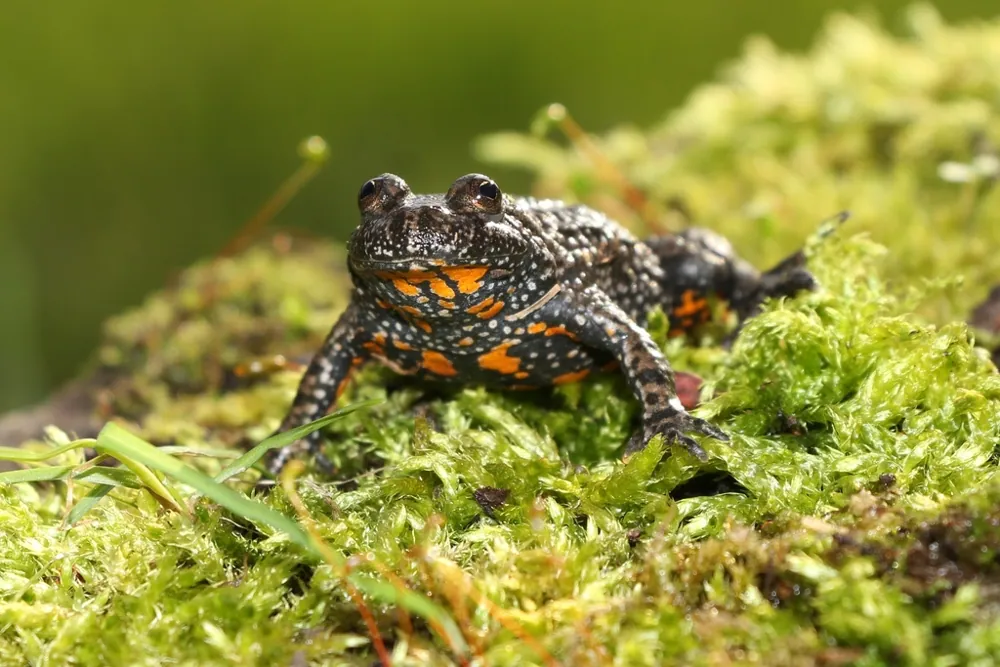
 Sɛdeɛ wobɛhunu no
- Medium-sized frog, growing up to about 5.6 cm.1
- Back colour can be grey, brown or green, and is covered in warts.1
- Belly is red with thick black mottling.1
- When threatened, it lifts its arms, sometimes flipping over, to show its red belly.1
Wɔtaa fa no sɛ: The yellow-bellied toad (Bombina variegata) is closely related and the two can hybridise where they overlap. The yellow-bellied toad lives at higher elevations in ponds that dry up quickly, has longer legs and thicker skin, and cannot call as loudly.1
Awuduro ahoɔden
Ne honam yɛ awuduro. Ɛyɛ asiane sɛ wode wo nsa bɛka, wobɛtaforɔ anaa wobɛdi.
Ne ho awuduro yɛ dɛn?
The skin of this toad contains bombinins, which have antibacterial and antifungal effects. Its red belly warns predators that its skin is toxic.1
Ne asiane ma nnipa te sɛn?
Asiane ma nnipa: Ɛnyɛ denƐte sɛ wowa wɔ anaa ɛnnu saa. Ɛkame ayɛ sɛ ɛnni asiane ma nnipa.Ɛyɛ dɛn bere a ehu aka no?
When threatened, it lifts its arms, sometimes flipping over, to expose its red belly and warn predators of its toxicity.1
 Sɛ obi de ne nsa ka anaa ɔdi a
- Sɛ obi de ne nsa aka bi a: hohoro ne nsa yie na mfa nsa nka ani anaa ano. Sɛ abofra anaa fie aboa bi taforɔɔ bi anaa ɔdii bi a: frɛ awuduro ho mmoa adwumayɛbea (poison centre) anaa wo ahohiahia nɔma.
Di kan frɛ wo ahohiahia nɔma (112, 000, 911). Yei yɛ mmoa a ɛdi kan ho akwankyerɛ, ɛnyɛ dɔkota afotuo. Mmoa a ɛdi kan ho nsɛm titiriw
 Hwɛ wo ho so
- Mfa wo nsa nka wiram aboa biara, nkyere no na mfa no nni agorɔ, sɛ ɔyɛ ketewa mpo, na sɛ ɛte sɛ ɔrededa anaa wawu mpo a.
- Ma no kwan. Sɛ wohyia baako a, ma wo bo nnwo, san w'akyi brɛoo na ma ɔnkɔ ne kwan.
- Sɛ wode wo nsa kaa no anaa wodii a: mfa wo nsa ntwitwi w'ani anaa w'ano, hohoro wo nsa na hwehwɛ dɔkota mmoa.
Ɛnhwehwɛ wo sɛ ɛbɛpira wo. Ne ho awuduro no wɔ hɔ sɛdeɛ ɛbɛyɛ a biribiara renni no. Nsɛm pii fa ahobammɔ ho
Wiase mu baabi bɛn?
Ne kɛseɛ te sɛn?
Ne tenten te sɛn?
 ɛyɛ tiaa sen wo nsateaa ketewa
 ɛbɛtumi atu mita 100 wɔ anibu 180 mu (onipa a ɔwɔ ntɛm sen biara hia 9.6)
European fire-bellied toad kɛseɛ te sɛn sɛ wode toto WO ho a?
Akontabuo kɛkɛ wɔ wo browser mu. Wɔnkora hwee, na wɔmfa hwee nkɔ baabiara.
Ne ntɛm te sɛn?


Nsɛm
The antifungal effect of bombinins in the skin makes them promising for use in food packaging to slow spoilage.1
A population in Lorraine, France, lives more than 500 km from its natural range, probably because people moved them there on purpose.1
Dozens of ponds dug in Funen County, Denmark, helped increase the population about five-fold in a decade.1
The prokineticin family of compounds was first discovered in this species and the yellow-bellied toad.1
Ma bɔre ho animdefoɔ
- Nyansahu din
- Bombina bombina
- Kuo
- Apɔtorɔwa a wɔn ho yɛ awuduro, apɔtorɔ ne newt
- Abusua
- Bombinatoridae2
- Nhyehyɛeɛ (Order)
- Anura
- Asaase akɛseɛ
- Yuropu
- Mmofra nketewa
- Females lay up to 15 to 40 eggs, depending on their size. Tadpoles hatch in about a week and develop for about a month before metamorphosing at about 3.8 cm.1
- Sɛdeɛ ɔte wɔ kwaem
- Least Concern (IUCN), though it has suffered losses in parts of its range1
- Asiane ma nnipa
- 1 / 5: Ɛnyɛ den3
Baabi a nsɛm no fi
- European fire-bellied toad (Wikipedia (CC BY-SA 4.0))
- Bombina bombina (iNaturalist): din ne nkyekyɛmu.
- Venom Wiki: asiane gyinabea, kɛseɛ a ɛtaa yɛ ne ntɛm susuo no yɛ yɛn ankasa deɛ. Hwɛ sɛdeɛ yɛbu no: Sɛdeɛ yɛkyerɛ asiane gyinabea.
Nsɛm biara a ɛwɔ kratafa yi so wɔ nɔma a ɛkyerɛ ne fibea. Sɛ yɛfom biribi a, kafra, yɛyɛ mmoa ho akɔnnɔfoɔ, ɛnyɛ nyansahu nwoma. Ka kyerɛ yɛn wɔ [email protected] na yɛbɛsiesie.
 Ɔkɔm de akekantwerɛ no! Onipa baako na ɔyɛ Venom Wiki: ɛyɛ kwa, dawurubɔ nni so na biribiara nni so a ɛdi w'akyi. Akyɛdeɛ ketewa bi boa ma ɛkɔ so tena internet so.Ma akekantwere no aduane
Pii fi kuo korɔ no mu: Apɔtorɔwa a wɔn ho yɛ awuduro, apɔtorɔ ne newt
 Fire salamanderApɔtorɔwa a wɔn ho yɛ awuduro, apɔtorɔ ne newtƐyɛ yaw kɛkɛMfa wo nsa nka
 Common toadApɔtorɔwa a wɔn ho yɛ awuduro, apɔtorɔ ne newtƐyɛ yaw kɛkɛMfa wo nsa nka
 Iberian ribbed newtApɔtorɔwa a wɔn ho yɛ awuduro, apɔtorɔ ne newtƐnni asiane
 Natterjack toadApɔtorɔwa a wɔn ho yɛ awuduro, apɔtorɔ ne newtƐnni asiane
 Alpine salamanderApɔtorɔwa a wɔn ho yɛ awuduro, apɔtorɔ ne newtƐnni asiane
 European green toadApɔtorɔwa a wɔn ho yɛ awuduro, apɔtorɔ ne newtƐnni asiane
Ɔte nso wɔ: Yuropu
 Common European adderViper ne adderƐhia dɔkota
 Spanish flyMmoa afoforɔ a wɔn ho yɛ awuduroƐhia dɔkotaMfa wo nsa nka
 Common waspWowa, kotokurodu ne kotokurodu akɛseɛƐyɛ yaw kɛkɛ
 European hornetWowa, kotokurodu ne kotokurodu akɛseɛƐyɛ yaw kɛkɛ
 Western honey beeWowa, kotokurodu ne kotokurodu akɛseɛƐyɛ yaw kɛkɛ
 Blunt-nosed viperViper ne adderƐtumi kum