
 Abibirem
 Asia
Asia Yuropu
 Amerika Anaafoɔ
 Australia ne Oceania
 Antarctica
 Pacific Po
 Atlantic Po
 India Po
 Arctic Po
 Mediterranean Po
 Po Kɔkɔɔ
 Caribbean Po
 Coral Po
 China Anaafoɔ Po
 Philippine Po
 Andaman Po
 Atifi Po
 Timor ne Arafura Po
 Bengal Ɛpo Ano
 California Ɛpo Ano
Greater banded hornet
 Ɛwɔ
ƐwɔThe greater banded hornet is a large hornet with a potent sting that can cause extreme pain and swelling. It lives in tropical southern Asia and New Guinea, and it has become an invasive species on the Pacific island of Guam. It hunts other wasps and honeybees.1

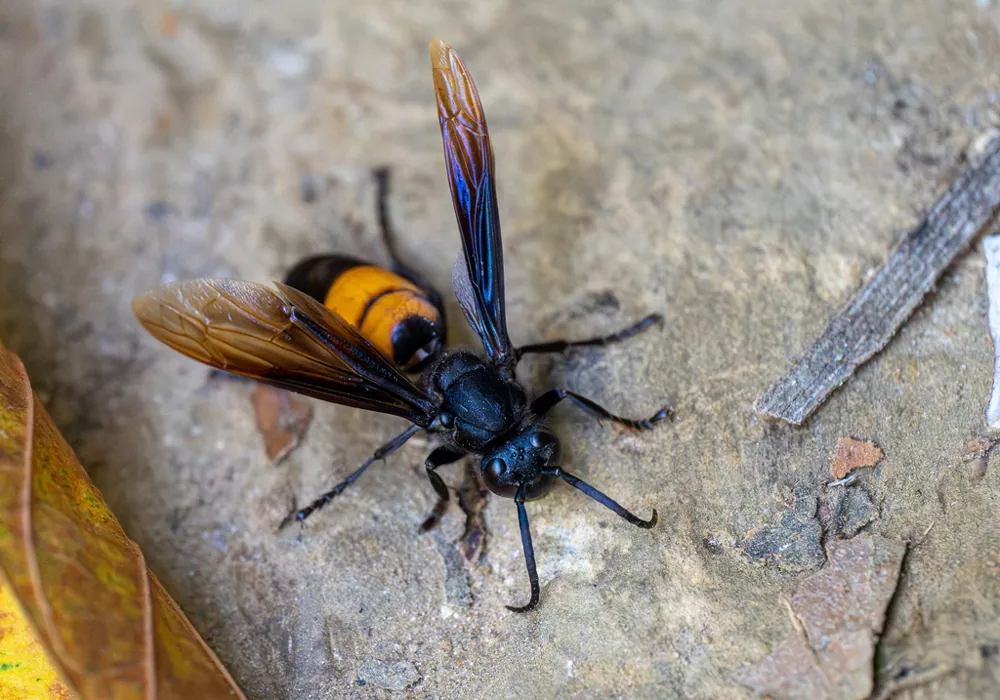
 Sɛdeɛ wobɛhunu no
- Head is dark brown or red.1
- Abdomen is black with a distinct yellow stripe covering most of the second abdominal segment.1
- In Singapore and south-eastern Asia, specimens are often completely black and larger.1
- In Hong Kong, the head and sides of the thorax are normally reddish.1
- In the Andamans and Nicobars, the head and thorax are reddish brown and the plates on the abdomen are orange, except the first.1
Bɔre ahoɔden
Bɔre fi ne dua ano nsɔe (stinger) mu ba.
Ne asiane ma nnipa te sɛn?
Asiane ma nnipa: Ɛyɛ denSɛ ɛwɔ wo a, kɔ dɔkota nkyɛn. Ɛntaa nkum obi koraa.Its sting is described as potent and can cause extreme pain and swelling.1
 Sɛ ɛwɔ a
- Fa biribi twitwiw wowa no dua (stinger) no fi mu, na dwo baabi no.
- Sɛ onipa no ntumi nhome yie, n'anim anaa ne mene mu hono, anaa ɛyɛ no sɛ ɔrebɛtɔ piti a, ɛyɛ allergy ahohiahia: frɛ wo ahohiahia nɔma na fa n'adrenaline pen (auto-injector) wɔ no sɛ ɔwɔ bi a.
Di kan frɛ wo ahohiahia nɔma (112, 000, 911). Yei yɛ mmoa a ɛdi kan ho akwankyerɛ, ɛnyɛ dɔkota afotuo. Mmoa a ɛdi kan ho nsɛm titiriw
 Hwɛ wo ho so
- Mfa wo nsa nka wiram aboa biara, nkyere no na mfa no nni agorɔ, sɛ ɔyɛ ketewa mpo, na sɛ ɛte sɛ ɔrededa anaa wawu mpo a.
- Ma no kwan. Sɛ wohyia baako a, ma wo bo nnwo, san w'akyi brɛoo na ma ɔnkɔ ne kwan.
- Sɛ baako wɔ wo a: ma wo bo nnwo, tena dinn, frɛ wo ahohiahia nɔma (112, 000, 911) anaa kɔ ayaresabea ntɛm. Kae sɛdeɛ na ɛte, mfonini bɛboa.
Ɛnhwehwɛ wo sɛ ɛbɛpira wo. Ɛde ne bɔre kyere aduane anaa ɛbɔ ne ho ban, na ɛpɛ sɛ ɛhinta sene biribiara. Nsɛm pii fa ahobammɔ ho
Wiase mu baabi bɛn?
Ne kɛseɛ te sɛn?
Ne tenten te sɛn?
 ne tenten bɛyɛ sɛ paper clip
 ɛbɛtumi atu atwa bɔɔlobɔ agodibea mu nyinaa wɔ anibu 11 mu
Greater banded hornet kɛseɛ te sɛn sɛ wode toto WO ho a?
Akontabuo kɛkɛ wɔ wo browser mu. Wɔnkora hwee, na wɔmfa hwee nkɔ baabiara.
Ne ntɛm te sɛn?


Nsɛm
Its predation is one of the main causes of colony failure in the paper wasp Polistes chinensis in Japan.1
Unlike most aerial hornets, whose nests are completely sealed, its nest has an open bottom.1
Its nest is kept at 25 to 30 °C until about the middle of October, when it cools towards the surrounding temperature as the nest begins to die.1
It was found on Guam in August 2016 and has since become a permanent resident of the island's ecosystem.1
It may play a significant role in controlling populations of Asian paper wasps.1
Baabi a nsɛm no fi
- Vespa tropica (Wikipedia (CC BY-SA 4.0))
- Vespa tropica (iNaturalist): din ne nkyekyɛmu.
- Venom Wiki: asiane gyinabea, kɛseɛ a ɛtaa yɛ ne ntɛm susuo no yɛ yɛn ankasa deɛ. Hwɛ sɛdeɛ yɛbu no: Sɛdeɛ yɛkyerɛ asiane gyinabea.
Nsɛm biara a ɛwɔ kratafa yi so wɔ nɔma a ɛkyerɛ ne fibea. Sɛ yɛfom biribi a, kafra, yɛyɛ mmoa ho akɔnnɔfoɔ, ɛnyɛ nyansahu nwoma. Ka kyerɛ yɛn wɔ [email protected] na yɛbɛsiesie.
 Ɔkɔm de akekantwerɛ no! Onipa baako na ɔyɛ Venom Wiki: ɛyɛ kwa, dawurubɔ nni so na biribiara nni so a ɛdi w'akyi. Akyɛdeɛ ketewa bi boa ma ɛkɔ so tena internet so.Ma akekantwere no aduane
Pii fi kuo korɔ no mu: Wowa, kotokurodu ne kotokurodu akɛseɛ
 Asian giant hornetWowa, kotokurodu ne kotokurodu akɛseɛƐtumi kum
 Common waspWowa, kotokurodu ne kotokurodu akɛseɛƐyɛ yaw kɛkɛ
 European hornetWowa, kotokurodu ne kotokurodu akɛseɛƐyɛ yaw kɛkɛ
 Western honey beeWowa, kotokurodu ne kotokurodu akɛseɛƐyɛ yaw kɛkɛ
 Giant honey beeWowa, kotokurodu ne kotokurodu akɛseɛƐhia dɔkota
 Asian hornetWowa, kotokurodu ne kotokurodu akɛseɛƐyɛ yaw kɛkɛ
 Deathstalker
 Indian cobra
 Indian saw-scaled viper
 King cobra
 Puff adder
 Russell ɔnanka