
 Afirik
 Asiya
Asiya Turai
Turai Amerik Worgo
 Australiya e Oseaniya
 Antarktika
 Baharu Pasifik
 Baharu Atlantik
 Baharu Indiya
 Baharu Arktik
 Baharu Mediterane
 Baharu Boɗeeru
 Baharu Karibiya
 Baharu Koral
 Baharu Ciina Worgo
 Baharu Filipin
 Baharu Andaman
 Baharu Rewo
 Baharu Timor e Arafura
 Baharu Bengal
 Baharu Kaliforniya
Anchieta's cobra
 Ina ŋata
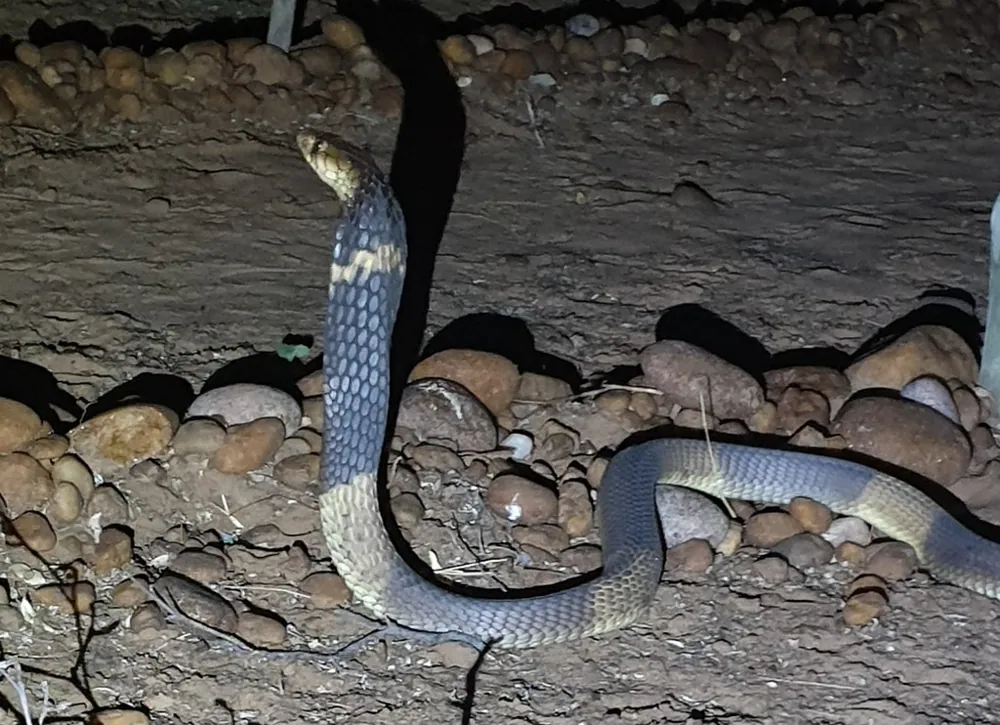
Anchieta's cobra is a venomous snake that lives in parts of southwestern Africa. It is a ground-dwelling cobra that spreads a broad hood when threatened. It is active at night and often comes close to human homes and farmyards.1



 No anndirto nde
- Young snakes are yellowish to light brown, with a black band circling the neck.1
- As it grows, it becomes a darker brown and the neck band fades away.1
- The throat band, which covers the front belly scales, is blue-black.1
- When threatened, it spreads a large, impressive hood about 10 to 12 cm wide.1
- In the southernmost parts of its range, some snakes are black with yellow bands across the body and tail.1
Ina jiiɓindiree e: The snouted cobra is very similar in shape, size and habits. The Anchieta's cobra is more inclined to stand its ground when confronted by a threat.1
Doole tooke
Tooke ina yalta e ñiiƴe mum si nde ŋatii.
Hol ko tooke mum (ŋatol walla fiɗol) waɗata?
Its venom is mainly a potent neurotoxin, which attacks the nerves. It may also contain cardiotoxic components, which harm the heart. Because it has moderately large size and relatively large fangs, it can inject a large volume of venom in a single bite.1
Hol no nde woni bone e yimɓe?
Bone e yimɓe: Bone sanneIna waawi warde neɗɗo mo heɓaali safaara.Bites are rare, but they have been known to cause human deaths.1
Hol ko nde waɗata si nde hulii?
When provoked it lifts its front body off the ground, spreads its hood and takes a defensive posture, but it will flee if it gets the chance, and it sometimes feigns death.1
 Si nde ŋatii
- Deeƴin neɗɗo oo, taa o dilla, ittu zoobe e geɗe ɗigginiiɗe, yahra mo asibiti law: antivenom ko safaara.
Sahaa fof, noddu lamba ballal yaawngal (112, 000, 911) ko adii. Ɗum ko ballal arano kuuɓal, wonaa wasiyya doktaa. Aslu ballal arano
 Reen hoore maa
- Taa memu, taa nanngu, taa aaɓnu dabbaare ladde abada, hay pamaro, hay si ina wayi no ɗaanii walla maayii.
- Accu nde nokku. Si a fottii e gooto, deeƴu, ruttu caggal seeɗa seeɗa, accu nde yaha laawol mum.
- Si gooto e majji ŋatii ma: deeƴu, taa dillu, noddu lamba ballal yaawngal (112, 000, 911) walla yah asibiti law. Siftor no nde wayri, foto ina walla.
Nde ɗaɓɓaaki ma. Nde huutora tooke mum ngam nanngude ñaamdu walla reende hoore mum, nde ɓuri yiɗde suuɗaade. Ɓeydu anndude no reentorto
Hol to e aduna?
Hol no nde mawni?
Hol no nde juuti?
 juuti no ullundi galle 5, hinere haa laaci
 juuti no ayaba 13 jokkondiraaɗi
 ina waawi dogde meeter 100 nder sakan 46 (neɗɗo ɓurɗo yaawde ina haani 9,6)
Hol no Anchieta's cobra mawni, fottindaade e AAN?
Hiisa tan nder browser maa. Alaa ko mooftetee walla ko neletee.
Hol no nde yaawi?


Anndal
The longest recorded male was 2.31 metres long and was caught in Windhoek, Namibia.1
It is hunted by birds of prey such as secretary birds and snake eagles, and by honey badgers and white-throated monitors.1
Males and females grow to similar sizes, although males usually have larger heads and longer tails.1
A banded form has been noted in roughly 13% of males and up to 22% of females.1
Ɗo anndal iwi
- Anchieta's cobra (Wikipedia (CC BY-SA 4.0))
- Naja anchietae (iNaturalist): inɗe e tolnugol.
- Venom Wiki: darja bone, mawnude woowaaɗo e miijo yaawre ko amen. Ndaar no min hiisirta ɗum: No min betiri bone.
Kala anndal e ngoo hello ina jogii limre hollirnde iwdi mum. Si min juumii, accu min, min yiɗɓe dabbaaji, wonaa jaridaa ganndal. Wiy min e [email protected] min feewnitay.
 Yaare nden ina heege! Venom Wiki ko golle neɗɗo gooto: meere, tawa tallaaji alaa, trackers alaa. Ballal pamarngal ina walla heddinde ɗum e internet.Ñaamnu yaare nden
 Mamba ɓaleendi
 Cobra Masar
 Cape cobra
 Eastern green mamba
 Jameson's mamba
 Western green mamba
 Yaare deathstalker
 Puff adder
 Boomslang
 Fat-tailed scorpion
 Gaboon viper
 Western honey bee