
 Afirik
 Asiya
Asiya Turai
Turai Amerik Worgo
 Australiya e Oseaniya
 Antarktika
 Baharu Pasifik
 Baharu Atlantik
 Baharu Indiya
 Baharu Arktik
 Baharu Mediterane
 Baharu Boɗeeru
 Baharu Karibiya
 Baharu Koral
 Baharu Ciina Worgo
 Baharu Filipin
 Baharu Andaman
 Baharu Rewo
 Baharu Timor e Arafura
 Baharu Bengal
 Baharu Kaliforniya
Jameson's mamba
 Ina ŋata
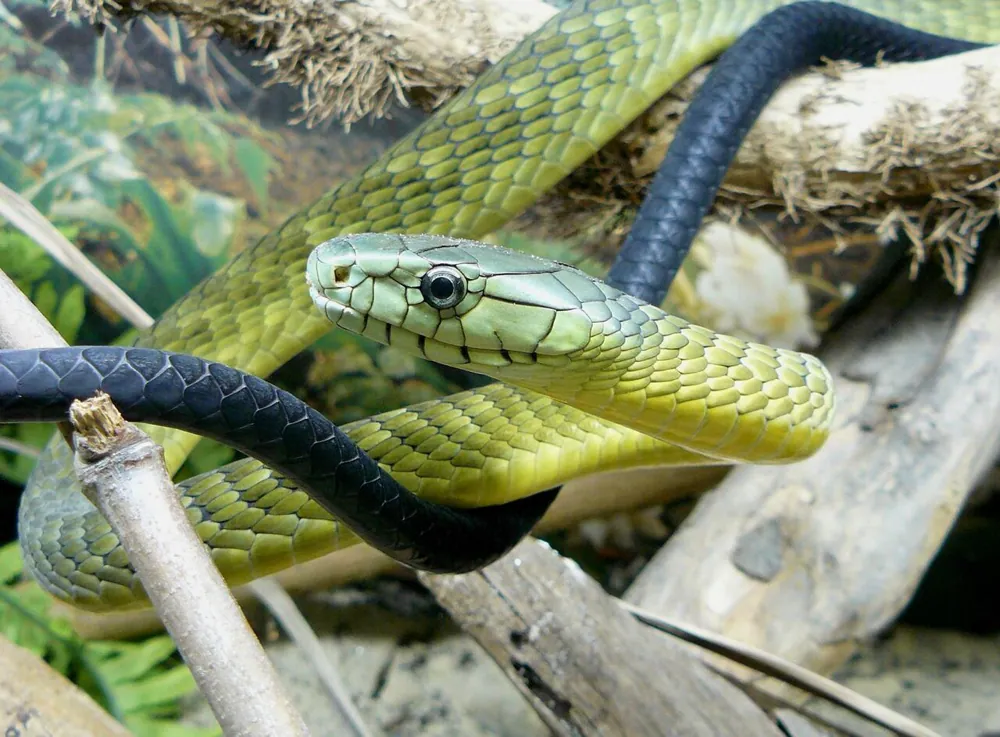
Jameson's mamba is a highly venomous snake that lives in the forests and woodlands of equatorial Africa. It spends much of its time in trees and is often found near towns, farms and plantations. Its venom attacks the nerves, so it is a snake to treat with respect and keep well away from.1



 No anndirto nde
- Slender body with dull green upper parts that fade to pale green towards the belly1
- Neck, throat and underparts are cream or yellowish1
- Narrow, elongated head with small eyes and round pupils1
- Tail is black in the eastern subspecies (kaimosae) and pale green or yellow in the central and western subspecies1
- Adults typically measure 1.5 to 2.2 metres in total length1
Doole tooke
Tooke ina yalta e ñiiƴe mum si nde ŋatii.
Hol ko tooke mum (ŋatol walla fiɗol) waɗata?
The venom is highly neurotoxic, meaning it attacks the nerves, and also contains cardiotoxins, which affect the heart. Bite pain and swelling are followed by chills, sweating, abdominal pain and vomiting. Later symptoms can include slurred speech, difficulty breathing and paralysis.1
Hol no nde woni bone e yimɓe?
Bone e yimɓe: WarooɗoGooto e dabbaaji ɓurɗi bone e aduna.The World Health Organization classes it as a Snake of Medical Importance in sub-Saharan Africa, although few bites are recorded. Deaths have been recorded within three to four hours of a bite. An unconfirmed report describes a child dying within 30 minutes. Access to antivenom is difficult in some areas, and workers in palm oil plantations have died after falling from trees when they met one in the canopy.1
 Kabaru moƴƴo: doktaaɓe ina njogii lekki (antivenom) walla safaara ngam ɗum.1
Hol ko nde waɗata si nde hulii?
When threatened, it flattens its neck like a cobra, and it will usually try to escape rather than attack.1
 Si nde ŋatii
- Apply a pressure bandage, keep the victim as still as possible and get them to a hospital or clinic quickly. An arterial tourniquet may help because of the neurotoxic venom. Antivenom is the main treatment, and tetanus toxoid is sometimes given.1
- Deeƴin neɗɗo oo, taa o dilla, ittu zoobe e geɗe ɗigginiiɗe, yahra mo asibiti law: antivenom ko safaara.
Sahaa fof, noddu lamba ballal yaawngal (112, 000, 911) ko adii. Ɗum ko ballal arano kuuɓal, wonaa wasiyya doktaa. Aslu ballal arano
 Reen hoore maa
- Taa memu, taa nanngu, taa aaɓnu dabbaare ladde abada, hay pamaro, hay si ina wayi no ɗaanii walla maayii.
- Accu nde nokku. Si a fottii e gooto, deeƴu, ruttu caggal seeɗa seeɗa, accu nde yaha laawol mum.
- Si gooto e majji ŋatii ma: deeƴu, taa dillu, noddu lamba ballal yaawngal (112, 000, 911) walla yah asibiti law. Siftor no nde wayri, foto ina walla.
Nde ɗaɓɓaaki ma. Nde huutora tooke mum ngam nanngude ñaamdu walla reende hoore mum, nde ɓuri yiɗde suuɗaade. Ɓeydu anndude no reentorto
Hol to e aduna?
Hol no nde mawni?
Hol no nde juuti?
 juuti no dawaaɗi 2,5, hinere haa laaci
 juuti no ayaba 15 jokkondiraaɗi
 ina waawi dogde meeter 100 nder sakan 41 (neɗɗo ɓurɗo yaawde ina haani 9,6)
Hol no Jameson's mamba mawni, fottindaade e AAN?
Hiisa tan nder browser maa. Alaa ko mooftetee walla ko neletee.
Hol no nde yaawi?


Anndal
Females lay their eggs in abandoned termite colonies.1
In Nigeria, males fight each other for access to females during the dry season.1
Its main predators are birds of prey, including the martial eagle, the bateleur and the Congo serpent eagle.1
It is difficult to study in the wild because it lives in trees and its green colouring helps it hide among leaves.1
Ɗo anndal iwi
- Jameson's mamba (Wikipedia (CC BY-SA 4.0))
- Dendroaspis jamesoni (iNaturalist): inɗe e tolnugol.
- Venom Wiki: darja bone, mawnude woowaaɗo e miijo yaawre ko amen. Ndaar no min hiisirta ɗum: No min betiri bone.
Kala anndal e ngoo hello ina jogii limre hollirnde iwdi mum. Si min juumii, accu min, min yiɗɓe dabbaaji, wonaa jaridaa ganndal. Wiy min e [email protected] min feewnitay.
 Yaare nden ina heege! Venom Wiki ko golle neɗɗo gooto: meere, tawa tallaaji alaa, trackers alaa. Ballal pamarngal ina walla heddinde ɗum e internet.Ñaamnu yaare nden
 Mamba ɓaleendi
 Cobra Masar
 Cape cobra
 Eastern green mamba
 Western green mamba
 Ashe's spitting cobra
 Yaare deathstalker
 Puff adder
 Boomslang
 Fat-tailed scorpion
 Gaboon viper
 Western honey bee
.jpg)