
 Afirik
 Asiya
Asiya Turai
Turai Amerik Worgo
 Australiya e Oseaniya
 Antarktika
 Baharu Pasifik
 Baharu Atlantik
 Baharu Indiya
 Baharu Arktik
 Baharu Mediterane
 Baharu Boɗeeru
 Baharu Karibiya
 Baharu Koral
 Baharu Ciina Worgo
 Baharu Filipin
 Baharu Andaman
 Baharu Rewo
 Baharu Timor e Arafura
 Baharu Bengal
 Baharu Kaliforniya
Ashe's spitting cobra
 Ina fuufa walla ina tuuyta
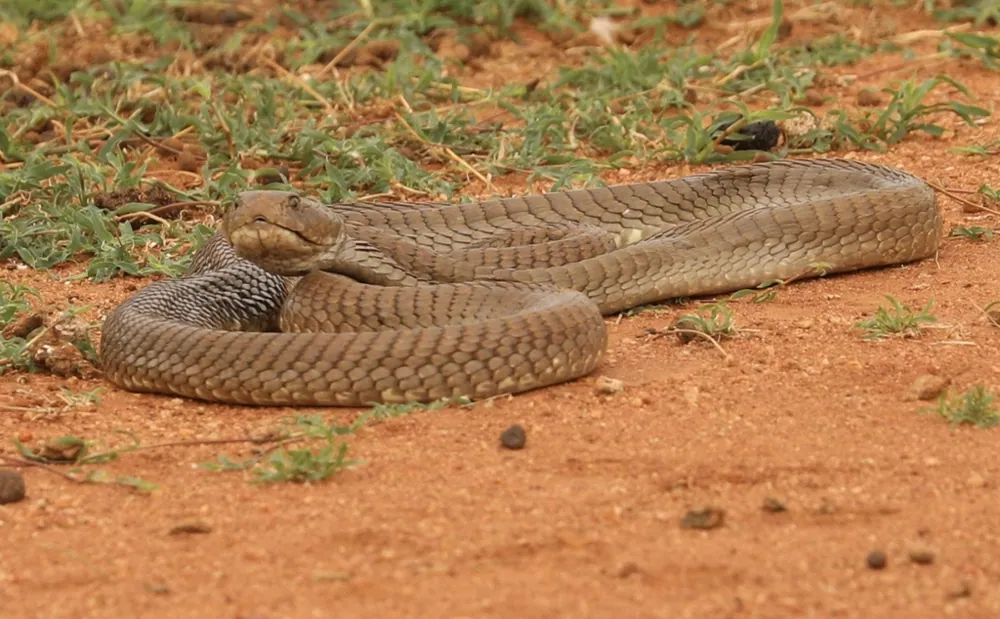
Ashe's spitting cobra is a large venomous snake from eastern and northeastern Africa. It is the largest of all the spitting cobras, and it can spray venom from a distance as well as bite. Its venom can cause blindness if it gets into the eyes and not treated at once.1
 No anndirto nde
- Very heavily built, with a big head1
- Colour ranges from light grey and pale mustard to dark brown1
- Pale along the belly, sometimes with slight speckling or blotches1
- A dark brown band across the throat1
- Average length about 1.3 to 2.0 m including the tail, making it the largest spitting cobra1
Ina jiiɓindiree e: It was once thought to be a brown form of the black-necked spitting cobra. It was classed as a separate species in 2007.1
Doole tooke
Nde ina fuufa walla ina tuuyta ndiyam fiɗooɗam e haɓooɓe nde.
Hol ko tooke mum (ŋatol walla fiɗol) waɗata?
Its venom is neurotoxic, meaning it attacks the nerves, and cytotoxic, meaning it destroys cells. It is very similar to the venom of other spitting cobras, but it can inject a much larger volume in one bite. Its venom also causes strong tissue death around a wound.1
Hol no nde woni bone e yimɓe?
Bone e yimɓe: Bone sanneIna waawi warde neɗɗo mo heɓaali safaara.The venom has low whole-body toxicity, so survival is very likely with proper treatment. Survivors may be left disfigured by tissue damage. If venom gets into the eyes and is not treated immediately, blindness is likely. Even with antivenom, amputation may be needed after a full dose from a large specimen.1
 Kabaru moƴƴo: doktaaɓe ina njogii lekki (antivenom) walla safaara ngam ɗum.1
Hol ko nde waɗata si nde hulii?
It is very defensive and does not hesitate to spit when it feels cornered. It can keep spitting for hours without running out of venom straight away.1
 Si nde ŋatii walla nde tuuytii
- If venom gets into the eyes, rinse them straight away with water or another bland liquid, as delay can cause permanent blindness. Whether the person has been bitten or spat at, they should see a doctor as soon as possible. Treatment is the appropriate antivenom, SAVP polyvalent from South African Vaccine Producers, and the dose may need to be higher than for the average black-necked spitting cobra bite.1
- Deeƴin neɗɗo oo, taa o dilla, ittu zoobe e geɗe ɗigginiiɗe, yahra mo asibiti law: antivenom ko safaara.
- Si tooke tuuytaama nder gite, lootu ɗe e ndiyam laaɓɗam ɗuuɗɗam ɗoo ɗoon.
Sahaa fof, noddu lamba ballal yaawngal (112, 000, 911) ko adii. Ɗum ko ballal arano kuuɓal, wonaa wasiyya doktaa. Aslu ballal arano
 Reen hoore maa
- Taa memu, taa nanngu, taa aaɓnu dabbaare ladde abada, hay pamaro, hay si ina wayi no ɗaanii walla maayii.
- Accu nde nokku. Si a fottii e gooto, deeƴu, ruttu caggal seeɗa seeɗa, accu nde yaha laawol mum.
- Si gooto e majji ŋatii ma walla tuuytii tooke nder gite maa: deeƴu, taa dillu, noddu lamba ballal yaawngal (112, 000, 911) walla yah asibiti law. Siftor no nde wayri, foto ina walla.
Nde ɗaɓɓaaki ma. Nde huutora tooke mum ngam nanngude ñaamdu walla reende hoore mum, nde ɓuri yiɗde suuɗaade. Ɓeydu anndude no reentorto
Hol to e aduna?
Hol no nde mawni?
Hol no nde juuti?
 juuti no dawaaɗi 2,5, hinere haa laaci
 juuti no ayaba 15 jokkondiraaɗi
 ina waawi dogde meeter 100 nder sakan 41 (neɗɗo ɓurɗo yaawde ina haani 9,6)
Hol no Ashe's spitting cobra mawni, fottindaade e AAN?
Hiisa tan nder browser maa. Alaa ko mooftetee walla ko neletee.
Hol no nde yaawi?


Anndal
It is the world's largest species of spitting cobra.1
It can spit venom in large amounts for hours.1
The largest specimen recorded, caught in Kenya, measured 270 cm in total length.1
One milked specimen at the Bio-Ken Snake Farm in 2004 produced a wet venom yield of 6.2 ml.1
It is most closely related to the Mozambique spitting cobra.1
Feññinoowo goonga
Fenaande: It is just a brown form of the black-necked spitting cobra.
Goonga: It was classed as a separate species in 2007, after experts recognised its differences from other spitting cobras.1
Ɗo anndal iwi
- Naja ashei (Wikipedia (CC BY-SA 4.0))
- Naja ashei (iNaturalist): inɗe e tolnugol.
- Venom Wiki: darja bone, mawnude woowaaɗo e miijo yaawre ko amen. Ndaar no min hiisirta ɗum: No min betiri bone.
Kala anndal e ngoo hello ina jogii limre hollirnde iwdi mum. Si min juumii, accu min, min yiɗɓe dabbaaji, wonaa jaridaa ganndal. Wiy min e [email protected] min feewnitay.
 Yaare nden ina heege! Venom Wiki ko golle neɗɗo gooto: meere, tawa tallaaji alaa, trackers alaa. Ballal pamarngal ina walla heddinde ɗum e internet.Ñaamnu yaare nden
 Mamba ɓaleendi
 Cobra Masar
 Cape cobra
 Eastern green mamba
 Jameson's mamba
 Western green mamba
 Yaare deathstalker
 Puff adder
 Boomslang
 Fat-tailed scorpion
 Gaboon viper
 Western honey bee