
 Afirik
 Asiya
Asiya Turai
Turai Amerik Worgo
 Australiya e Oseaniya
 Antarktika
 Baharu Pasifik
 Baharu Atlantik
 Baharu Indiya
 Baharu Arktik
 Baharu Mediterane
 Baharu Boɗeeru
 Baharu Karibiya
 Baharu Koral
 Baharu Ciina Worgo
 Baharu Filipin
 Baharu Andaman
 Baharu Rewo
 Baharu Timor e Arafura
 Baharu Bengal
 Baharu Kaliforniya
Banded water cobra
 Ina ŋata
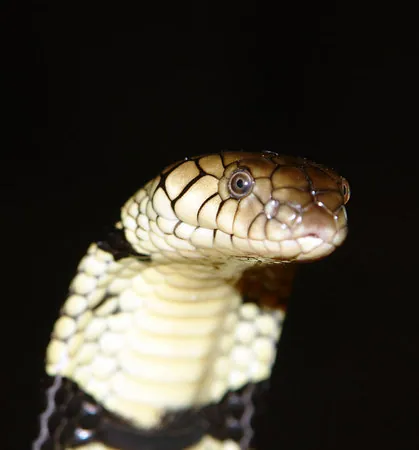
The banded water cobra is a large, heavy snake that lives mostly in the water. It is found in parts of central and western Africa, along lakes, rivers and streams. It is one of only two water cobra species in the world.1


 No anndirto nde
Doole tooke
Tooke ina yalta e ñiiƴe mum si nde ŋatii.
Hol ko tooke mum (ŋatol walla fiɗol) waɗata?
Its venom has not been well studied, but it is believed to be dangerously neurotoxic, meaning it attacks the nerves, as most elapids' venoms do. Laboratory tests on mice showed that its venom is very potent, with some of the lowest lethal doses recorded for any African cobra studied so far.1
Hol no nde woni bone e yimɓe?
Bone e yimɓe: Bone sanneIna waawi warde neɗɗo mo heɓaali safaara.It is secretive and seldom met by people. It is generally not aggressive and bites only when provoked.1
 Kabaru moƴƴo: doktaaɓe ina njogii lekki (antivenom) walla safaara ngam ɗum.1
Hol ko nde waɗata si nde hulii?
On land, when threatened, it rears up, spreads its hood and may hiss loudly, but it tends not to lunge forward. In water, it swims away quickly.1
 Si nde ŋatii
- Deeƴin neɗɗo oo, taa o dilla, ittu zoobe e geɗe ɗigginiiɗe, yahra mo asibiti law: antivenom ko safaara.
Sahaa fof, noddu lamba ballal yaawngal (112, 000, 911) ko adii. Ɗum ko ballal arano kuuɓal, wonaa wasiyya doktaa. Aslu ballal arano
 Reen hoore maa
- Taa memu, taa nanngu, taa aaɓnu dabbaare ladde abada, hay pamaro, hay si ina wayi no ɗaanii walla maayii.
- Accu nde nokku. Si a fottii e gooto, deeƴu, ruttu caggal seeɗa seeɗa, accu nde yaha laawol mum.
- Si gooto e majji ŋatii ma: deeƴu, taa dillu, noddu lamba ballal yaawngal (112, 000, 911) walla yah asibiti law. Siftor no nde wayri, foto ina walla.
Nde ɗaɓɓaaki ma. Nde huutora tooke mum ngam nanngude ñaamdu walla reende hoore mum, nde ɓuri yiɗde suuɗaade. Ɓeydu anndude no reentorto
Hol to e aduna?
Hol no nde mawni?
Hol no nde juuti?
 juuti no dawaaɗi 3, hinere haa laaci
 juuti no ayaba 16 jokkondiraaɗi
 ina waawi dogde meeter 100 nder sakan 43 (neɗɗo ɓurɗo yaawde ina haani 9,6)
Hol no Banded water cobra mawni, fottindaade e AAN?
Hiisa tan nder browser maa. Alaa ko mooftetee walla ko neletee.
Hol no nde yaawi?


Anndal
It is an excellent swimmer and can stay underwater for up to 10 minutes.1
It can dive to depths of 25 m.1
It is one of only two water cobra species in the world; the other is the Congo water cobra (Naja christyi).1
It is a slow mover on land, so it usually heads for water to escape.1
A polyvalent antivenom made by the South African Institute of Medical Research neutralised its venom in laboratory tests.1
Ɗo anndal iwi
- Naja annulata (Wikipedia (CC BY-SA 4.0))
- Naja annulata (iNaturalist): inɗe e tolnugol.
- Venom Wiki: darja bone, mawnude woowaaɗo e miijo yaawre ko amen. Ndaar no min hiisirta ɗum: No min betiri bone.
Kala anndal e ngoo hello ina jogii limre hollirnde iwdi mum. Si min juumii, accu min, min yiɗɓe dabbaaji, wonaa jaridaa ganndal. Wiy min e [email protected] min feewnitay.
 Yaare nden ina heege! Venom Wiki ko golle neɗɗo gooto: meere, tawa tallaaji alaa, trackers alaa. Ballal pamarngal ina walla heddinde ɗum e internet.Ñaamnu yaare nden
 Mamba ɓaleendi
 Cobra Masar
 Cape cobra
 Eastern green mamba
 Jameson's mamba
 Western green mamba
 Yaare deathstalker
 Puff adder
 Boomslang
 Fat-tailed scorpion
 Gaboon viper
 Western honey bee