
 Afrik
Afrik Aazi
Aazi Orop
Orop Amerik Worgo
 Ostaraali e Oseyaani
 Antarktik
 Geec Pasifik
 Geec Atlantik
 Geec Enndo
 Geec Arktik
 Geec Mediteraane
 Geec Boɗeejo
 Geec Karayib
 Geec Korayl
 Geec Siin Worgo
 Geec Filipiin
 Geec Andaman
 Geec Rewo
 Geec Timor e Arafura
 Gulf Bengal
 Gulf Kaliforni
Habu
 Ŋatgol
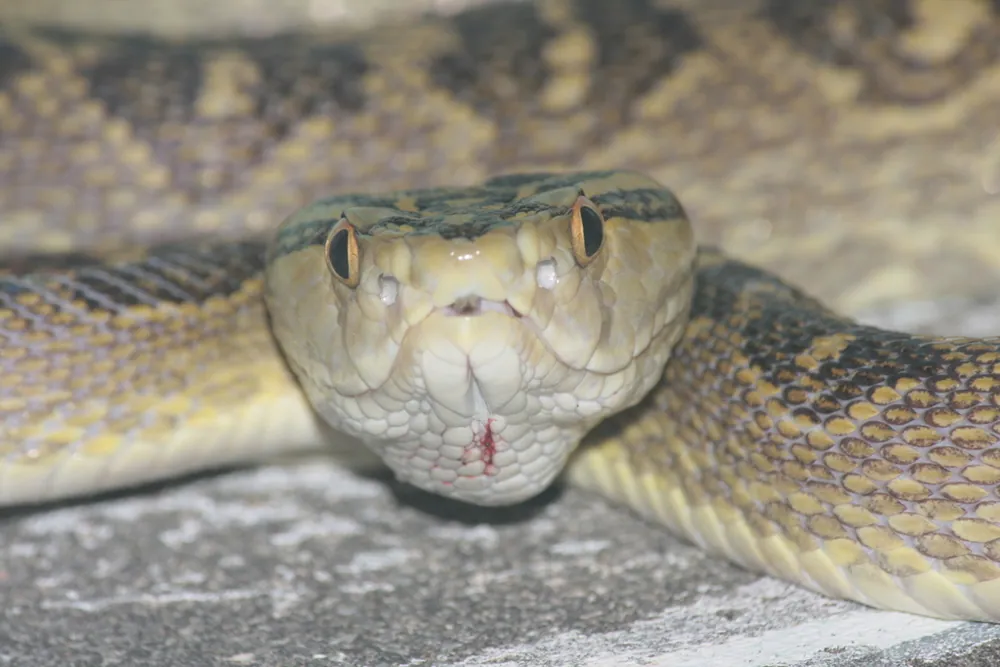
The habu is a venomous pit viper that lives on the Ryukyu Islands of Japan, including Okinawa and the Amami Islands. It is the largest member of its genus, Protobothrops. Its bite is serious, so it is important to know what it looks like.1

 No anndirte ngal
- Typically 120 to 150 cm long, including the tail, and slender with a large head1
- Light olive or brown body with elongated dark green or brownish blotches1
- Blotches have yellow edges, sometimes yellow spots, and often join to form wavy stripes1
- Whitish belly with dark edges1
- Crown of the head covered with small scales1
Ina heewi waylondireede e: In Okinawa Prefecture, the name habu can also refer to the Sakishima habu (Protobothrops elegans), also called the elegant pit viper. This is a different species.1
Doole tooke
Tooke ngal ina yaltira ñiiƴe mum so ina ŋata.
Hol ko tooke ŋatgol mum waɗata?
The venom is highly toxic and contains cytotoxin, which damages body cells, and hemorrhagin, which damages blood vessels and causes bleeding. A bite can cause nausea, vomiting and low blood pressure, and it can possibly cause death. Some victims have lost movement in their hands and legs, even after treatment.1
Hol no bone mum heewiri e yimɓe?
Bone e yimɓe: Bone sanneIna waawi warde neɗɗo mo safraaka.The Amami Islands have about two snakebites per 1,000 people, which is considered very high. The fatality rate is less than 1%. Bites are not life-threatening if the victim receives medical care promptly, but 6 to 8% of victims suffer permanent disability.1
Hol ko ngal waɗata so ina hula?
The habu is bold and irritable, and it can strike quickly from a long reach.1
 So ina ŋata
- Get medical care promptly. With prompt medical care, bites are not life-threatening.1
- Haɗ neɗɗo oo dillaade, deƴƴin mo, jogo terɗe ŋataaɗe ɗee e toownde ɓernde, ittu jabbe e kala ko tiiɗi, yahra mo opitaal law.
Adii fof noddu nimero urgence (112, 000, 911). Ɗum ko anndinal ballal adiingal, wonaa saaraangal doktoor. Ko adii e ballal adiingal
 Reen hoore maa
- Wota a meem, wota a nanngu, wota a ñiŋŋu kullal ladde haa abada, hay so ngal ina famɗi, hay so ina nanndi e ɗaaniingal walla maayngal.
- Accu ngal nokku. So a fotti e ngal, deƴƴu, ruttu ɓaawo seeɗa seeɗa, accu ngal yaha laawol mum.
- So gooto ŋatii ma: deƴƴu, wota a dillu, noddu nimero urgence (112, 000, 911) walla yahu opitaal law. Jogo e hakkille no ngal nanndi, natal ina walla.
Ngal faalaaka gaañde ma. Ina huutoroo tooke mum ngam nanngude ñaamdu walla reenaade, ina ɓuri yiɗde suuɗaade. Ɓeydu anndude no reentortoo
Hol to e aduna?
Hol no mawniri?
Hol no juutiri?
 juutde no ulluuɗi galle 5, hinere haa lawol
 juutde no banaanaaji 13 sammondiraaɗi
 ina waawi taƴde 100 meeteer e segonde 86 (neɗɗo ɓurɗo yaawde ina sokli 9,6)
Hol no Habu mawniri, so fooɗondiraama e AN?
Limgal tan e navigatoor maa. Alaa ko danndetee walla ko neldetee.
Hol no yaawiri?


Humpito
On Okinawa, habus are heavily collected to make habushu, a liquor made from awamori sake, which is said to have medicinal properties.1
Unlike most pit vipers, the habu lays eggs rather than giving birth to live young.1
Hatchlings are about 25 cm long and look the same as the adults.1
The small Indian mongoose was introduced to Okinawa in 1910 to reduce the habu population. The effects of this have not been studied, but similar introductions have harmed native wildlife.1
The habu is the largest member of its genus, Protobothrops.1
Ngam ganduɓe tooke
Ɗo humpito iwri
- Protobothrops flavoviridis (Wikipedia (CC BY-SA 4.0))
- Protobothrops flavoviridis (iNaturalist): inɗe e ceergal.
- Venom Wiki: tolno bone, mawnude heewnde e miijo yaawde ko amen. Yiy no men keɓirta ɗum: No men tolnirta bone.
Kala humpito e ngoo hello ina jogii limoore hollirnde iwdi mum. So men juumii, yaafo, men ko yiɗɓe kulle, wonaa jaaynde ganndal. Wiy men e [email protected], men feewnita.
 Yaare nden ina weelaa! Venom Wiki ko golle neɗɗo gooto: yoɓetaake, alaa ko jeeyetee, alaa rewɓe. Ndokkal seeɗa ina walla ngam heddude e enternet.Ñaam yaare nden
 Brown spotted pit viper
 Hump-nosed viper
 Hundred-pace viper
 Malayan pit viper
 Mamushi
 Mangshan pit viper
 Deathstalker
 Indian cobra
 Indian saw-scaled viper
 King cobra
 Mbaa-ndiyam (Puff adder)
 Ladde Russell