
 Afrik
Afrik Aazi
Aazi Orop
Orop Amerik Worgo
 Ostaraali e Oseyaani
 Antarktik
 Geec Pasifik
 Geec Atlantik
 Geec Enndo
 Geec Arktik
 Geec Mediteraane
 Geec Boɗeejo
 Geec Karayib
 Geec Korayl
 Geec Siin Worgo
 Geec Filipiin
 Geec Andaman
 Geec Rewo
 Geec Timor e Arafura
 Gulf Bengal
 Gulf Kaliforni
Hump-nosed viper
 Ŋatgol
The hump-nosed viper is a small, stout pit viper with an upturned snout that ends in a hump. It lives in India and Sri Lanka, in jungle and coffee plantations. It matters because its bite can cause serious harm, and for a long time it was wrongly thought to be harmless.1
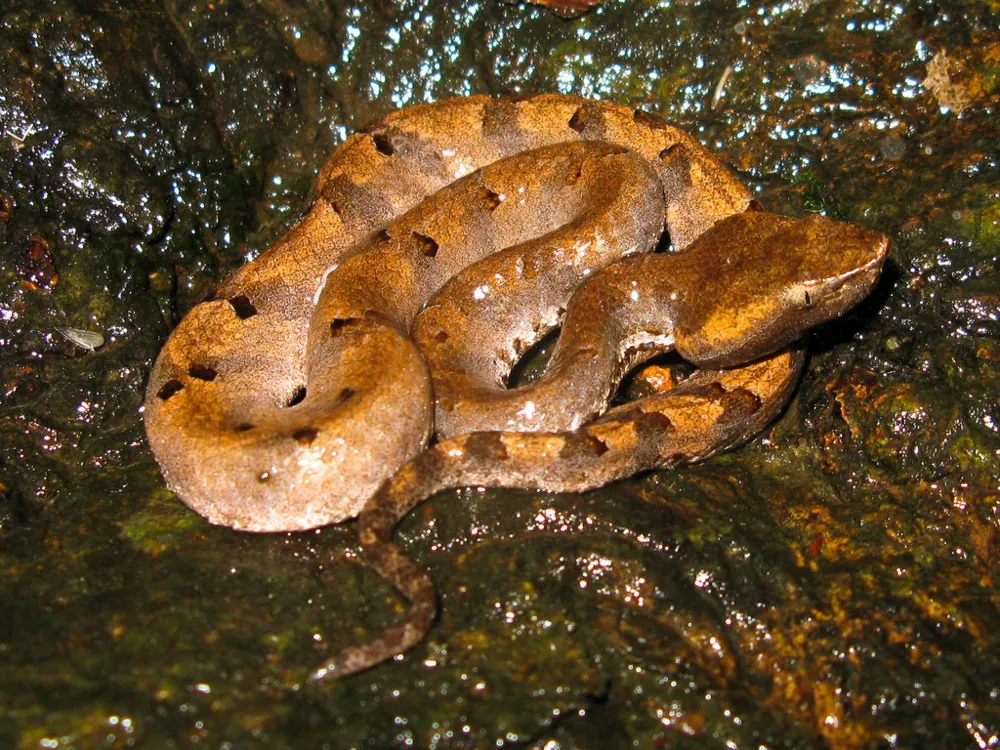
 No anndirte ngal
Doole tooke
Tooke ngal ina yaltira ñiiƴe mum so ina ŋata.
Hol ko tooke ŋatgol mum waɗata?
Its venom causes coagulopathy, a problem with blood clotting, and acute renal failure, which is sudden kidney failure. If a bite is not treated within a few hours, it can be fatal to people.1
Hol no bone mum heewiri e yimɓe?
Bone e yimɓe: Bone sanneIna waawi warde neɗɗo mo safraaka.Bites were once thought to be harmless, but they are now known to be serious. It is the snake that causes the highest number of recorded snake bites in Sri Lanka. It is now considered highly venomous and is one of the medically important venomous snakes in Sri Lanka and on the south-west coast of India.1
Hol ko ngal waɗata so ina hula?
When annoyed it vibrates its tail, a warning behaviour it shares with other pit vipers such as rattlesnakes, and it can make fast strikes despite being a slow mover.1
 So ina ŋata
- Bites need medical treatment within a few hours. An antivenom is being developed and tested in Sri Lanka.1
- Haɗ neɗɗo oo dillaade, deƴƴin mo, jogo terɗe ŋataaɗe ɗee e toownde ɓernde, ittu jabbe e kala ko tiiɗi, yahra mo opitaal law.
Adii fof noddu nimero urgence (112, 000, 911). Ɗum ko anndinal ballal adiingal, wonaa saaraangal doktoor. Ko adii e ballal adiingal
 Reen hoore maa
- Wota a meem, wota a nanngu, wota a ñiŋŋu kullal ladde haa abada, hay so ngal ina famɗi, hay so ina nanndi e ɗaaniingal walla maayngal.
- Accu ngal nokku. So a fotti e ngal, deƴƴu, ruttu ɓaawo seeɗa seeɗa, accu ngal yaha laawol mum.
- So gooto ŋatii ma: deƴƴu, wota a dillu, noddu nimero urgence (112, 000, 911) walla yahu opitaal law. Jogo e hakkille no ngal nanndi, natal ina walla.
Ngal faalaaka gaañde ma. Ina huutoroo tooke mum ngam nanngude ñaamdu walla reenaade, ina ɓuri yiɗde suuɗaade. Ɓeydu anndude no reentortoo
Hol to e aduna?
Hol no mawniri?
Hol no juutiri?
 juutde no banaanaaji 2,5 sammondiraaɗi
 juutde no kaaɗe mahirɗe 14 ɗaɓɓondiraaɗe
 ina waawi taƴde 100 meeteer e segonde 110 (neɗɗo ɓurɗo yaawde ina sokli 9,6)
Hol no Hump-nosed viper mawniri, so fooɗondiraama e AN?
Limgal tan e navigatoor maa. Alaa ko danndetee walla ko neldetee.
Hol no yaawiri?


Humpito
For a long time its bites were thought to be harmless, but they are now known to cause serious complications.1
It causes more recorded snake bites in Sri Lanka than any other snake.1
It vibrates its tail when annoyed, a behaviour it shares with rattlesnakes.1
Although it is a slow mover, it can make fast strikes.1
Females give birth to live young, with broods of 4 to 17 newborns.1
Feññinoowo fenaande
Fenaande: Its bites are harmless.
Goonga: Its bites can cause serious complications, including blood clotting problems and kidney failure, and can be fatal if not treated within a few hours.1
Ɗo humpito iwri
- Hypnale hypnale (Wikipedia (CC BY-SA 4.0))
- Hypnale hypnale (iNaturalist): inɗe e ceergal.
- Venom Wiki: tolno bone, mawnude heewnde e miijo yaawde ko amen. Yiy no men keɓirta ɗum: No men tolnirta bone.
Kala humpito e ngoo hello ina jogii limoore hollirnde iwdi mum. So men juumii, yaafo, men ko yiɗɓe kulle, wonaa jaaynde ganndal. Wiy men e [email protected], men feewnita.
 Yaare nden ina weelaa! Venom Wiki ko golle neɗɗo gooto: yoɓetaake, alaa ko jeeyetee, alaa rewɓe. Ndokkal seeɗa ina walla ngam heddude e enternet.Ñaam yaare nden
 Brown spotted pit viper
 Habu
Habu Hundred-pace viper
 Malayan pit viper
 Mamushi
 Mangshan pit viper
 Yaare oolnde maayde
 Kobra Enndo
 Wipeer cerkeeje siy Enndo
 Kobra laamɗo
 Mbaa-ndiyam (Puff adder)
 Ladde Russell