
 Afrik
Afrik Aazi
Aazi Orop
Orop Amerik Worgo
 Ostaraali e Oseyaani
 Antarktik
 Geec Pasifik
 Geec Atlantik
 Geec Enndo
 Geec Arktik
 Geec Mediteraane
 Geec Boɗeejo
 Geec Karayib
 Geec Korayl
 Geec Siin Worgo
 Geec Filipiin
 Geec Andaman
 Geec Rewo
 Geec Timor e Arafura
 Gulf Bengal
 Gulf Kaliforni
Malayan pit viper
 Ŋatgol
The Malayan pit viper is a venomous snake of Southeast Asia. It lives in forests, farmland and plantations, where it hunts rats and mice. Its bite causes severe pain and swelling, so it is an important snake to recognise.1

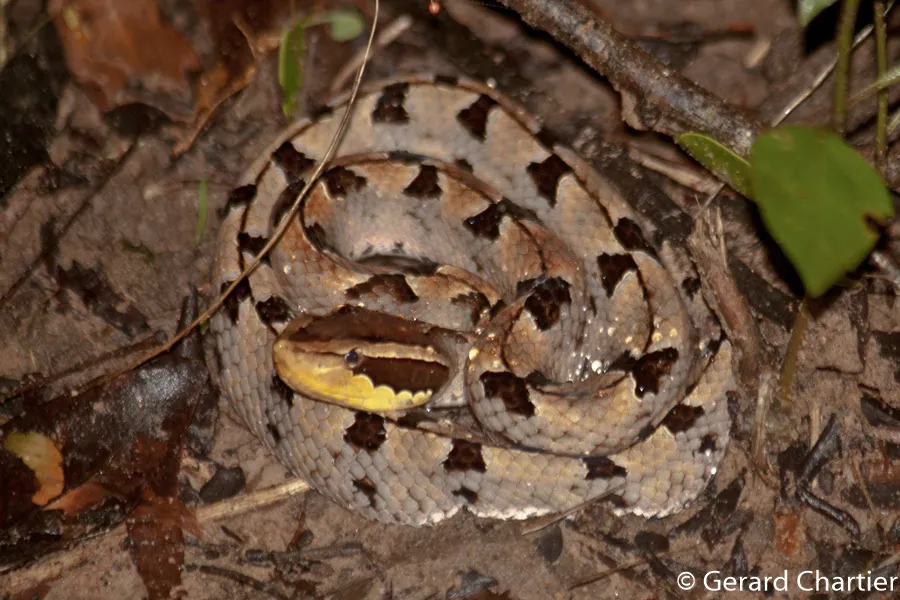
 No anndirte ngal
- Reddish, grey or pale brown in colour on its back.1
- Two rows of large, dark brown triangular blotches with black edges run down the back.1
- A broad dark brown stripe runs from the eye to the corner of the mouth.1
- Smooth scales and a pointed, upturned snout.1
- Adults average about 76 cm long and can reach about 91 cm.1
Doole tooke
Tooke ngal ina yaltira ñiiƴe mum so ina ŋata.
Hol ko tooke ŋatgol mum waɗata?
Its venom causes severe pain and swelling around the bite, and sometimes tissue damage (necrosis), where body tissue dies. The venom acts on platelets, the small cells that help blood clot, and can cause dangerous blood clots. Symptoms are described as developing over time after a bite.1
Hol no bone mum heewiri e yimɓe?
Bone e yimɓe: Bone sanneIna waawi warde neɗɗo mo safraaka.In northern Malaysia it is responsible for about 700 snakebite incidents a year, with a mortality rate of about 2 percent. In a 2005 study of 145 patients in Thailand, 18.6 percent were left with permanently swollen limbs, and two patients died from brain bleeding. Many victims lose limb use or have limbs amputated when there is no antivenom or early treatment.1
 Kabaaru moƴƴo: doktooruuji ina njogii lekki (sérum antivenimeux) walla safaara ngam ɗum.1
Hol ko ngal waɗata so ina hula?
It has a reputation for being bad-tempered and quick to strike when disturbed.1
 So ina ŋata
- Get medical treatment as early as possible, as delays are linked to lasting limb damage. Antivenin is effective in reversing the blood clotting caused by the venom. Authors advise victims not to use traditional healers and to avoid overusing tourniquets.1
- Haɗ neɗɗo oo dillaade, deƴƴin mo, jogo terɗe ŋataaɗe ɗee e toownde ɓernde, ittu jabbe e kala ko tiiɗi, yahra mo opitaal law.
Adii fof noddu nimero urgence (112, 000, 911). Ɗum ko anndinal ballal adiingal, wonaa saaraangal doktoor. Ko adii e ballal adiingal
 Reen hoore maa
- Wota a meem, wota a nanngu, wota a ñiŋŋu kullal ladde haa abada, hay so ngal ina famɗi, hay so ina nanndi e ɗaaniingal walla maayngal.
- Accu ngal nokku. So a fotti e ngal, deƴƴu, ruttu ɓaawo seeɗa seeɗa, accu ngal yaha laawol mum.
- So gooto ŋatii ma: deƴƴu, wota a dillu, noddu nimero urgence (112, 000, 911) walla yahu opitaal law. Jogo e hakkille no ngal nanndi, natal ina walla.
Ngal faalaaka gaañde ma. Ina huutoroo tooke mum ngam nanngude ñaamdu walla reenaade, ina ɓuri yiɗde suuɗaade. Ɓeydu anndude no reentortoo
Hol to e aduna?
Hol no mawniri?
Hol no juutiri?
 juutde no ulluuɗi galle 2, hinere haa lawol
 juutde no banaanaaji 5 sammondiraaɗi
 ina waawi taƴde 100 meeteer e segonde 100 (neɗɗo ɓurɗo yaawde ina sokli 9,6)
Hol no Malayan pit viper mawniri, so fooɗondiraama e AN?
Limgal tan e navigatoor maa. Alaa ko danndetee walla ko neldetee.
Hol no yaawiri?


Humpito
The venom of this snake is used to isolate an enzyme called ancrod, which doctors use to break down blood clots in patients.1
It is very sedentary, and has often been found in the same spot several hours after a bite involving a person.1
Bites happen throughout the year but mostly early in the monsoon season, in May and June.1
It is the only Asian pit viper with large crown scales and smooth back scales.1
Ɗo humpito iwri
- Calloselasma (Wikipedia (CC BY-SA 4.0))
- Calloselasma rhodostoma (iNaturalist): inɗe e ceergal.
- Venom Wiki: tolno bone, mawnude heewnde e miijo yaawde ko amen. Yiy no men keɓirta ɗum: No men tolnirta bone.
Kala humpito e ngoo hello ina jogii limoore hollirnde iwdi mum. So men juumii, yaafo, men ko yiɗɓe kulle, wonaa jaaynde ganndal. Wiy men e [email protected], men feewnita.
 Yaare nden ina weelaa! Venom Wiki ko golle neɗɗo gooto: yoɓetaake, alaa ko jeeyetee, alaa rewɓe. Ndokkal seeɗa ina walla ngam heddude e enternet.Ñaam yaare nden
 Brown spotted pit viper
 Habu
Habu Hump-nosed viper
 Hundred-pace viper
 Mamushi
 Mangshan pit viper
 Deathstalker
 Indian cobra
 Indian saw-scaled viper
 King cobra
 Mbaa-ndiyam (Puff adder)
 Ladde Russell