
 Afrik
Afrik Aazi
Aazi Orop
Orop Amerik Worgo
 Ostaraali e Oseyaani
 Antarktik
 Geec Pasifik
 Geec Atlantik
 Geec Enndo
 Geec Arktik
 Geec Mediteraane
 Geec Boɗeejo
 Geec Karayib
 Geec Korayl
 Geec Siin Worgo
 Geec Filipiin
 Geec Andaman
 Geec Rewo
 Geec Timor e Arafura
 Gulf Bengal
 Gulf Kaliforni
Mangrove snake
 Ŋatgol
The mangrove snake is a large, tree-climbing snake with yellow and black bands. It lives in Southeast Asia and is one of the biggest cat snake species. It is mildly venomous, and it is often mistaken for a much more dangerous snake, the banded krait.1



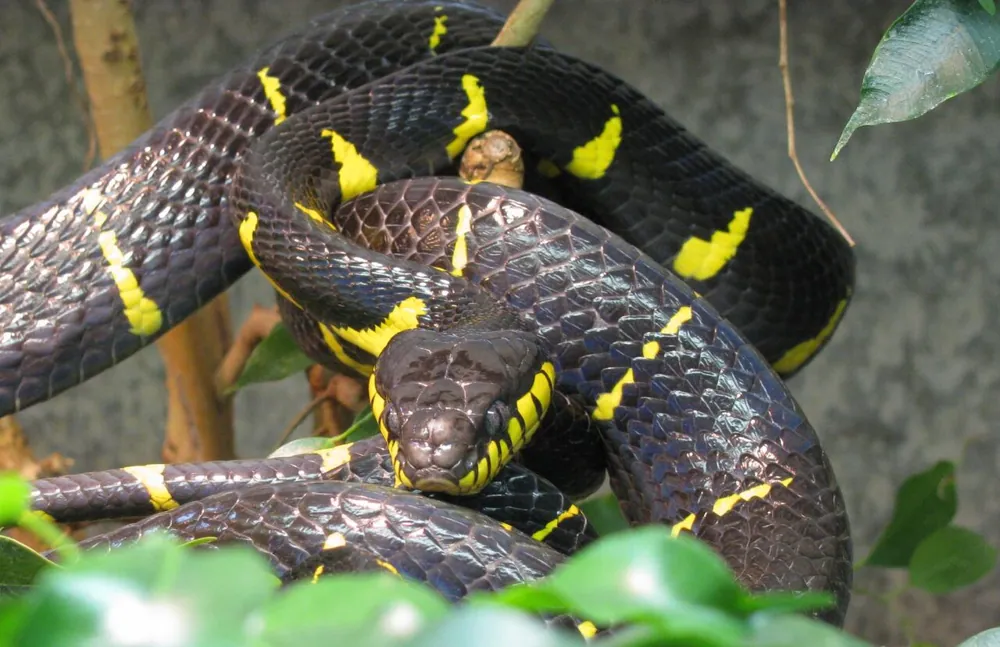
 No anndirte ngal
- Black above, with yellow bands across the back1
- Yellow lips with black edges1
- Black or bluish underside, sometimes speckled with yellow, and a yellow throat1
- Can grow to about 240 to 270 cm long1
- Has a triangular body cross-section1
Ina heewi waylondireede e: The mangrove snake can be confused with the banded krait, which has alternating black and yellow crossbands and a triangular body. The banded krait is extremely venomous, so treat any black and yellow banded snake with caution.1
Doole tooke
Tooke ngal ina yaltira ñiiƴe mum so ina ŋata.
Hol ko tooke ŋatgol mum waɗata?
The snake has rear fangs and a venom gland linked to them. It has to chew to release the venom, which is released gradually. Its venom is weak, and the rear fangs are small, so it is hard for the snake to sink them into a person's arm or leg. Moderate bites have caused intense swelling.1
Hol no bone mum heewiri e yimɓe?
Bone e yimɓe: MuusɗoIna waawi muusde sanne, kono hertaani wonde huunde mawnde.It is considered mildly venomous. Moderate bites have caused intense swelling, but there has never been a confirmed death, as of 2016.1
Hol ko ngal waɗata so ina hula?
It is a potentially defensive snake that may strike repeatedly, even when captive bred.1
 So ina ŋata
- Loot nokku ŋataaɗo oo, deƴƴin neɗɗo oo, heɓ ballal cafrol. Noone goɗɗe (ko wayi no boomslang) ina mbaawi warde caggal waktuuji.
Adii fof noddu nimero urgence (112, 000, 911). Ɗum ko anndinal ballal adiingal, wonaa saaraangal doktoor. Ko adii e ballal adiingal
 Reen hoore maa
- Wota a meem, wota a nanngu, wota a ñiŋŋu kullal ladde haa abada, hay so ngal ina famɗi, hay so ina nanndi e ɗaaniingal walla maayngal.
- Accu ngal nokku. So a fotti e ngal, deƴƴu, ruttu ɓaawo seeɗa seeɗa, accu ngal yaha laawol mum.
- So gooto ŋatii ma: deƴƴu, wota a dillu, noddu nimero urgence (112, 000, 911) walla yahu opitaal law. Jogo e hakkille no ngal nanndi, natal ina walla.
Ngal faalaaka gaañde ma. Ina huutoroo tooke mum ngam nanngude ñaamdu walla reenaade, ina ɓuri yiɗde suuɗaade. Ɓeydu anndude no reentortoo
Hol to e aduna?
Hol no mawniri?
Hol no juutiri?
 juutde no dawaaɗi 2,5, hinere haa lawol
 juutde no banaanaaji 15 sammondiraaɗi
 ina waawi taƴde 100 meeteer e segonde 54 (neɗɗo ɓurɗo yaawde ina sokli 9,6)
Hol no Mangrove snake mawniri, so fooɗondiraama e AN?
Limgal tan e navigatoor maa. Alaa ko danndetee walla ko neldetee.
Hol no yaawiri?


Humpito
Its venom contains denmotoxin, a three-finger toxin that is the first fully characterised bird-specific toxin.1
It is one of the biggest cat snake species.1
Despite its name, it is found more often in lowland rainforests than in mangrove swamps.1
It may refuse food for long periods if it is disturbed.1
Feññinoowo fenaande
Fenaande: It is a dangerous killer because it looks like the banded krait.
Goonga: It is mildly venomous, and there has never been a confirmed death from its bite. Its look can be confused with the extremely venomous banded krait.1
Ɗo humpito iwri
- Boiga dendrophila (Wikipedia (CC BY-SA 4.0))
- Boiga dendrophila (iNaturalist): inɗe e ceergal.
- Venom Wiki: tolno bone, mawnude heewnde e miijo yaawde ko amen. Yiy no men keɓirta ɗum: No men tolnirta bone.
Kala humpito e ngoo hello ina jogii limoore hollirnde iwdi mum. So men juumii, yaafo, men ko yiɗɓe kulle, wonaa jaaynde ganndal. Wiy men e [email protected], men feewnita.
 Yaare nden ina weelaa! Venom Wiki ko golle neɗɗo gooto: yoɓetaake, alaa ko jeeyetee, alaa rewɓe. Ndokkal seeɗa ina walla ngam heddude e enternet.Ñaam yaare nden
 Brown tree snake
 Tiger keelback
 Red-necked keelback
 Green cat snake
 Asian vine snake
 Golden tree snake
 Yaare oolnde maayde
 Kobra Enndo
 Wipeer cerkeeje siy Enndo
 Kobra laamɗo
 Mbaa-ndiyam (Puff adder)
 Ladde Russell
.JPG)