
 Afrik
Afrik Aazi
Aazi Orop
Orop Amerik Worgo
 Ostaraali e Oseyaani
 Antarktik
 Geec Pasifik
 Geec Atlantik
 Geec Enndo
 Geec Arktik
 Geec Mediteraane
 Geec Boɗeejo
 Geec Karayib
 Geec Korayl
 Geec Siin Worgo
 Geec Filipiin
 Geec Andaman
 Geec Rewo
 Geec Timor e Arafura
 Gulf Bengal
 Gulf Kaliforni
Walking catfish
 Gaaɗe tooke
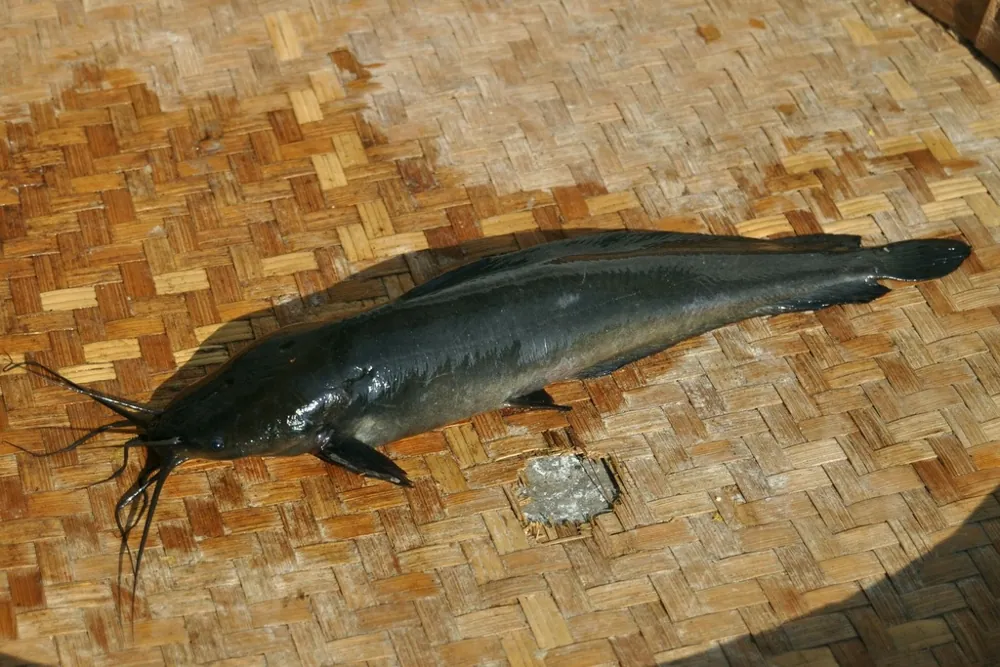
The walking catfish is a freshwater fish that can crawl across wet land to reach new water. It lives in Southeast Asia and has also been introduced to places such as Florida. Its spiny defence is the reason it needs careful handling.1


 No anndirte ngal
- Elongated body, grey or grey-brown in colour1
- Often covered on its sides with small white spots1
- Long dorsal and anal fins, and several pairs of sensory barbels1
- Scaleless skin covered in mucus1
- No adipose fin, a small fleshy fin on the back near the tail1
Ina heewi waylondireede e: It is often confused with North American ictalurid catfish and with close relatives such as C. magur. The walking catfish can be told apart from the North American ictalurid catfish because it lacks an adipose fin.1
Doole tooke
Gaaɗe ceeɓɗe ina ndondii tooke. Yaabde e mum walla nanngude ɗum ina muusi.
Hol no bone mum heewiri e yimɓe?
Bone e yimɓe: MuusɗoIna waawi muusde sanne, kono hertaani wonde huunde mawnde.It must be handled carefully when fished because of its embedded sting or thorn-like spines. It is also harmful as an invasive species, because it eats the food of native fish, preys on their young and can destroy fish farms.1
Hol ko ngal waɗata so ina hula?
It has a sting or thorn-like spine hidden behind its fins, which it uses to defend itself.1
 So gaaɗe mum tuƴii ma
- Naatnu gaañande nden e ndiyam guleeɗam, guleeɗam no neɗɗo oo waawi muññude tawa sumaani (ƴeewr ɗum e jungo maa), hojomaaji 30 haa 90. Heɓ ballal cafrol, ɓuri noon ngam liƴƴi kaaƴe e liƴƴi raay.
Adii fof noddu nimero urgence (112, 000, 911). Ɗum ko anndinal ballal adiingal, wonaa saaraangal doktoor. Ko adii e ballal adiingal
 Reen hoore maa
- Wota a meem, wota a nanngu, wota a ñiŋŋu kullal ladde haa abada, hay so ngal ina famɗi, hay so ina nanndi e ɗaaniingal walla maayngal.
- Accu ngal nokku. So a fotti e ngal, deƴƴu, ruttu ɓaawo seeɗa seeɗa, accu ngal yaha laawol mum.
- So gaaɗe mum tuƴii ma: deƴƴu, wota a dillu, noddu nimero urgence (112, 000, 911) walla yahu opitaal law. Jogo e hakkille no ngal nanndi, natal ina walla.
Ngal faalaaka gaañde ma. Ina huutoroo tooke mum ngam nanngude ñaamdu walla reenaade, ina ɓuri yiɗde suuɗaade. Ɓeydu anndude no reentortoo
Hol to e aduna?
Hol no mawniri?
Hol no juutiri?
Hol no teddiri?
 juutde no banaanaaji 3 sammondiraaɗi
 juutde no kaaɗe mahirɗe 16 ɗaɓɓondiraaɗe
 ina waawi yoowde juuteendi pisin mawɗo (50 m) e segonde 30
Hol no Walking catfish mawniri, so fooɗondiraama e AN?
Limgal tan e navigatoor maa. Alaa ko danndetee walla ko neldetee.
Hol no yaawiri?
Humpito
It can survive 18 hours out of water.1
It moves over land with snake-like wiggles, using its pectoral fins to stay upright.1
In Florida, fish farmers have had to put up fences to protect their ponds from them.1
It often rises to the surface to gulp air, because it breathes air as well as using water.1
Walking catfish were imported to Florida in the early 1960s for aquaculture, and escapes led to wild populations.1
In Indonesia it is known as lele and is the main ingredient in dishes such as pecel lele.1
Feññinoowo fenaande
Fenaande: The walking catfish truly walks on land like a four-legged or two-legged animal.
Goonga: It does not walk in that way. It uses its pectoral fins to stay upright while it wiggles its body in snake-like movements.1
Ɗo humpito iwri
- Walking catfish (Wikipedia (CC BY-SA 4.0))
- Clarias batrachus (iNaturalist): inɗe e ceergal.
- Venom Wiki: tolno bone, mawnude heewnde e miijo yaawde ko amen. Yiy no men keɓirta ɗum: No men tolnirta bone.
Kala humpito e ngoo hello ina jogii limoore hollirnde iwdi mum. So men juumii, yaafo, men ko yiɗɓe kulle, wonaa jaaynde ganndal. Wiy men e [email protected], men feewnita.
 Yaare nden ina weelaa! Venom Wiki ko golle neɗɗo gooto: yoɓetaake, alaa ko jeeyetee, alaa rewɓe. Ndokkal seeɗa ina walla ngam heddude e enternet.Ñaam yaare nden
Goɗɗe e nder fedde wootere: Liƴƴi jogiiɗi tooke
 Giant freshwater stingrayLiƴƴi jogiiɗi tookeIna sokli doktoor
 Asian stinging catfishLiƴƴi jogiiɗi tookeIna sokli doktoorWota a meem
 Reef stonefishLiƴƴi jogiiɗi tookeIna waawi wardeWota a meem
 Red lionfishLiƴƴi jogiiɗi tookeIna sokli doktoorWota a meem
 Estuarine stonefishLiƴƴi jogiiɗi tookeIna waawi wardeWota a meem
 Short-tail stingrayLiƴƴi jogiiɗi tookeIna waawi warde
 Deathstalker
 Indian cobra
 Indian saw-scaled viper
 King cobra
 Mbaa-ndiyam (Puff adder)
 Ladde Russell