
 Africa
 Asia
Asia Ulaya
Ulaya Amereka ya Kumwera
 Australia ndi Oceania
 Antarctica
 Nyanja ya Pacific
 Nyanja ya Atlantic
 Nyanja ya Indian
 Nyanja ya Arctic
 Nyanja ya Mediterranean
 Nyanja Yofiira
 Nyanja ya Caribbean
 Nyanja ya Coral
 Nyanja ya South China
 Nyanja ya Philippine
 Nyanja ya Andaman
 Nyanja ya Kumpoto (North Sea)
 Nyanja ya Timor ndi Arafura
 Nyanja ya Bengal
 Gulf ya California
Black-banded sea krait
 Imaluma
The black-banded sea krait is a sea snake with venom that is reportedly ten times stronger than a cobra's. It lives in the warm western Pacific Ocean, mostly around coral reefs. It spends much of its life in water but needs to come up to breathe.1



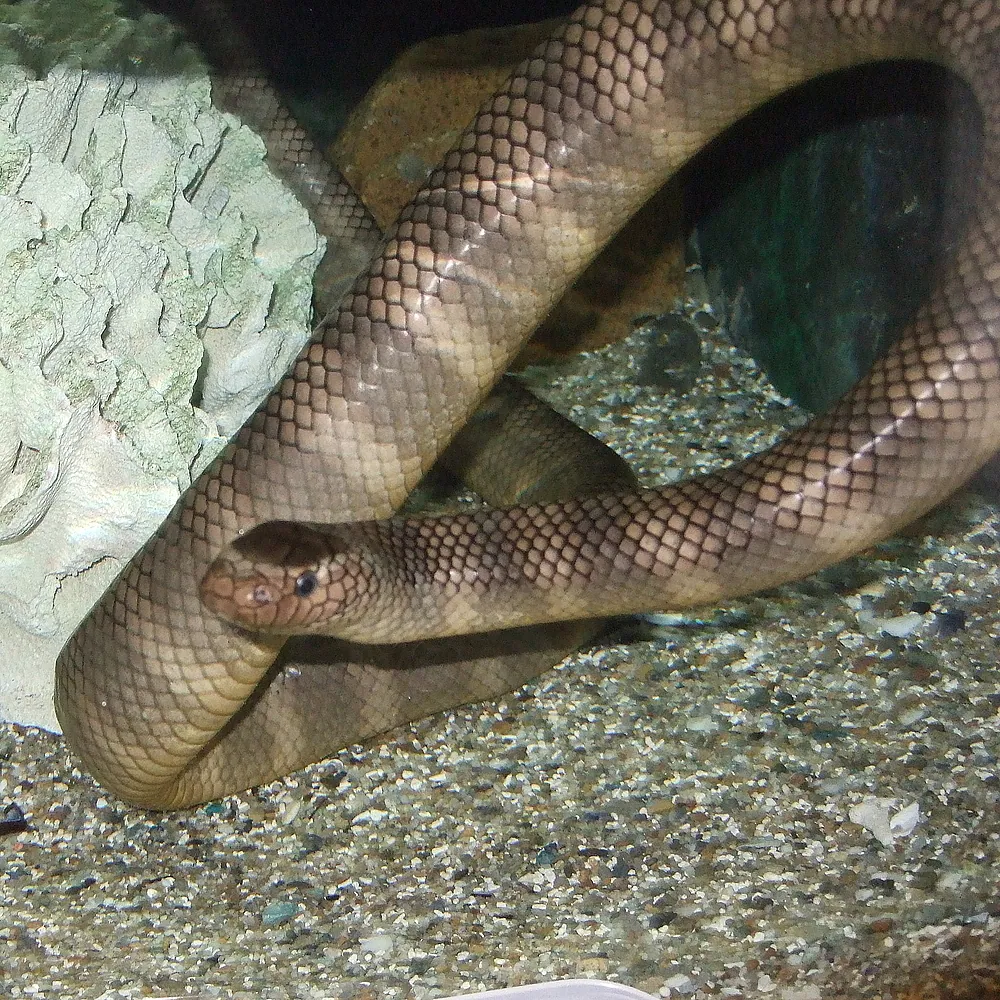
 Mmene ungaizindikirire
Mphamvu ya ululu
Ululu umatuluka kudzera m'mano ake ikaluma.
Ululu wake umachita chiyani?
The bite is highly venomous and paralyses the prey. The venom glands are located behind the eyes.1
Ndi yoopsa bwanji kwa anthu?
Ngozi kwa anthu: Yoopsa kwambiriIngathe kupha munthu amene sanalandire chithandizo.Its venom is reportedly ten times stronger than cobra venom, so any bite should be treated as serious.1
Imachita chiyani ikachita mantha?
It prefers to save its energy and venom for hunting, so it strikes only as a very last resort when cornered, threatened or provoked.1
 Ikaluma
- Kumanga ndi kusasuntha (pressure immobilisation): manga bandeji yotanuka mwamphamvu pamene walumidwa kenako mmwamba chiwalo chonse, ika chogwiriziza (splint), ndipo munthuyo akhale chete osasuntha konse mpaka thandizo litafika.
- Tulutsa munthuyo m'madzi ndipo mufikitse kuchipatala mwachangu.
Nthawi zonse yamba wayimbira nambala yadzidzidzi (112, 000, 911). Awa ndi malangizo wamba a chithandizo choyamba, osati malangizo a dokotala. Zoyambira za chithandizo choyamba
 Khala wotetezeka
- Usakhudze, kugwira kapena kuseweretsa nyama yakuthengo, ngakhale yaing'ono, ndipo ngakhale ikuoneka ngati yagona kapena yafa.
- Ipatse malo. Ukakumana nayo, khala chete, bwerera m'mbuyo pang'onopang'ono ndipo uilole ipite njira yake.
- Ikakuluma: khala chete, usasunthe, imbira nambala yadzidzidzi (112, 000, 911) kapena pita kuchipatala mwachangu. Kumbukira m'mene inkaonekera, chithunzi chimathandiza.
Sikufuna kukuvulaza. Imagwiritsa ntchito ululu wake kugwira chakudya kapena kudziteteza, ndipo imakonda kwambiri kubisala. Zambiri za kukhala wotetezeka
Kuti padziko lapansi?
Ndi yaikulu bwanji?
Ndi yaitali bwanji?
 yaitali ngati amphaka apakhomo 3 mphuno ndi mchira motsatizana
 yaitali ngati nthochi 9 zoyalidwa motsatizana
 ingasambire kutalika kwa dziwe lalikulu losambira (50 m) m'masekondi 43
Black-banded sea krait ndi yaikulu bwanji poyerekeza ndi IWE?
Ndi masamu chabe mu msakatuli wako. Palibe chomwe chimasungidwa kapena kutumizidwa kwina.
Imathamanga bwanji?
Mfundo
Its venom is reportedly ten times stronger than that of a cobra.1
It has been observed hunting in cooperative 'alliances' with bluefin trevally, which pick off small fish that the snake flushes from the coral.1
In some warm years, large numbers gather in sea caves and tide pools on the Ryukyu cliffs in search of fresh water and possibly to mate.1
Although it lives in the sea, it lays its eggs on land.1
In southern Japan its meat is used in a winter broth called irabu-jiru, which is said to taste like miso and a little like tuna.1
Its northward spread into waters near South Korea is linked to climate change, which has damaged its habitat.1
Za akatswiri a ululu
- Dzina la sayansi
- Laticauda semifasciata
- Gulu
- Njoka za m'nyanja
- Banja
- Elapidae2
- Dongosolo
- Squamata
- Makontinenti
- Nyanja ya Pacific, Nyanja ya Philippine, Nyanja ya South China, Nyanja zikuluzikulu
- Ana akhanda
- Females lay 3 to 7 eggs on land, and the eggs hatch after 4 to 5 months.1
- Ngozi kwa anthu
- 4 / 5: Yoopsa kwambiri3
Kumene mfundo zimachokera
- Black-banded sea krait (Wikipedia (CC BY-SA 4.0))
- Laticauda semifasciata (iNaturalist): mayina ndi magulu a sayansi.
- Venom Wiki: mlingo wa ngozi, kukula wamba ndi kuyerekeza kwa liwiro ndi zathu. Ona mmene timazipezera: Mmene timayezera ngozi.
Mfundo iliyonse patsamba lino ili ndi nambala yosonyeza kochokera. Ngati talakwitsa, pepani, ndife okonda nyama, osati magazini a sayansi. Tiuze pa [email protected] ndipo tikonza.
 Chinkhanira chili ndi njala! Venom Wiki ndi ntchito ya munthu mmodzi: yaulere, yopanda zotsatsa ndi zokutsatira. Mphatso yaing'ono imathandiza kuti ikhalebe pa intaneti.Dyetsa chinkhanira
Zina za gulu lomwelo: Njoka za m'nyanja
 Beaked sea snake
 Belcher's sea snake
 Blue-lipped sea krait
 Dubois' sea snake
 Olive sea snake
 Yellow-lipped sea krait
Imakhalanso ku: Nyanja ya Pacific
 Australian box jellyfishJellyfish ndi zolasa za m'nyanjaYakuphaUsakhudze
 Geography coneNkhono za cone ndi ma octopusYakupha
 Greater blue-ringed octopusNkhono za cone ndi ma octopusYakupha
 Japanese pufferfishNyama zina za poizoniYakupha
 Southern blue-ringed octopusNkhono za cone ndi ma octopusYakupha
 Hawksbill sea turtleNyama zina za poizoniIngathe kupha