
 Africa
 Asia
Asia Ulaya
Ulaya Amereka ya Kumwera
 Australia ndi Oceania
 Antarctica
 Nyanja ya Pacific
 Nyanja ya Atlantic
 Nyanja ya Indian
 Nyanja ya Arctic
 Nyanja ya Mediterranean
 Nyanja Yofiira
 Nyanja ya Caribbean
 Nyanja ya Coral
 Nyanja ya South China
 Nyanja ya Philippine
 Nyanja ya Andaman
 Nyanja ya Kumpoto (North Sea)
 Nyanja ya Timor ndi Arafura
 Nyanja ya Bengal
 Gulf ya California
Northeastern Brazilian scorpion
 Imalasa
The Northeastern Brazilian scorpion is a venomous scorpion that lives in northeastern Brazil. It is golden-tan or yellowish-brown and grows to about the length of a finger. Its sting can cause serious symptoms, so it should be left alone.1

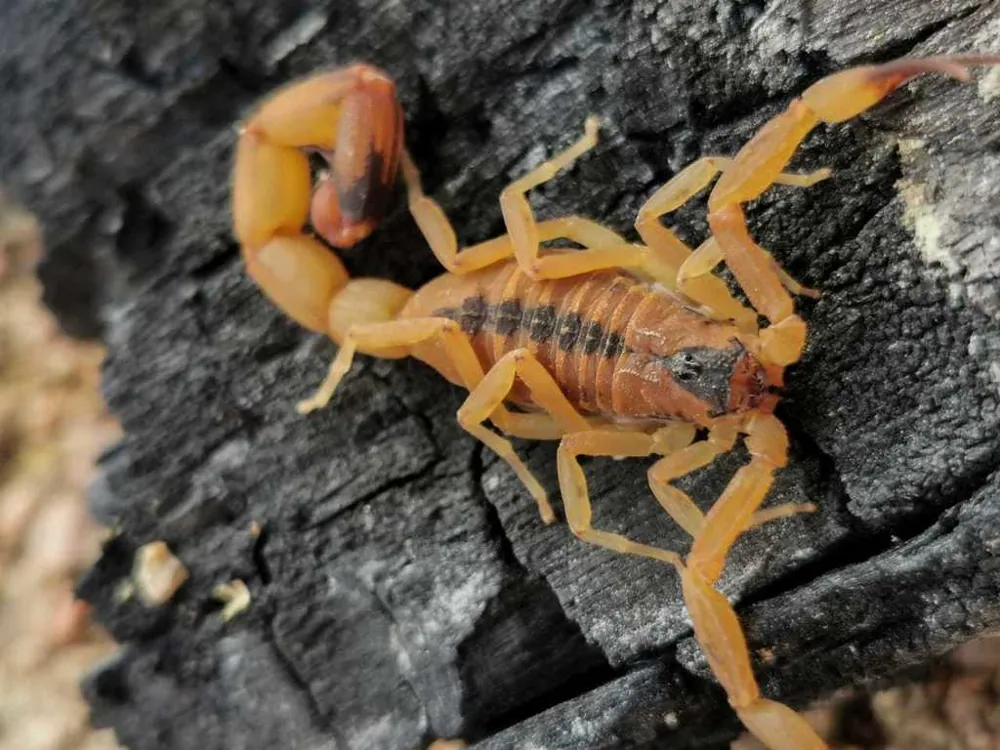
 Mmene ungaizindikirire
Mphamvu ya ululu
Ululu umatuluka kudzera mu mbola.
Ululu wake umachita chiyani?
The venom contains the neurotoxins Tst1 and Tst26, which act on the nerves. Lab tests on mice give an LD50 of 0.575 mg/kg, a measure of how strong a venom is, which is significant. Reported symptoms include local pain, numbness, swelling, burning and itching, plus sweating, headache, vomiting, nausea, tremors, agitation, dizziness, low blood pressure and difficulty breathing.1
Ndi yoopsa bwanji kwa anthu?
Ngozi kwa anthu: YoopsaKulasidwa kumafuna dokotala. Imfa ndi zosowa kwambiri.A study in Bahia state, Brazil, recorded 237 people stung by this species between January 1982 and December 1995. Symptoms were recorded for only 90 of them, so the full picture is unclear.1
 Ikalasa
- Put an ice pack on the sting to cool it. Go to hospital and ask to be checked for serious complications such as acute kidney injury and pancreatitis. Venom extraction kits were tested and found not to work; they can cause more damage to the wound because of the suction.1
- Ziziritsa pamene walasidwa ndi paketi ya ayezi ndipo munthuyo akhale chete osasuntha. Peza thandizo la dokotala mwachangu, makamaka kwa ana: zinkhanira zina zimapha ana.
Nthawi zonse yamba wayimbira nambala yadzidzidzi (112, 000, 911). Awa ndi malangizo wamba a chithandizo choyamba, osati malangizo a dokotala. Zoyambira za chithandizo choyamba
 Khala wotetezeka
- Usakhudze, kugwira kapena kuseweretsa nyama yakuthengo, ngakhale yaing'ono, ndipo ngakhale ikuoneka ngati yagona kapena yafa.
- Ipatse malo. Ukakumana nayo, khala chete, bwerera m'mbuyo pang'onopang'ono ndipo uilole ipite njira yake.
- Ikakulasa: khala chete, usasunthe, imbira nambala yadzidzidzi (112, 000, 911) kapena pita kuchipatala mwachangu. Kumbukira m'mene inkaonekera, chithunzi chimathandiza.
Sikufuna kukuvulaza. Imagwiritsa ntchito ululu wake kugwira chakudya kapena kudziteteza, ndipo imakonda kwambiri kubisala. Zambiri za kukhala wotetezeka
Kuti padziko lapansi?
Ndi yaikulu bwanji?
Ndi yaitali bwanji?
 yaitali ngati zidutswa zomangira zoseweretsa 2 pamzere
 ingathamange mamita 100 m'masekondi 260 (munthu wothamanga kwambiri amafunika 9.6)
Northeastern Brazilian scorpion ndi yaikulu bwanji poyerekeza ndi IWE?
Ndi masamu chabe mu msakatuli wako. Palibe chomwe chimasungidwa kapena kutumizidwa kwina.
Imathamanga bwanji?


Mfundo
Females can reproduce without a male, a process called facultative parthenogenesis.1
It does not need to drink water, because it gets moisture from its prey.1
Its venom contains two neurotoxins, Tst1 and Tst26, which affect the nerves.1
Females can have as many as 16 young in one brood, with an average of 8.1
It takes about a year for this scorpion to mature into an adult, which makes it a fast-growing species.1
Za akatswiri a ululu
- Dzina la sayansi
- Tityus stigmurus
- Gulu
- Zinkhanira
- Banja
- Buthidae2
- Dongosolo
- Scorpiones
- Makontinenti
- Amereka ya Kumwera
- Ana akhanda
- Females give birth to live young, usually 2 to 16 at a time, with an average of 8. Pregnancy typically lasts about 3 months, and can be as long as 4 to 5 months.1
- Ngozi kwa anthu
- 3 / 5: Yoopsa3
Kumene mfundo zimachokera
- Tityus stigmurus (Wikipedia (CC BY-SA 4.0))
- Tityus stigmurus (iNaturalist): mayina ndi magulu a sayansi.
- Venom Wiki: mlingo wa ngozi, kukula wamba ndi kuyerekeza kwa liwiro ndi zathu. Ona mmene timazipezera: Mmene timayezera ngozi.
Mfundo iliyonse patsamba lino ili ndi nambala yosonyeza kochokera. Ngati talakwitsa, pepani, ndife okonda nyama, osati magazini a sayansi. Tiuze pa [email protected] ndipo tikonza.
 Chinkhanira chili ndi njala! Venom Wiki ndi ntchito ya munthu mmodzi: yaulere, yopanda zotsatsa ndi zokutsatira. Mphatso yaing'ono imathandiza kuti ikhalebe pa intaneti.Dyetsa chinkhanira
Zina za gulu lomwelo: Zinkhanira
 Brazilian yellow scorpion
 Amazonian black scorpion
 Caracas scorpion
 Panamanian black scorpion
 Zulia scorpion
 Amazon forest scorpion
Imakhalanso ku: Amereka ya Kumwera
 Golden poison frogAchule a poizoni, achule a mphini (toads) ndi ma newtYakuphaUsakhudze
 TerciopeloNjoka za pit viperYakupha
 Brazilian wandering spiderAkangaudeIngathe kupha
 Eyelash viperNjoka za pit viperIngathe kupha
 Golden lanceheadNjoka za pit viperIngathe kupha
 South American bushmasterNjoka za pit viperIngathe kupha