
 Afrika
 Asia
Asia Yuropa
 Amerika Borwa
 Australia le Oceania
 Antarctica
 Lewatle la Pacific
 Lewatle la Atlantic
 Lewatle la India
 Lewatle la Arctic
 Lewatle la Mediterranean
 Lewatle le Lefubedu
 Lewatle la Caribbean
 Lewatle la Coral
 Lewatle la China Borwa
 Lewatle la Philippine
 Lewatle la Andaman
 Lewatle la Leboya
 Lewatle la Timor le Arafura
 Kgwohlo ya Bengal
 Kgwohlo ya California
Asian giant water bug
 Ho loma
The Asian giant water bug is a large aquatic insect, about 6.5 to 8 cm long. It lives in South and Southeast Asia and parts of China, the Ryukyu Islands and New Guinea. People in several Asian countries eat it, and its scent glands make it valued as a flavouring.1
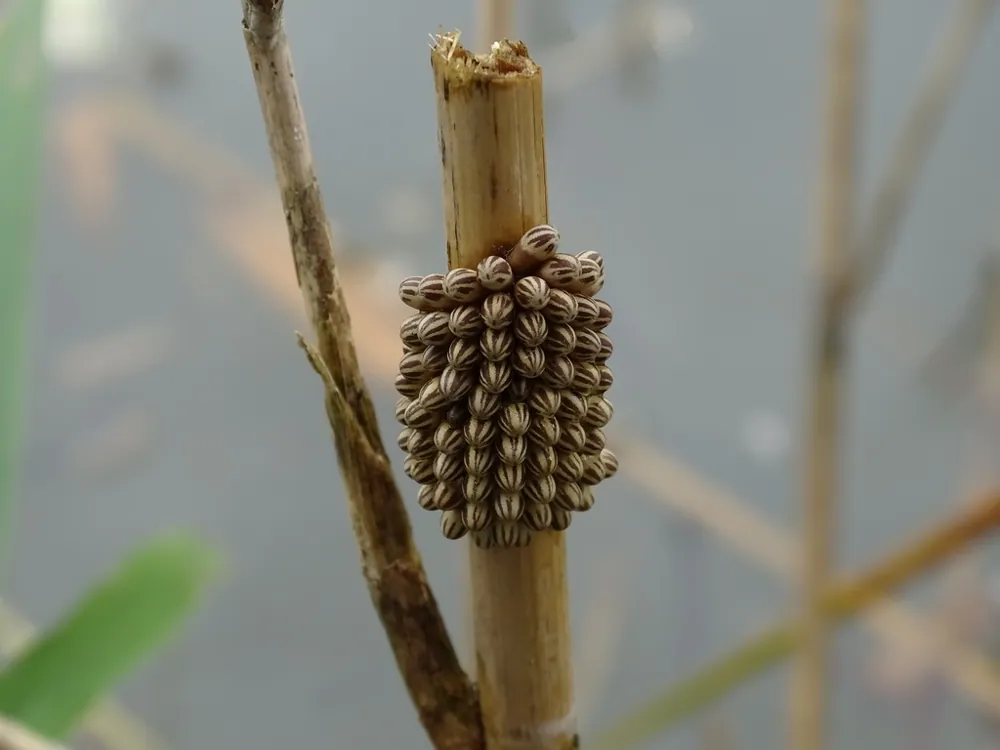
 Ho e tseba jwang
- Typically 6.5 to 8 cm long.1
- Its abdomen has glands that produce odorous chemicals.1
- Some of these chemicals give a sweet, banana-like smell.1
Hangata e ferekanngwa le: Lethocerus patruelis has narrower light stripes on the pronotum (the plate behind the head). Lethocerus insulanus has a dark stripe between its light stripes. Kirkaldyia deyrolli is paler and has no pronotal stripes, and its eyes are set further apart.1
Matla a chefo
Chefo e tswa ka meno a yona a chefo (fangs) kapa ka meno a mang ha e loma.
E kotsi hakae ho batho?
Kotsi ho batho: E bohlokoE ka utlwisa bohloko haholo, empa hoo e batlang e le kamehla ha e kotsi haholo. Haeba e loma
- Bakeng sa boya bo hlabang ba diboko: bo tlose ka theipi e kgomarelang, ebe o hlatswa letlalo. O se ke wa hohla.
- Bakeng sa ho longwa: hlatswa mme o pholise. Fumana thuso ya bongaka haeba motho a ikutlwa a kula kapa a tswa madi habonolo.
Kamehla letsetsa nomoro ya tshohanyetso pele (112, 000, 911). Ena ke tataiso e akaretsang ya thuso ya pele, hase keletso ya bongaka. Metheo ya thuso ya pele
 Dula o bolokehile
- O se ke wa ama, wa tshwara kapa wa tena phoofolo ya naheng, leha e le e nyenyane, le leha e shebahala e robetse kapa e shwele.
- E fe sebaka. Ha o kopana le yona, dula o kgutsitse, kgutlela morao butle mme o e tlohele e tsamaye ka tsela ya yona.
- Haeba e nngwe e o loma: dula o kgutsitse, o se ke wa sisinyeha, letsetsa nomoro ya tshohanyetso (112, 000, 911) kapa o ye sepetlele kapele. Hopola hore e ne e shebahala jwang, foto e a thusa.
Ha e o batle. E sebedisa chefo ya yona ho tshwara dijo kapa ho itshireletsa, mme e kgetha ho ipata. Ho eketsehileng ka ho dula o bolokehile
Hokae lefatsheng?
E kgolo hakae?
E telele hakae?
 e telele jwaloka diboloko tsa ho bapala tse 2,5 moleng
 e ka sesa bolelele ba letangwane le leholo la ho sesa (50 m) ka metsotswana e 160
Asian giant water bug e kgolo hakae ha e bapiswa le WENA?
Ke dipalo feela ka hara sebatli sa hao. Ha ho letho le bolokwang kapa le romelwang kae kapa kae.
E potlaka hakae?

Dintlha
In several Southeast Asian cuisines it is a well-known edible insect. Its flight muscles are often said to taste like sweet scallops or shrimp.1
In Vietnam, a single drop of the extract on a toothpick is enough to flavour a whole bowl of bún thang soup.1
In Vietnam, its scent essence is a pheromone produced by males that attracts females. It is collected from liquid-producing sacs and sold in small glass containers.1
Much of the essence sold as cà cuống in Vietnam is imitation, because the real product is scarce and expensive.1
Its large size, flight muscles and easy dissection make it a model for studying muscle structure, especially cardiac muscle.1
In Northeast India, it is often fried or made into a chutney. It is valued for its high protein content.1
Moo dintlha di tswang teng
- Lethocerus indicus (Wikipedia (CC BY-SA 4.0))
- Lethocerus indicus (iNaturalist): mabitso le tlhophiso.
- Venom Wiki: boemo ba kotsi, boholo bo tlwaelehileng le kakanyo ya lebelo ke tsa rona. Bona kamoo re di balang ka teng: Kamoo re lekanyang kotsi ka teng.
Taba e nngwe le e nngwe leqepheng lena e na le nomoro e bontshang mohlodi wa yona. Haeba re entse phoso, re kopa tshwarelo, re barati ba diphoofolo, hase makasine wa saense. Re bolelle ho [email protected] mme re tla e lokisa.
 Phepheng e lapile! Venom Wiki ke projeke ya motho a le mong: ke mahala, ha e na dipapatso ebile ha e na di-tracker. Thuso e nyenyane ya tjhelete e e boloka e ntse e le inthaneteng.Fepa phepheng
Tse ding tsa sehlopha se le seng: Diboko le dikokoanyana
 Pine processionaryDiboko le dikokoanyanaE utlwisa bohloko feelaO se ke wa ama
 Blue-striped nettle grubDiboko le dikokoanyanaE utlwisa bohloko feelaO se ke wa ama
 Brown-tail mothDiboko le dikokoanyanaE utlwisa bohloko feelaO se ke wa ama
 Masked hunterDiboko le dikokoanyanaE utlwisa bohloko feela
 Pine-tree lappetDiboko le dikokoanyanaE utlwisa bohloko feelaO se ke wa ama
 Asian bombardier beetleDiboko le dikokoanyanaHa e na kotsi
 Deathstalker
 Indian cobra
 Indian saw-scaled viper
 King cobra
 Puff adder
 Noha ea Russell