
 Afrika
 Asia
Asia Yuropa
 Amerika Borwa
 Australia le Oceania
 Antarctica
 Lewatle la Pacific
 Lewatle la Atlantic
 Lewatle la India
 Lewatle la Arctic
 Lewatle la Mediterranean
 Lewatle le Lefubedu
 Lewatle la Caribbean
 Lewatle la Coral
 Lewatle la China Borwa
 Lewatle la Philippine
 Lewatle la Andaman
 Lewatle la Leboya
 Lewatle la Timor le Arafura
 Kgwohlo ya Bengal
 Kgwohlo ya California
Mottled spinefoot
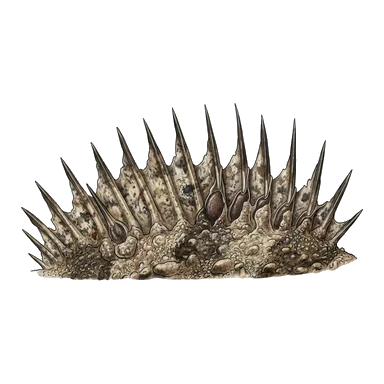 Meutlwa e nang le chefo
The mottled spinefoot is a marine fish that lives in warm coastal waters of the Western Pacific and eastern Indian Oceans. It has venomous spines on its fins, so it is best to leave it alone in the water. It is also an important food fish in many places.1
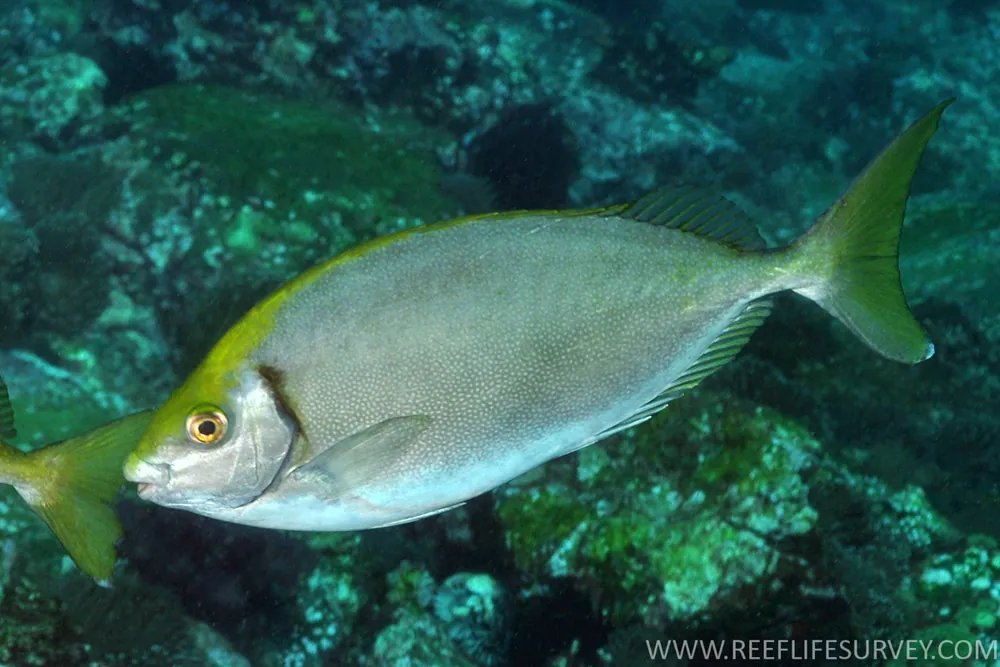

 Ho e tseba jwang
- Moderately slender, flattened body1
- Overall colour greenish-grey to brown, fading to silvery on the lower body1
- Many small light-bluish spots on the flanks1
- A slender brown bar along the upper edge of the gill cover1
- Adults show a mottled pattern when asleep or threatened1
Hangata e ferekanngwa le: It is very similar in appearance to the white-spotted spinefoot (Siganus canaliculatus), and the two are sometimes confused. They often live in the same areas.1
Matla a chefo
Meutlwa e bohale e nka chefo. Ho e hata kapa ho e tshwara ho bohloko.
Chefo ya yona (eo e e kenyang ka ho loma kapa ho hlaba) e etsang?
It has venomous spines in its dorsal and pelvic fins. The venom is similar to that of stonefishes. It can cause sharp pain, bleeding and numbness at the puncture site.1
E kotsi hakae ho batho?
Kotsi ho batho: E bohlokoE ka utlwisa bohloko haholo, empa hoo e batlang e le kamehla ha e kotsi haholo.The venom is usually non-lethal.1
E etsang ha e tshohile?
When threatened, adults adopt a mottled pattern and may use their venomous spines.1
 Haeba meutlwa ya yona e o hlaba
- Soaking the affected area in water of around 45°C could help eliminate or ease the pain.1
- Kenya leqeba metsing a tjhesang, a tjhesang hoo motho a ka a mamellang ntle le ho tjha (a leke ka letsoho la hao pele), metsotso e 30 ho isa ho e 90. Fumana thuso ya bongaka, haholoholo bakeng sa di-stonefish le di-stingray.
Kamehla letsetsa nomoro ya tshohanyetso pele (112, 000, 911). Ena ke tataiso e akaretsang ya thuso ya pele, hase keletso ya bongaka. Metheo ya thuso ya pele
 Dula o bolokehile
- O se ke wa ama, wa tshwara kapa wa tena phoofolo ya naheng, leha e le e nyenyane, le leha e shebahala e robetse kapa e shwele.
- E fe sebaka. Ha o kopana le yona, dula o kgutsitse, kgutlela morao butle mme o e tlohele e tsamaye ka tsela ya yona.
- Haeba meutlwa ya yona e o hlaba: dula o kgutsitse, o se ke wa sisinyeha, letsetsa nomoro ya tshohanyetso (112, 000, 911) kapa o ye sepetlele kapele. Hopola hore e ne e shebahala jwang, foto e a thusa.
Ha e o batle. E sebedisa chefo ya yona ho tshwara dijo kapa ho itshireletsa, mme e kgetha ho ipata. Ho eketsehileng ka ho dula o bolokehile
Hokae lefatsheng?
E kgolo hakae?
E telele hakae?
 e telele jwaloka dibanana tse 2 tse latellanang
 e telele jwaloka diboloko tsa ho bapala tse 12 moleng
 e ka sesa bolelele ba letangwane le leholo la ho sesa (50 m) ka metsotswana e 33
Mottled spinefoot e kgolo hakae ha e bapiswa le WENA?
Ke dipalo feela ka hara sebatli sa hao. Ha ho letho le bolokwang kapa le romelwang kae kapa kae.
E potlaka hakae?
Dintlha
Bakeng sa ditsebi tsa chefo
- Lebitso la saense
- Siganus fuscescens
- Sehlopha
- Ditlhapi tse nang le chefo
- Lelapa
- Siganidae2
- Tatelano
- Acanthuriformes
- Dikontinente
- Lewatle la Pacific, Lewatle la Philippine, Lewatle la Coral, Lewatle la Timor le Arafura, Mawatle
- Masea
- Each female lays around 300,000 eggs in a single spawning. Spawning happens near the edge of the reef on the 4th or 5th day of a new moon.1
- Kotsi ho batho
- 2 / 5: E bohloko3
Moo dintlha di tswang teng
- Siganus fuscescens (Wikipedia (CC BY-SA 4.0))
- Siganus fuscescens (iNaturalist): mabitso le tlhophiso.
- Venom Wiki: boemo ba kotsi, boholo bo tlwaelehileng le kakanyo ya lebelo ke tsa rona. Bona kamoo re di balang ka teng: Kamoo re lekanyang kotsi ka teng.
Taba e nngwe le e nngwe leqepheng lena e na le nomoro e bontshang mohlodi wa yona. Haeba re entse phoso, re kopa tshwarelo, re barati ba diphoofolo, hase makasine wa saense. Re bolelle ho [email protected] mme re tla e lokisa.
 Phepheng e lapile! Venom Wiki ke projeke ya motho a le mong: ke mahala, ha e na dipapatso ebile ha e na di-tracker. Thuso e nyenyane ya tjhelete e e boloka e ntse e le inthaneteng.Fepa phepheng
Tse ding tsa sehlopha se le seng: Ditlhapi tse nang le chefo
 Reef stonefishDitlhapi tse nang le chefoE ka bolayaO se ke wa ama
 Red lionfishDitlhapi tse nang le chefoE hloka ngakaO se ke wa ama
 Estuarine stonefishDitlhapi tse nang le chefoE ka bolayaO se ke wa ama
 Short-tail stingrayDitlhapi tse nang le chefoE ka bolaya
 Striped eel catfishDitlhapi tse nang le chefoE ka bolayaO se ke wa ama
 Bluespotted ribbontail rayDitlhapi tse nang le chefoE hloka ngaka
E boetse e phela: Lewatle la Pacific
 Australian box jellyfishDi-jellyfish le diphoofolo tsa lewatle tse hlabangE a bolayaO se ke wa ama
 Geography coneDikgofu tsa cone le di-octopusE a bolaya
 Greater blue-ringed octopusDikgofu tsa cone le di-octopusE a bolaya
 Japanese pufferfishDiphoofolo tse ding tse chefangE a bolaya
 Southern blue-ringed octopusDikgofu tsa cone le di-octopusE a bolaya
 Hawksbill sea turtleDiphoofolo tse ding tse chefangE ka bolaya