
 IAfrika
 IAsiya
 IYurophu
 uMzantsi Melika
 IOstreliya neOceania
 IAntarctica
 uLwandlekazi lwePasifiki
 uLwandlekazi lweAtlantiki
 uLwandlekazi lwaseIndiya
 uLwandlekazi lweArctic
 uLwandle lweMeditera
 uLwandle oluBomvu
 uLwandle lweKharibhiya
 uLwandle lweCoral
 uLwandle lwaseMzantsi China
 uLwandle lwePhilippines
 uLwandle lweAndaman
 uLwandle lwaseMntla (North Sea)
 uLwandle lweTimor ne-Arafura
 iBhayi yaseBengal
 iGulf yaseCalifornia
Glory of the sea cone
 Ukuhlaba
The Glory of the Sea Cone is a sea snail with a striking shell, part of the cone snail family. It lives in the warm waters of the Pacific and Indian Oceans. It is special because collectors once thought it was the rarest shell in the world.1
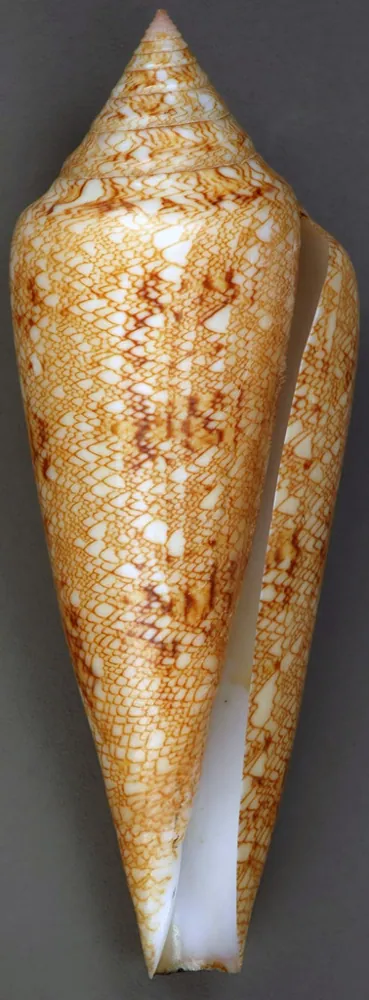
 Indlela yokusiqaphela
- A relatively large, slender shell with a tall spire1
- Typical shell length is 8 to 12 cm, and it can reach 16 cm1
- A fine net-like pattern of orange-brown lines that enclose triangular spaces1
- Two or three bands of chestnut, hieroglyphic-like markings across the body1
- Tan colouring that can range from light golden to deep dark brown1
Sidla ngokubhidaniswa no: It is sometimes confused with the common Textile cone, and it has a similarity to the Bengal cone.1
Amandla etyhefu yokuluma nokuhlaba
Ityhefu iphuma ngenaliti yokuhlaba.
Siyingozi kangakanani ebantwini?
Ingozi ebantwini: Kubi kakhuluUkuhlatywa kufuna ugqirha. Ukufa kunqabe kakhulu. Ukuba siyahlaba
- Ukubopha ngoxinzelelo nokunqanda ukushukuma (pressure immobilisation): songa ibhandeji eqinileyo enwebekayo phezu kwendawo elunyiweyo uze unyuke ngelungu lonke, uliqinise ngesiplinti, kwaye ugcine umntu engashukumi kwaphela de kufike uncedo.
- Ingwane enamakhonkco aluhlaza okwesibhakabhaka okanye inkumba ye-cone inokwenza umntu ayeke ukuphefumla esaphaphile: biza uncedo kwaye ulungele ukumphefumlela (rescue breaths) de i-ambulensi ithathe izintambo.
Soloko utsalela inombolo kaxakeka kuqala (112, 000, 911). Esi sisikhokelo soncedo lokuqala ngokubanzi, asilocebiso lwezonyango. Iziseko zoncedo lokuqala
 Hlala ukhuselekile
- Ungaze uchukumise, ubambe okanye uqhule isilwanyana sasendle, nokuba sincinci, kwaye nokuba sibonakala silele okanye sifile.
- Sinike indawo. Ukuba udibana naso, hlala uzolile, buyela umva kancinci kwaye usiyeke sihambe ngendlela yaso.
- Ukuba siyakuhlaba: hlala uzolile, musa ukushukuma, tsalela inombolo kaxakeka (112, 000, 911) okanye uye esibhedlele ngokukhawuleza. Khumbula ukuba sasikhangeleka njani, ifoto iyanceda.
Asikuzingeli. Sisebenzisa ityhefu yaso ukubamba ukutya okanye ukuzikhusela, kwaye singakhetha ukuzimela. Okungakumbi malunga nokuhlala ukhuselekile
Phi emhlabeni?
Sikhulu kangakanani?
Side kangakanani?
 ubude obulingana neebhloko zokudlala zokwakha eziyi-5 zilandelelana
 sicotha kunenkumba yasegadini
U-Glory of the sea cone mkhulu kangakanani xa uthelekisa NAWE?
Zizibalo nje kwibhrawuza yakho. Akukho nto igcinwayo okanye ithunyelwa naphi na.
Sikhawuleza kangakanani?

Iinyaniso
For about two centuries, this shell was regarded as the rarest shell in the world.1
Specimens were once valued in the thousands of U.S. dollars and were generally owned only by museums and wealthy private collectors.1
Today, shells can often be found from retailers or online auction sites for less than $100 U.S.1
Its habitat was not discovered until 1969.1
Improvements in diving technology, such as scuba, led to the discovery of far more shells.1
Umqhekezi weentsomi
Intsomi: A collector bought one at auction in 1792 and destroyed it to keep the value of another one he owned.
Inyaniso: This is an urban legend, a popular story that has spread among collectors. It is not an established fact.1
Apho iinyaniso zivela khona
- Conus gloriamaris (Wikipedia (CC BY-SA 4.0))
- Conus gloriamaris (iNaturalist): amagama nokuhlelwa.
- Venom Wiki: inqanaba lengozi, ubungakanani obuqhelekileyo noqikelelo lwesantya zezethu. Bona indlela esizifumana ngayo: Indlela esilinganisa ngayo ingozi.
Inyaniso nganye kweli phepha inenombolo ebonisa umthombo wayo. Ukuba senze impazamo, uxolo, sithanda izilwanyana, asiyomagazini yenzululwazi. Sixelele ku-[email protected] kwaye siza kuyilungisa.
 Unomadudwane ulambile! I-Venom Wiki yiprojekthi yomntu omnye: isimahla, ayinazibhengezo kwaye ayinazilandeli. Isipho esincinci sinceda ukuyigcina ikwi-intanethi.Yondla unomadudwane
Okungakumbi kwiqela elinye: Iinkumba ze-cone neengwane
 Geography coneIinkumba ze-cone neengwaneSiyabulala
 Greater blue-ringed octopusIinkumba ze-cone neengwaneSiyabulala
 Southern blue-ringed octopusIinkumba ze-cone neengwaneSiyabulala
 Blue sea dragonIinkumba ze-cone neengwaneKubuhlungu nje
 Common octopusIinkumba ze-cone neengwaneAsinangozi
 Giant Pacific octopusIinkumba ze-cone neengwaneAsinangozi
Sikwahlala: uLwandlekazi lwePasifiki
 Australian box jellyfishIijelifishi nezinye izilwanyana zaselwandle ezihlabayoSiyabulalaMusa ukuchukumisa
 Japanese pufferfishEzinye izilwanyana ezityhefayoSiyabulala
 Hawksbill sea turtleEzinye izilwanyana ezityhefayoSinokubulala
 Irukandji jellyfishIijelifishi nezinye izilwanyana zaselwandle ezihlabayoSinokubulalaMusa ukuchukumisa
 Reef stonefishIintlanzi ezinetyhefuSinokubulalaMusa ukuchukumisa
 Crown-of-thorns starfishIi-sea urchin, iinkwenkwezi zolwandle neentshulubeKufuna ugqirhaMusa ukuchukumisa