
 IAfrika
 IAsiya
 IYurophu
 uMzantsi Melika
 IOstreliya neOceania
 IAntarctica
 uLwandlekazi lwePasifiki
 uLwandlekazi lweAtlantiki
 uLwandlekazi lwaseIndiya
 uLwandlekazi lweArctic
 uLwandle lweMeditera
 uLwandle oluBomvu
 uLwandle lweKharibhiya
 uLwandle lweCoral
 uLwandle lwaseMzantsi China
 uLwandle lwePhilippines
 uLwandle lweAndaman
 uLwandle lwaseMntla (North Sea)
 uLwandle lweTimor ne-Arafura
 iBhayi yaseBengal
 iGulf yaseCalifornia
Peacock spider
 Ukuluma
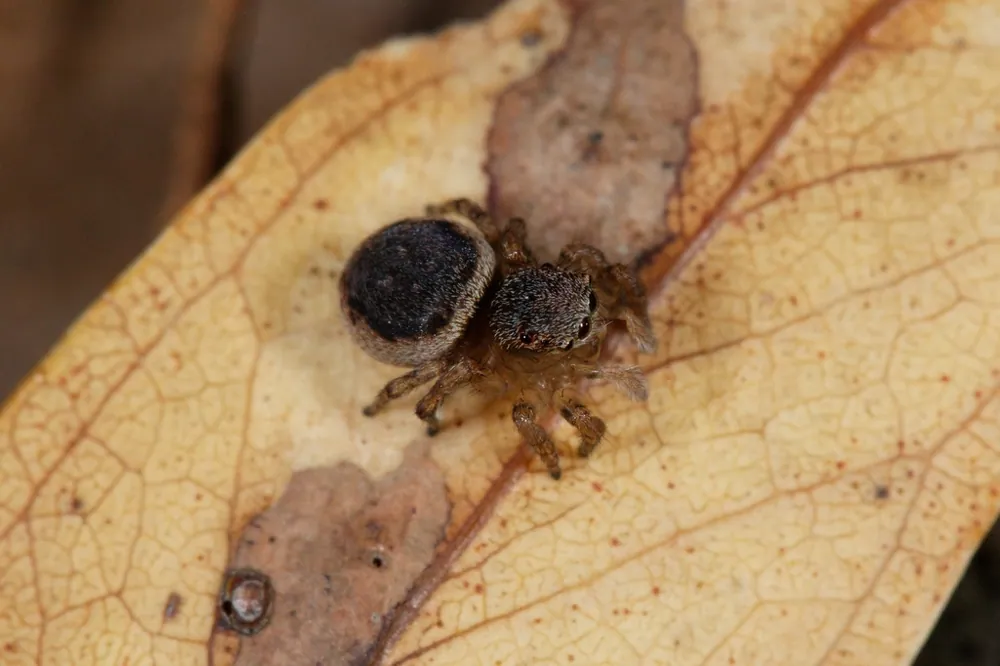
The peacock spider is a tiny jumping spider from Australia. Males are brightly coloured, and they show off with a fan of flaps on their abdomen and a dance to win a female. Its eyesight is so good that it can see ultraviolet light, which helps it hunt.1

 Indlela yokusiqaphela
- Males are red, blue and black, with flap-like extensions on the abdomen that have white hairs and can be folded down.1
- Females and young spiders are brown, with colour patterns that set them apart from related species.1
- Both sexes reach about 5 mm in body length.1
- The males raise their abdomen and spread the flaps into a white-fringed, circular field of colour during courtship.1
Amandla etyhefu yokuluma nokuhlaba
Ityhefu iphuma ngamazinyo aso etyhefu okanye ngamazinyo aso xa siluma.
Siyingozi kangakanani ebantwini?
Ingozi ebantwini: KuthambileNjengokuhlatywa yinyosi okanye ngaphantsi. Phantse asinangozi ebantwini. Ukuba siyaluma
- Hlamba indawo elunyiweyo uze ubeke ipakethi yomkhenkce kuyo ngenxa yeentlungu. Fumana uncedo lwezonyango ukuba iintlungu zinamandla, ziyasasazeka okanye umntu uziva engaphilanga kakuhle.
Soloko utsalela inombolo kaxakeka kuqala (112, 000, 911). Esi sisikhokelo soncedo lokuqala ngokubanzi, asilocebiso lwezonyango. Iziseko zoncedo lokuqala
 Hlala ukhuselekile
- Ungaze uchukumise, ubambe okanye uqhule isilwanyana sasendle, nokuba sincinci, kwaye nokuba sibonakala silele okanye sifile.
- Sinike indawo. Ukuba udibana naso, hlala uzolile, buyela umva kancinci kwaye usiyeke sihambe ngendlela yaso.
- Ukuba siyakuluma: hlala uzolile, musa ukushukuma, tsalela inombolo kaxakeka (112, 000, 911) okanye uye esibhedlele ngokukhawuleza. Khumbula ukuba sasikhangeleka njani, ifoto iyanceda.
Asikuzingeli. Sisebenzisa ityhefu yaso ukubamba ukutya okanye ukuzikhusela, kwaye singakhetha ukuzimela. Okungakumbi malunga nokuhlala ukhuselekile
Sikhulu kangakanani?
Side kangakanani?
 sincinci kangangokuba singahlala eluzipheni lwakho
U-Peacock spider mkhulu kangakanani xa uthelekisa NAWE?
Zizibalo nje kwibhrawuza yakho. Akukho nto igcinwayo okanye ithunyelwa naphi na.
Sikhawuleza kangakanani?


Iinyaniso
Some males can change their scale colours from red to green to violet with slight movements, because their scales reflect light in a special way.1
Peacock spiders can jump up to 40 times their own body length.1
They have eight eyes and can see ultraviolet light as well as the full visible spectrum.1
Males dance and vibrate their abdomen for an average of about 24 minutes to win a female, and the dance can last from 6 to 50 minutes.1
Females of this species are thought to mate only once.1
Umqhekezi weentsomi
Intsomi: The male spider uses its colourful flaps as wings to help it glide or sustain its leaps.
Inyaniso: This belief has been debunked by the Australasian Arachnological Society.1
Kwiingcali zetyhefu
- Igama lenzululwazi
- Maratus volans
- Iqela
- Izigcawu
- Usapho
- Salticidae2
- Ucwangco
- Araneae
- Amazwekazi
- IOstreliya neOceania
- Iintsana
- Females dig nests underground in December and lay between 6 and 15 eggs per clutch. Some females have several broods in a season.1
- Ixesha lobomi
- malunga neminyaka eyi-11
- Ingozi ebantwini
- 1 / 5: Kuthambile3
Apho iinyaniso zivela khona
- Maratus volans (Wikipedia (CC BY-SA 4.0))
- Maratus volans (iNaturalist): amagama nokuhlelwa.
- Venom Wiki: inqanaba lengozi, ubungakanani obuqhelekileyo noqikelelo lwesantya zezethu. Bona indlela esizifumana ngayo: Indlela esilinganisa ngayo ingozi.
Inyaniso nganye kweli phepha inenombolo ebonisa umthombo wayo. Ukuba senze impazamo, uxolo, sithanda izilwanyana, asiyomagazini yenzululwazi. Sixelele ku-[email protected] kwaye siza kuyilungisa.
 Unomadudwane ulambile! I-Venom Wiki yiprojekthi yomntu omnye: isimahla, ayinazibhengezo kwaye ayinazilandeli. Isipho esincinci sinceda ukuyigcina ikwi-intanethi.Yondla unomadudwane
Okungakumbi kwiqela elinye: Izigcawu
 Redback spider
 Katipo
 White-tailed spider
 Badge huntsman spider
 Black house spider
 Eastern white-tailed spider
Sikwahlala: IOstreliya neOceania
 Coastal taipanIinyoka zaseOstreliyaSiyabulala
 Common death adderIinyoka zaseOstreliyaSiyabulala
 Eastern brown snakeIinyoka zaseOstreliyaSiyabulala
 Inyoka ityhefu yaseOstreliya (Inland taipan)Iinyoka zaseOstreliyaSiyabulala
 Sydney funnel-web spiderIi-tarantula nee-funnel-webSiyabulala
 Inyoka yengweIinyoka zaseOstreliyaSiyabulala