
 IAfrika
 IAsiya
 IYurophu
 uMzantsi Melika
 IOstreliya neOceania
 IAntarctica
 uLwandlekazi lwePasifiki
 uLwandlekazi lweAtlantiki
 uLwandlekazi lwaseIndiya
 uLwandlekazi lweArctic
 uLwandle lweMeditera
 uLwandle oluBomvu
 uLwandle lweKharibhiya
 uLwandle lweCoral
 uLwandle lwaseMzantsi China
 uLwandle lwePhilippines
 uLwandle lweAndaman
 uLwandle lwaseMntla (North Sea)
 uLwandle lweTimor ne-Arafura
 iBhayi yaseBengal
 iGulf yaseCalifornia
White-tailed spider
 Ukuluma
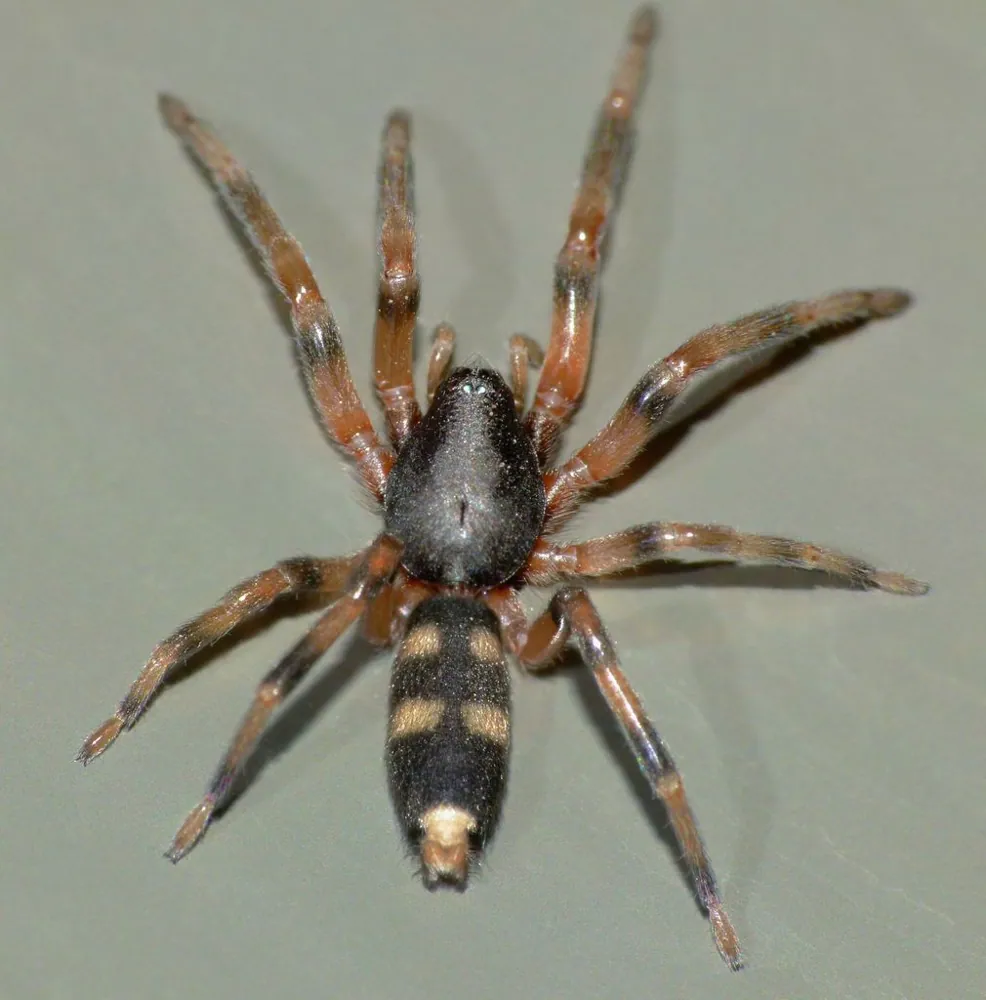
The white-tailed spider is a slim, long-legged spider that lives in southern and eastern Australia. It gets its name from the whitish tip at the end of its abdomen. It hunts other spiders at night rather than spinning a web, and it can bite people.1

 Indlela yokusiqaphela
- Slender spider with a dark reddish to grey, cigar-shaped body1
- Dark orange-brown legs with bands1
- Grey abdomen with two pairs of faint white spots1
- Usually a distinct white spot at the tip of the abdomen, just above the spinnerets (the silk-producing organs)1
- Does not build a web1
Sidla ngokubhidaniswa no: Lampona murina is very similar to Lampona cylindrata. The two are not easily told apart without microscopic examination. Several other spider species also have a white mark at the end of the abdomen and are called white-tails.1
Amandla etyhefu yokuluma nokuhlaba
Ityhefu iphuma ngamazinyo aso etyhefu okanye ngamazinyo aso xa siluma.
Ityhefu yaso yokuluma okanye yokuhlaba yenza ntoni?
The bite injects venom. Typical effects are a small red or discoloured bump that burns or itches, along with local pain and swelling. Rarely, the bite causes nausea, vomiting, malaise (a general feeling of being unwell) or headache. These symptoms are generally mild and go away over time.1
Siyingozi kangakanani ebantwini?
Ingozi ebantwini: KubuhlunguKunokuba buhlungu ngokwenene, kodwa phantse akusoze kube kubi kakhulu.Bites are generally mild. In a study of 130 confirmed white-tailed spider bites, there were no necrotic ulcers (areas of dead tissue) and no confirmed infections. The effects were mainly local, such as pain, a red mark, swelling and itching.1
 Ukuba siyaluma
- Hlamba indawo elunyiweyo uze ubeke ipakethi yomkhenkce kuyo ngenxa yeentlungu. Fumana uncedo lwezonyango ukuba iintlungu zinamandla, ziyasasazeka okanye umntu uziva engaphilanga kakuhle.
Soloko utsalela inombolo kaxakeka kuqala (112, 000, 911). Esi sisikhokelo soncedo lokuqala ngokubanzi, asilocebiso lwezonyango. Iziseko zoncedo lokuqala
 Hlala ukhuselekile
- Ungaze uchukumise, ubambe okanye uqhule isilwanyana sasendle, nokuba sincinci, kwaye nokuba sibonakala silele okanye sifile.
- Sinike indawo. Ukuba udibana naso, hlala uzolile, buyela umva kancinci kwaye usiyeke sihambe ngendlela yaso.
- Ukuba siyakuluma: hlala uzolile, musa ukushukuma, tsalela inombolo kaxakeka (112, 000, 911) okanye uye esibhedlele ngokukhawuleza. Khumbula ukuba sasikhangeleka njani, ifoto iyanceda.
Asikuzingeli. Sisebenzisa ityhefu yaso ukubamba ukutya okanye ukuzikhusela, kwaye singakhetha ukuzimela. Okungakumbi malunga nokuhlala ukhuselekile
Sikhulu kangakanani?
Side kangakanani?
 mfutshane kunomnwe wakho omncinci
U-White-tailed spider mkhulu kangakanani xa uthelekisa NAWE?
Zizibalo nje kwibhrawuza yakho. Akukho nto igcinwayo okanye ithunyelwa naphi na.
Sikhawuleza kangakanani?


Iinyaniso
Ulcers and tissue death were once blamed on white-tailed spider bites, but studies found other causes, mostly infections.1
In reported bite cases, more than 60% of people said the spider had got into their clothing, towels or bed.1
The two common species look so alike that people once thought there was only one kind of white-tailed spider.1
The white tail marking stays into adulthood, while other markings fade with each moult.1
Lampona murina has lived on New Zealand's North Island for over a hundred years.1
Umqhekezi weentsomi
Intsomi: White-tailed spider bites cause ulcers and necrosis (dead tissue).
Inyaniso: A study of 130 bites found no necrotic ulcers or confirmed infections. Ulcers blamed on these spiders were shown to have other causes, mostly infections.1
Kwiingcali zetyhefu
Apho iinyaniso zivela khona
- White-tailed spider (Wikipedia (CC BY-SA 4.0))
- Lampona cylindrata (iNaturalist): amagama nokuhlelwa.
- Venom Wiki: inqanaba lengozi, ubungakanani obuqhelekileyo noqikelelo lwesantya zezethu. Bona indlela esizifumana ngayo: Indlela esilinganisa ngayo ingozi.
Inyaniso nganye kweli phepha inenombolo ebonisa umthombo wayo. Ukuba senze impazamo, uxolo, sithanda izilwanyana, asiyomagazini yenzululwazi. Sixelele ku-[email protected] kwaye siza kuyilungisa.
 Unomadudwane ulambile! I-Venom Wiki yiprojekthi yomntu omnye: isimahla, ayinazibhengezo kwaye ayinazilandeli. Isipho esincinci sinceda ukuyigcina ikwi-intanethi.Yondla unomadudwane
Okungakumbi kwiqela elinye: Izigcawu
 Redback spider
 Katipo
 Peacock spider
 Badge huntsman spider
 Black house spider
 Eastern white-tailed spider
Sikwahlala: IOstreliya neOceania
 Coastal taipanIinyoka zaseOstreliyaSiyabulala
 Common death adderIinyoka zaseOstreliyaSiyabulala
 Eastern brown snakeIinyoka zaseOstreliyaSiyabulala
 Inyoka ityhefu yaseOstreliya (Inland taipan)Iinyoka zaseOstreliyaSiyabulala
 Sydney funnel-web spiderIi-tarantula nee-funnel-webSiyabulala
 Inyoka yengweIinyoka zaseOstreliyaSiyabulala